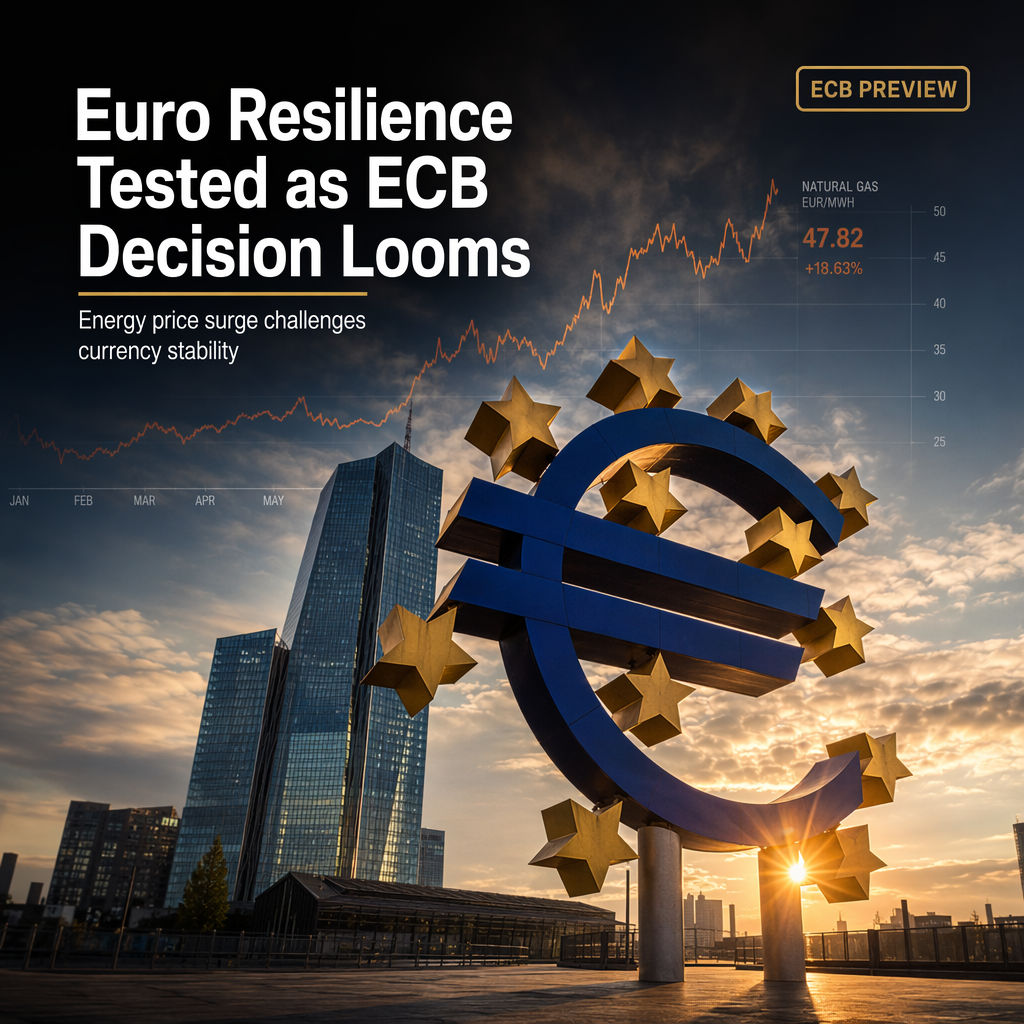
The euro (EUR/USD) has demonstrated resilience in the face of rising energy prices, with natural gas prices retesting the March highs of EUR60/MWh [1]. According to Chris Turner at ING, this relative strength is attributed to interest rate differentials and market expectations of a more aggressive tightening response from the European Central Bank (ECB) compared to the Federal Reserve (Fed) [1]. Despite these supportive factors, ING anticipates that EUR/USD will drift back to 1.1380 before reacting to the outcome of the upcoming ECB meeting [1].
Turner notes that unless there is a near-term move towards another cease-fire between the US and Iran, the bias remains for EUR/USD to weaken ahead of the ECB event [1]. ING's analysis suggests that, regardless of the language used at the ECB meeting and press conference, it is unlikely the market will price in even higher ECB rates at this stage [1].
The market is closely watching the ECB's next steps, as the euro's performance has been buoyed by expectations of policy divergence. However, ING cautions that the scope for further hawkish repricing appears limited, which could cap further euro gains in the near term [1].
CONCLUSION
The euro has shown resilience despite energy market pressures, supported by expectations of ECB policy action. However, ING expects EUR/USD to drift lower ahead of the ECB meeting, with limited room for further hawkish surprises. Market participants are now focused on the ECB's upcoming decisions for further direction.