
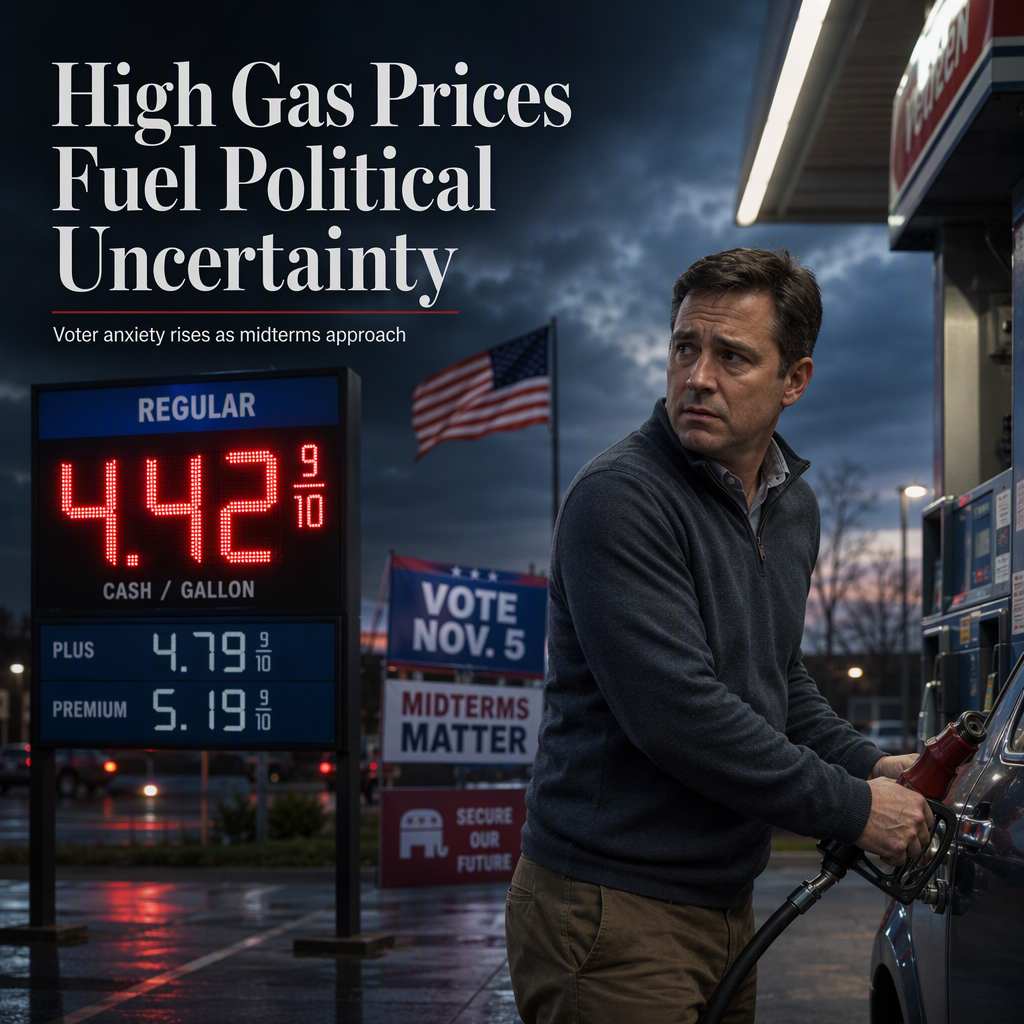
Elevated gas prices are emerging as a significant political issue ahead of the upcoming midterm elections, with experts warning that Republicans could face the same electoral challenges as Democrats did in 2022 when gas prices averaged $5 per gallon during the summer, according to GasBuddy data [1]. As of Wednesday, the national average for a gallon of gas stands at $4.42 [1]. Patrick De Haan, head of petroleum analysis at GasBuddy, stated that high fuel prices traditionally have a negative impact on the incumbent party, referencing how Democrats lost their slim House majority four years ago under similar circumstances [1].
De Haan noted that politicians at various levels are actively seeking ways to address elevated fuel prices, which have remained high for seven months [1]. Measures under consideration include a potential diesel export ban by the Trump administration, gas tax relief in states such as Indiana, Georgia, and potentially Ohio, and Governor Newsom's waiver of California's fuel requirements to encourage price declines [1]. White House spokeswoman Taylor Rogers emphasized President Trump's commitment to expanding American energy dominance and lowering costs, highlighting a recent meeting with refiners to discuss increasing refining capacity [1]. Rogers also stated that maintaining control of the Strait of Hormuz would help return oil and gas prices to pre-conflict levels [1].
A Fox News Poll conducted in mid-September found that 61% of voters consider gas prices a major problem, up from 48% two years ago [1]. De Haan suggested that gas prices "could" drop before the midterms, but the extent of any decline depends on ongoing geopolitical tensions that have significantly influenced prices over the past seven months [1]. He added that gas prices typically moderate in the fall, regardless of whether it is an election year [1].
CONCLUSION
Persistently high gas prices are a major concern for voters and could negatively impact the incumbent Republican party in the upcoming midterms, mirroring challenges faced by Democrats in 2022. While various political and regulatory measures are being considered to lower prices, the outcome remains uncertain and is closely tied to geopolitical developments.