
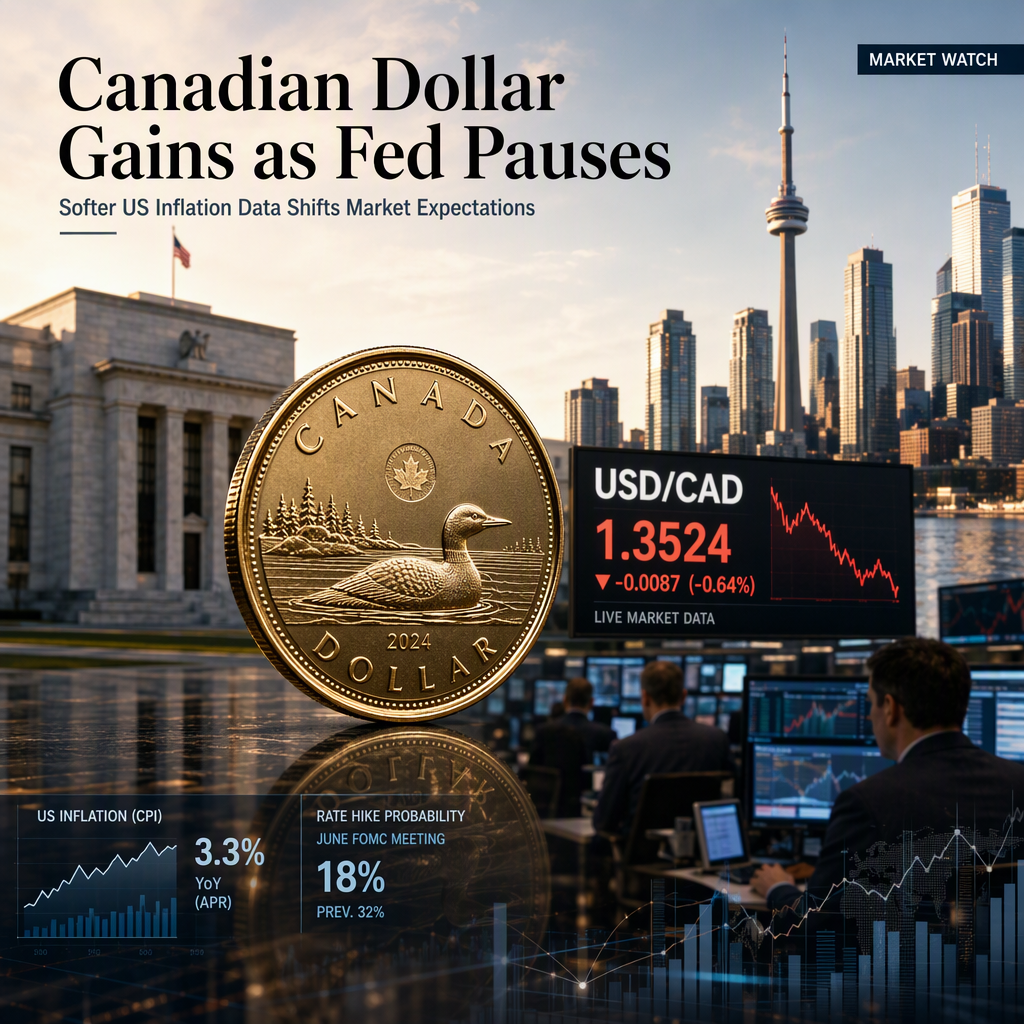
The Canadian Dollar gained ground against the US Dollar on Wednesday, with USD/CAD declining 0.08% to trade around 1.4180 after reaching a daily low of 1.4155, following the release of US inflation data [1]. The US Dollar initially faced selling pressure as the US Personal Consumption Expenditures (PCE) Price Index for August remained unchanged at 3.4% year-over-year, below the market expectation of 3.7%. July's PCE reading was also revised downward to 3.4% from 3.7% [1].
The core PCE Price Index, a key inflation measure for the Federal Reserve, also remained steady at 3% year-over-year, undercutting the 3.3% forecast. July's core PCE was revised down to 3% from 3.3%. On a monthly basis, headline PCE rose 0.3% and core PCE increased 0.2% [1]. These softer-than-expected inflation figures contributed to a shift in market expectations regarding the timing of the next Fed rate hike. According to the CME FedWatch tool, the probability of an October rate increase dropped to around 37%, down from nearly 51% on Tuesday and 71% a week earlier [1].
Despite the softer inflation, US economic data showed resilience. The ADP reported that the US private sector added 90,000 jobs in September, surpassing expectations of 70,000 and accelerating from the revised 36,000 jobs in August. Additionally, annualized GDP growth for Q2 was revised higher to 2.2% from 1.5%, exceeding expectations and indicating an acceleration from the 2.1% pace in Q1 [1].
The US Dollar Index (DXY) reflected these developments, dropping 0.21% to trade around 101.20 after hitting an intraday low of 101.03 post-PCE release. While immediate expectations for an October rate hike faded, markets shifted their focus to December, with the probability of a rate hike in that month rising to 57.5% from 49.4% a day earlier. This adjustment in rate hike expectations helped limit the downside for the US Dollar and contributed to USD/CAD's rebound from its daily low [1].
CONCLUSION
Softer US inflation data has reduced market expectations for a Federal Reserve rate hike in October, leading to short-term weakness in the US Dollar and gains for the Canadian Dollar. However, resilient US economic data and a shift in rate hike expectations toward December have helped stabilize the Greenback. The market remains attentive to future Fed policy moves as new data emerges.