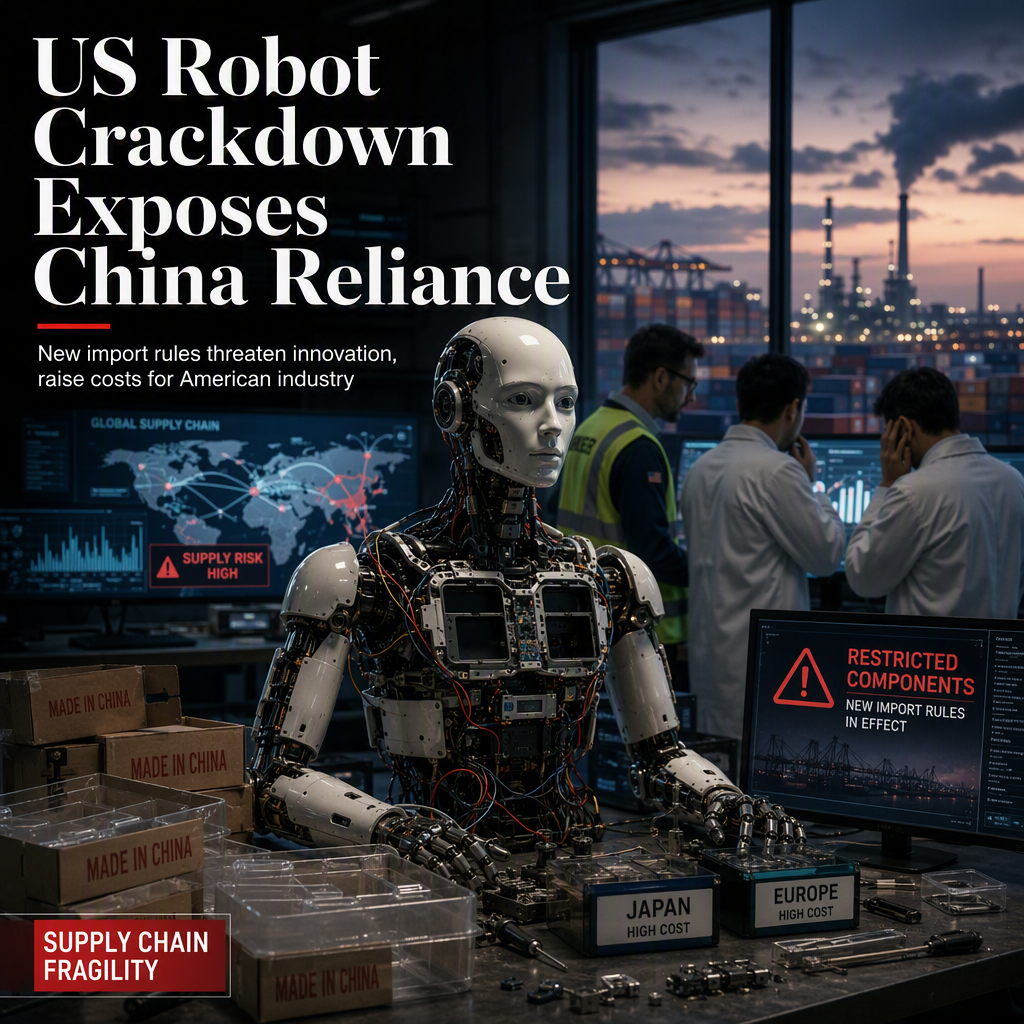
The United States has introduced new restrictions on advanced robotics imports, highlighting the American industry's significant reliance on Chinese-made hardware components such as motors, sensors, and actuators [1]. These measures are intended to reshore production and address national security concerns, but industry participants warn that the rules could lead to higher costs and delays for U.S. manufacturers and researchers [1]. According to a U.S. robotic hardware startup executive, more than 60% of their core parts are sourced from China, and shifting to alternative suppliers in Japan or Europe could increase costs by 30% to 50% and delay project timelines by months or even years [1].
Industry analysts caution that the U.S. robotics sector, which has experienced rapid growth driven by demand from logistics, manufacturing, and healthcare, may face higher prices for end users and slower adoption of advanced automation as a result of these restrictions [1]. American companies are now assessing their exposure to Chinese suppliers, with some stockpiling inventories and others seeking new relationships with vendors in South Korea, Japan, and Europe. However, these alternative suppliers often lack the scale and cost advantages of their Chinese counterparts [1].
The timing of the new rules coincides with intensifying global competition in humanoid and industrial robotics. Chinese firms such as Unitree and Galbot have made significant technological advances, dominating component production and setting new performance benchmarks. At the 2026 World Humanoid Robot Games in Beijing, Galbot robots showcased China's leadership in the sector by performing in formation during the opening ceremony [1].
A U.S.-based robotics professor emphasized that, without substantial investment in domestic production of key components, American innovation risks being hampered by shortages and increased costs just as global demand for robotics is surging [1]. No specific trading advice or price levels were mentioned in the article [1].
CONCLUSION
The new U.S. restrictions on advanced robotics imports expose the industry's heavy dependence on Chinese components, raising concerns about higher costs, delays, and potential setbacks in innovation. As global competition intensifies, the U.S. faces urgent pressure to invest in domestic production to maintain its competitive edge in robotics.