
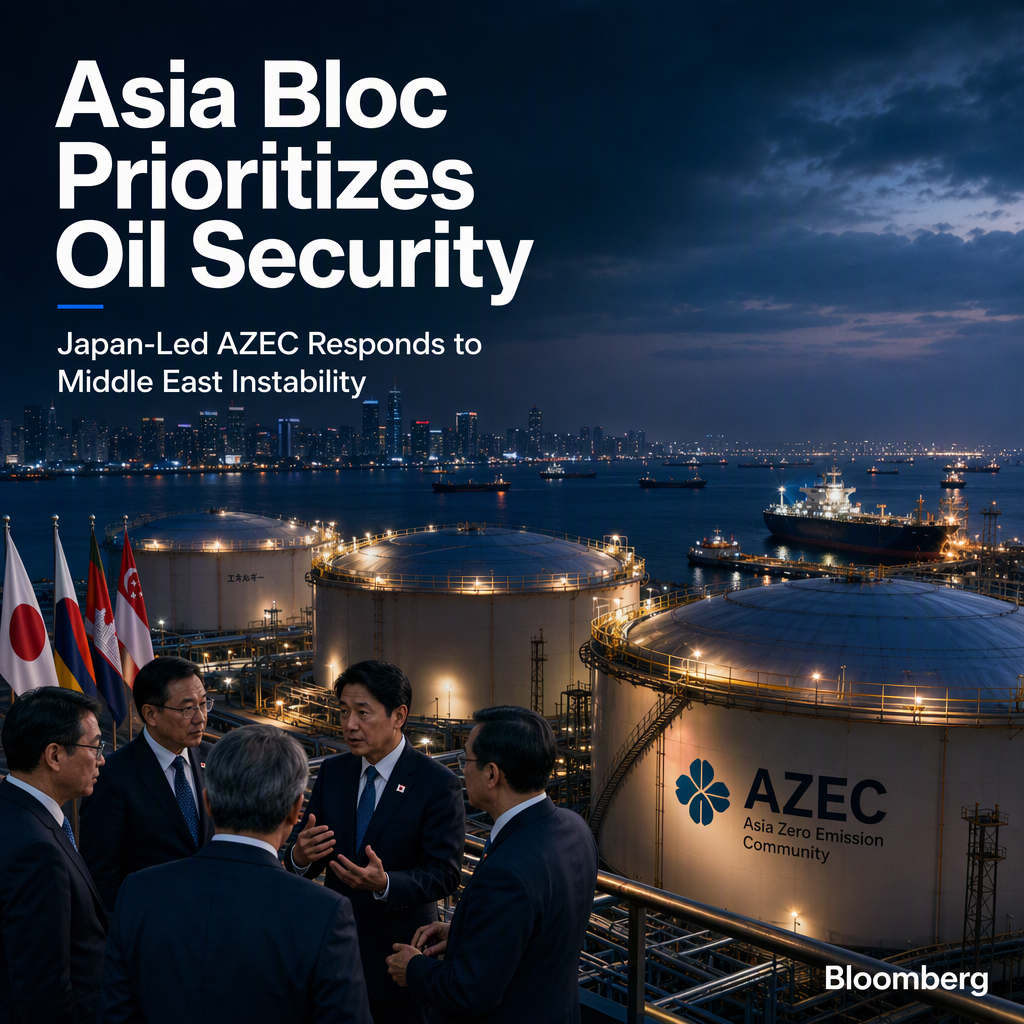
The Japan-led Asia Zero Emission Community (AZEC) has agreed to strengthen oil stockpiles across its member countries in response to rising instability in the Middle East, marking a significant shift from its original decarbonization agenda [1]. At a ministerial meeting in Manila, AZEC officials cited the need to prioritize energy security due to heightened geopolitical tensions that threaten the stability of energy supplies in the region [1].
AZEC, which was established to accelerate Asia's transition away from fossil fuels, acknowledged that current instability has made it difficult to reduce reliance on oil and gas. As a result, member countries, with Japan at the forefront, are implementing measures to increase their strategic oil reserves [1]. A representative from the Japanese Ministry of Economy, Trade and Industry emphasized, "Given the current geopolitical environment, it is essential that we safeguard our energy supplies. Oil stockpiling is a crucial buffer against future shocks" [1].
The decision is expected to influence oil markets, as increased stockpiling could support price stability in the region. Technical analysis suggests that oil prices may find support at higher levels if Asian demand for reserves grows, especially if supply disruptions persist [1]. While no specific price levels were discussed, observers anticipate that Asian oil importers will closely monitor Brent and Dubai crude benchmarks for upward movement, with potential resistance if stockpiling activity increases spot market purchases [1].
AZEC members reaffirmed their commitment to decarbonization but stated that energy security is now the top priority. They plan to revisit green initiatives once supply risks have diminished. In the meantime, trading advice centers on maintaining robust reserves and hedging against potential price spikes [1].
CONCLUSION
The AZEC's pivot to oil stockpiling highlights the region's pragmatic response to energy market instability caused by Middle Eastern tensions. While decarbonization remains a long-term goal, energy security has taken precedence, with potential implications for oil prices and market dynamics. Member countries are expected to maintain a cautious approach, balancing immediate supply concerns with future environmental objectives.