
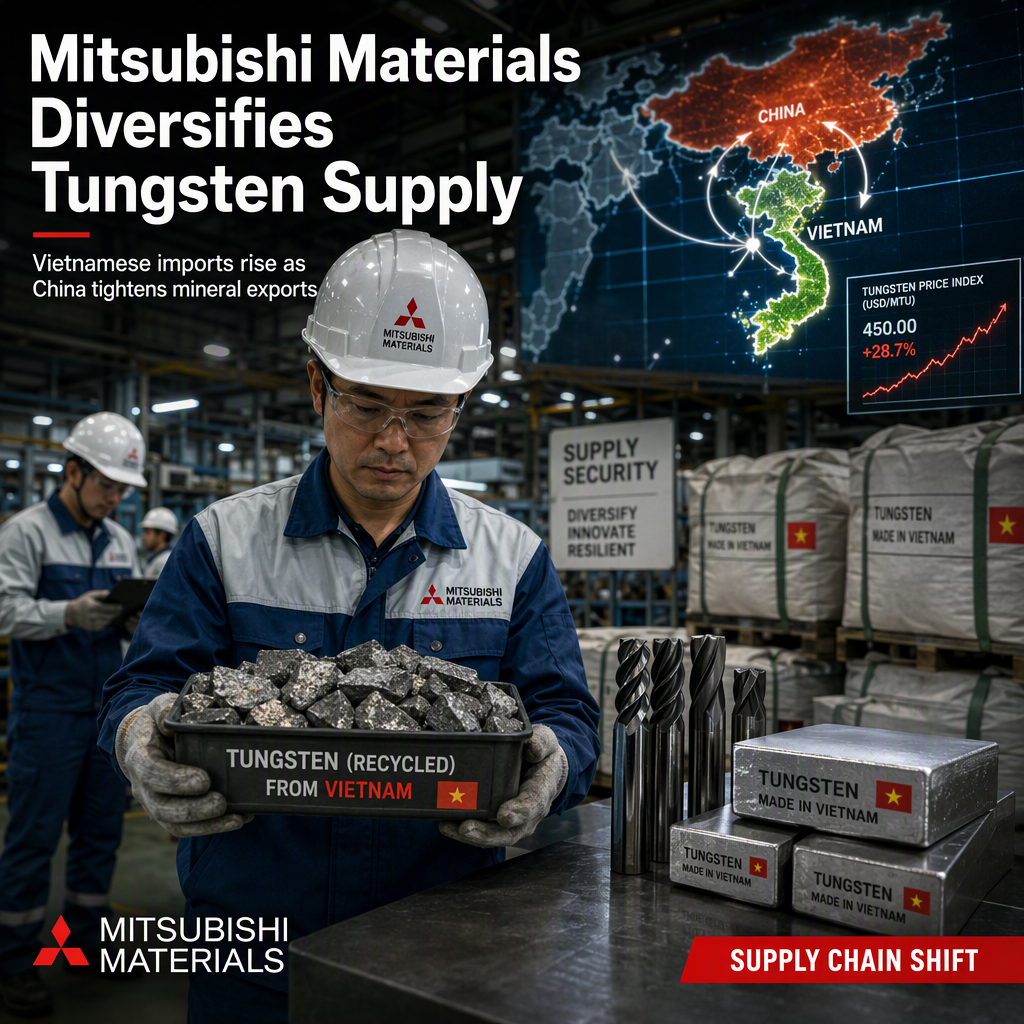
Mitsubishi Materials has initiated full-scale imports of recycled tungsten from Vietnam for use in carbide tools, marking a strategic move to reduce reliance on China due to tightened Chinese export restrictions on critical minerals such as tungsten [1]. The company is sourcing both primary and recycled tungsten, including products made from carbide scrap, from Vietnam [1]. This shift comes at a higher cost, as Vietnamese-sourced tungsten is more expensive than material from China, prompting Mitsubishi Materials to raise prices for its carbide tools [1].
The decision reflects Mitsubishi Materials' prioritization of supply security over cost, as the company adapts to changing market conditions and regulatory pressures [1]. This approach is indicative of a broader trend among Japanese manufacturers and global supply chains, with companies seeking alternative sources for critical inputs to mitigate risks associated with geopolitical tensions and trade controls [1].
While the article does not provide specific figures regarding the volume of imports, price increases, or the percentage of supply now sourced from Vietnam, it highlights the company's strategic response to market disruptions caused by China's export restrictions [1]. No forward-looking statements or analyst opinions are mentioned in the source [1].
CONCLUSION
Mitsubishi Materials' shift to Vietnamese tungsten underscores the growing importance of supply chain diversification amid geopolitical risks. The move, though costlier, aims to ensure supply security and reflects broader industry trends. Market impact is medium, as price increases and supply chain adjustments may affect downstream industries.