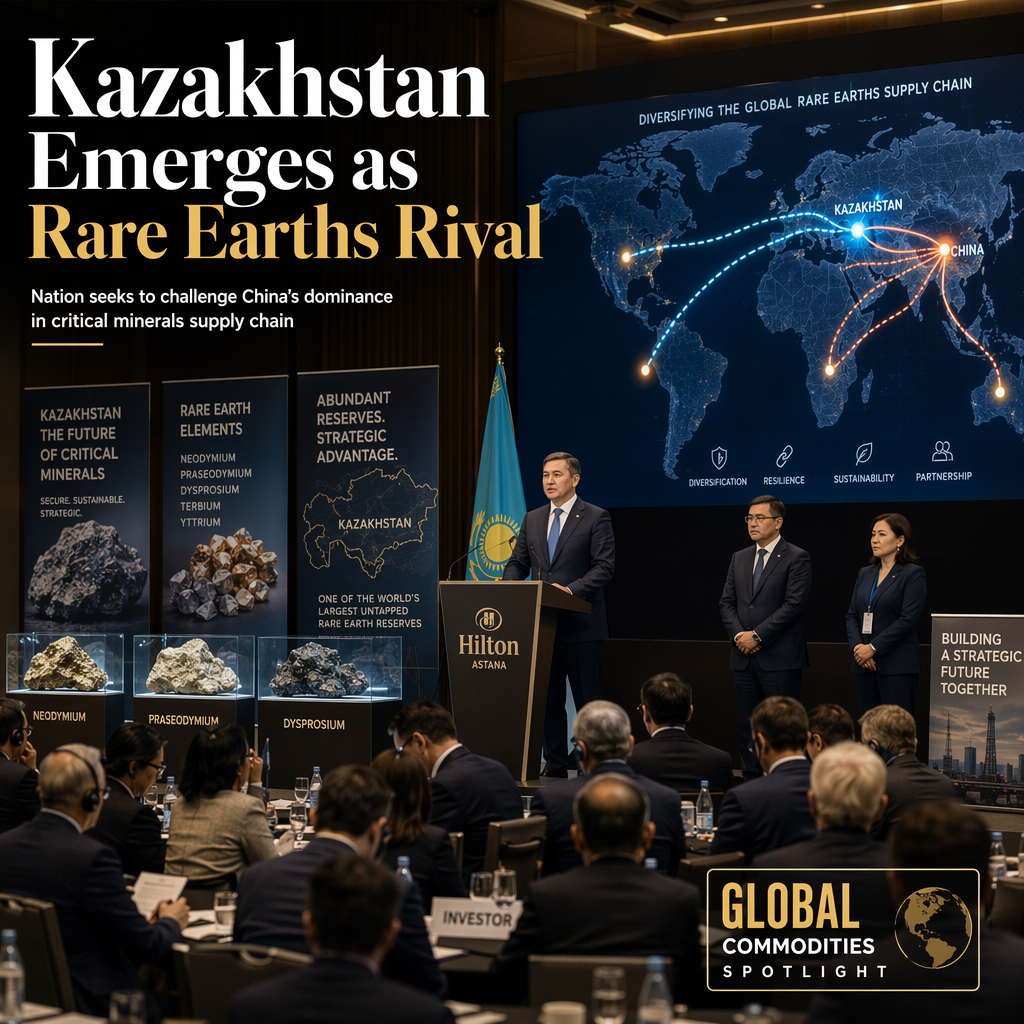
Kazakhstan has announced its intention to become a significant player in the global rare earths and critical minerals market, presenting itself as a credible alternative to China, which currently accounts for 70% of the world's rare-earth production and controls 90% of processing and refining capacity [1]. This move was highlighted during a presentation at the Hilton Astana, where Kazakh officials emphasized the country's substantial mineral reserves and mining expertise [1].
The initiative comes amid heightened international concern over China's dominance in the rare earths supply chain, which is crucial for industries such as electronics, electric vehicles, and renewable energy [1]. Governments and companies across North America, Europe, and Asia are actively seeking to diversify their sources and supply chains for these critical materials due to geopolitical risks, trade tensions, and the need for secure access to resources vital for technological advancement and national security [1].
Industry analysts suggest that Kazakhstan's mineral sector could attract significant investment, particularly if the country forges partnerships with Western and Asian stakeholders [1]. However, they caution that developing local processing infrastructure is technically complex and capital-intensive, requiring both expertise and technology transfers [1]. The success of Kazakhstan's ambitions will depend on its ability to overcome these challenges and establish itself as a reliable supplier [1].
The global rare earths market has experienced increased volatility, with prices fluctuating due to export controls, diplomatic disputes, and shifting demand from high-tech industries [1]. Kazakhstan's entry is expected to exert downward pressure on prices and provide buyers with alternatives to Chinese-controlled supply chains, though the actual impact will hinge on the country's ability to scale up both production and processing effectively [1].
Kazakh officials remain optimistic about the country's prospects, underscoring their willingness to collaborate with international partners to develop the necessary infrastructure and technology. This initiative is part of a broader strategy to diversify Kazakhstan's economy and strengthen its position in the global commodities market [1].
CONCLUSION
Kazakhstan's push to enter the rare earths market aims to challenge China's dominance and provide alternative supply options for global industries. While the country has significant potential, its impact will depend on successful development of processing capabilities and international partnerships. The move could introduce greater competition and price stability in the rare earths market.