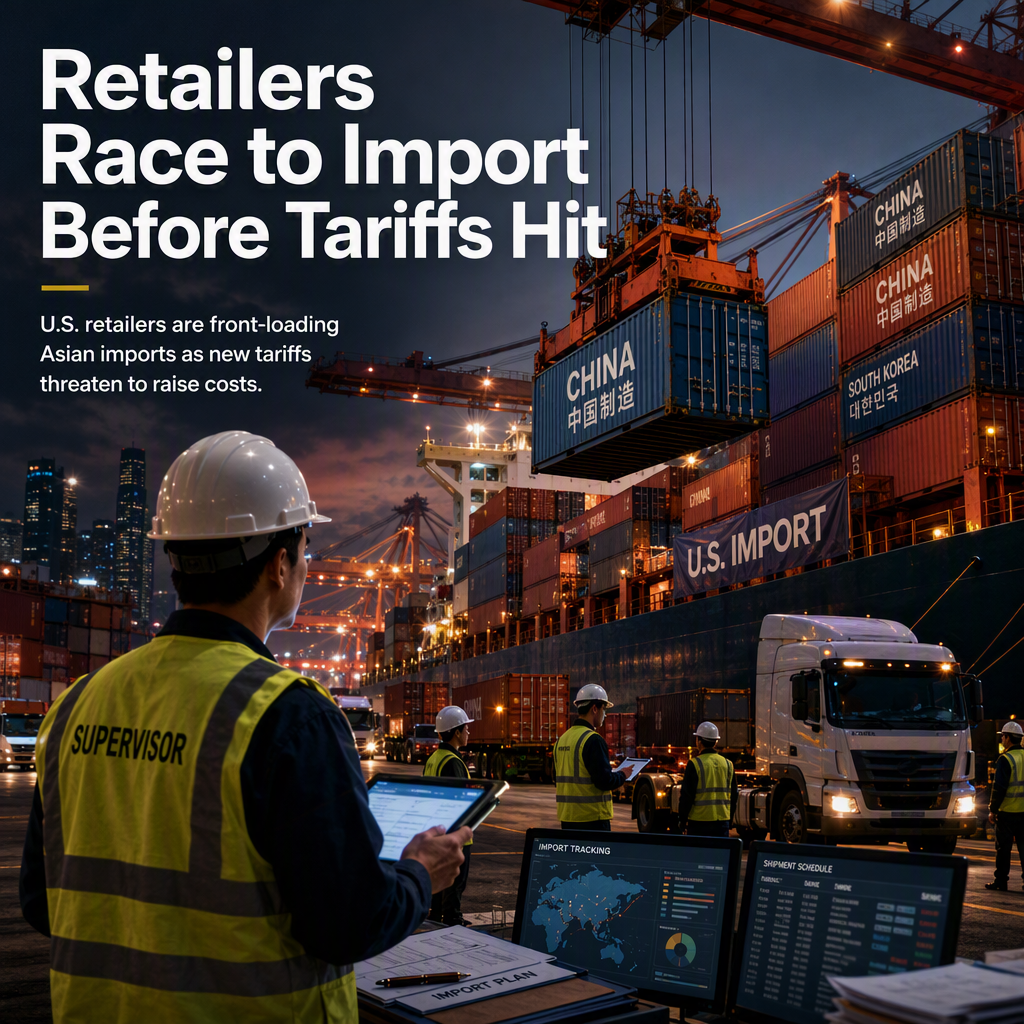
U.S. imports of goods from Asian countries exceeded levels from the previous year in June, as businesses accelerated their purchasing activity in anticipation of upcoming tariff increases [1]. Retailers notably increased their imports to stock up on inventory before a new round of tariffs took effect in July [1]. According to the report, former President Trump imposed tariffs ranging from 10% to 12.5% on 60 trading partners after a flat 10% levy on all imports expired on July 24 [1].
This escalation in tariffs prompted a surge in import activity during the first half of the year, with companies front-loading shipments to avoid higher costs [1]. The article highlights that this behavior reflects ongoing uncertainty surrounding U.S. trade policy and tariff implementation, as businesses adapt their supply chains to mitigate the impact of shifting tariffs [1].
The anticipation of higher tariffs has also led to increased volatility in import volumes, as companies attempt to manage both supply risks and pricing pressures [1]. The latest round of tariffs represents a continuation of trade tensions between the U.S. and its global partners, particularly those in Asia [1].
No specific analyst opinions or forward-looking statements are provided in the article, but the described actions suggest that businesses are bracing for further cost increases and ongoing uncertainty in the trade environment [1].
CONCLUSION
U.S. businesses responded to tariff uncertainty by increasing imports from Asia ahead of new levies, leading to a surge in shipments and heightened volatility. The ongoing trade tensions and shifting tariff policies continue to drive supply chain adjustments and market uncertainty.