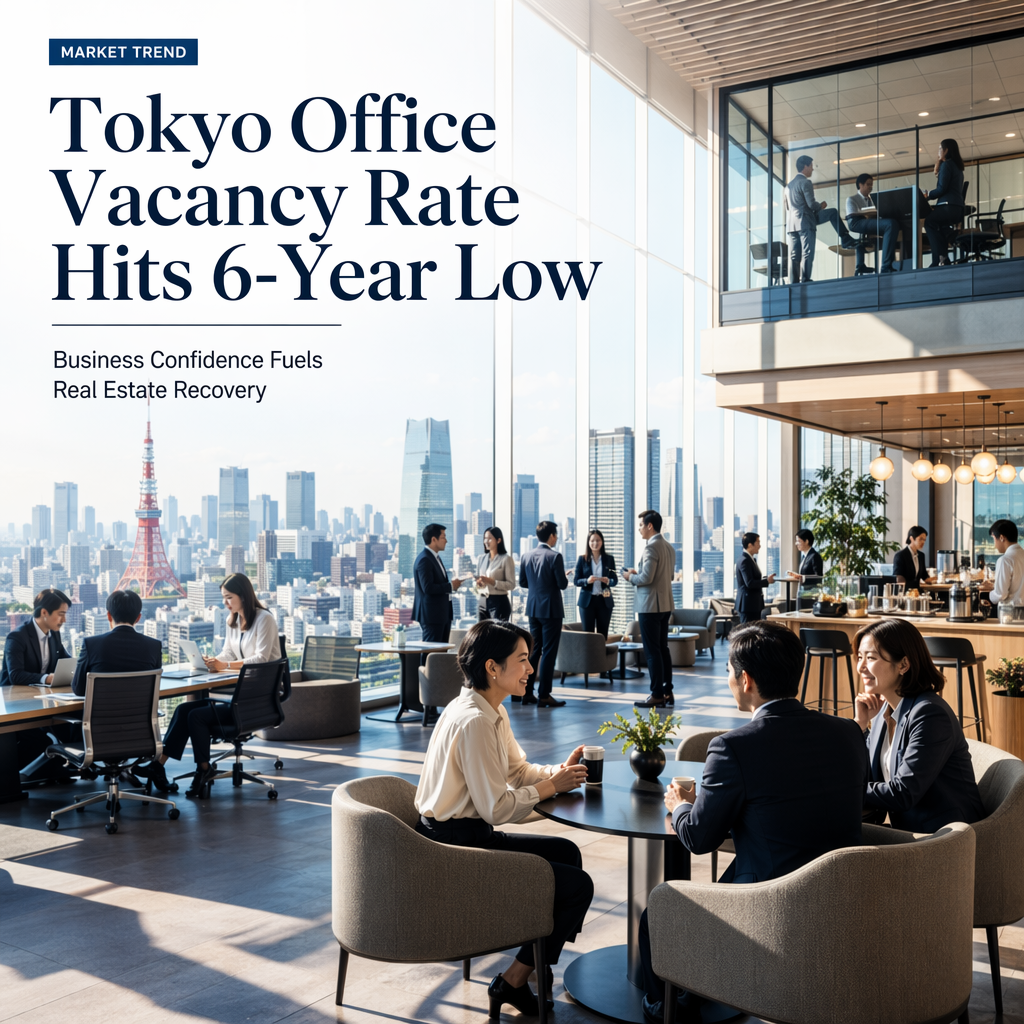
The office vacancy rate in central Tokyo has declined to the 1% range for the first time in six years, marking a significant recovery from the pandemic period when vacancies were higher due to remote work and reduced economic activity [1]. This shift is attributed to increased corporate demand for office space, as companies relocate to the capital to secure labor and provide larger, more collaborative work environments for their employees [1].
An example of this trend is Kenko Mayonnaise, which moved into a larger office in February, featuring amenities such as a cafe to enhance employee comfort and interaction [1]. The broader movement among businesses to create more comfortable and collaborative workspaces reflects efforts to attract talent and foster workplace engagement [1].
The decline in office vacancies signals a marked turnaround in Tokyo's commercial property market, indicating renewed confidence among businesses and a potential boost for the city's real estate sector [1].
CONCLUSION
Central Tokyo's office vacancy rate has fallen below 2% for the first time since the pandemic, driven by increased corporate demand and a shift toward larger, more collaborative workspaces. This trend highlights a recovery in the city's commercial property market and suggests growing business confidence.