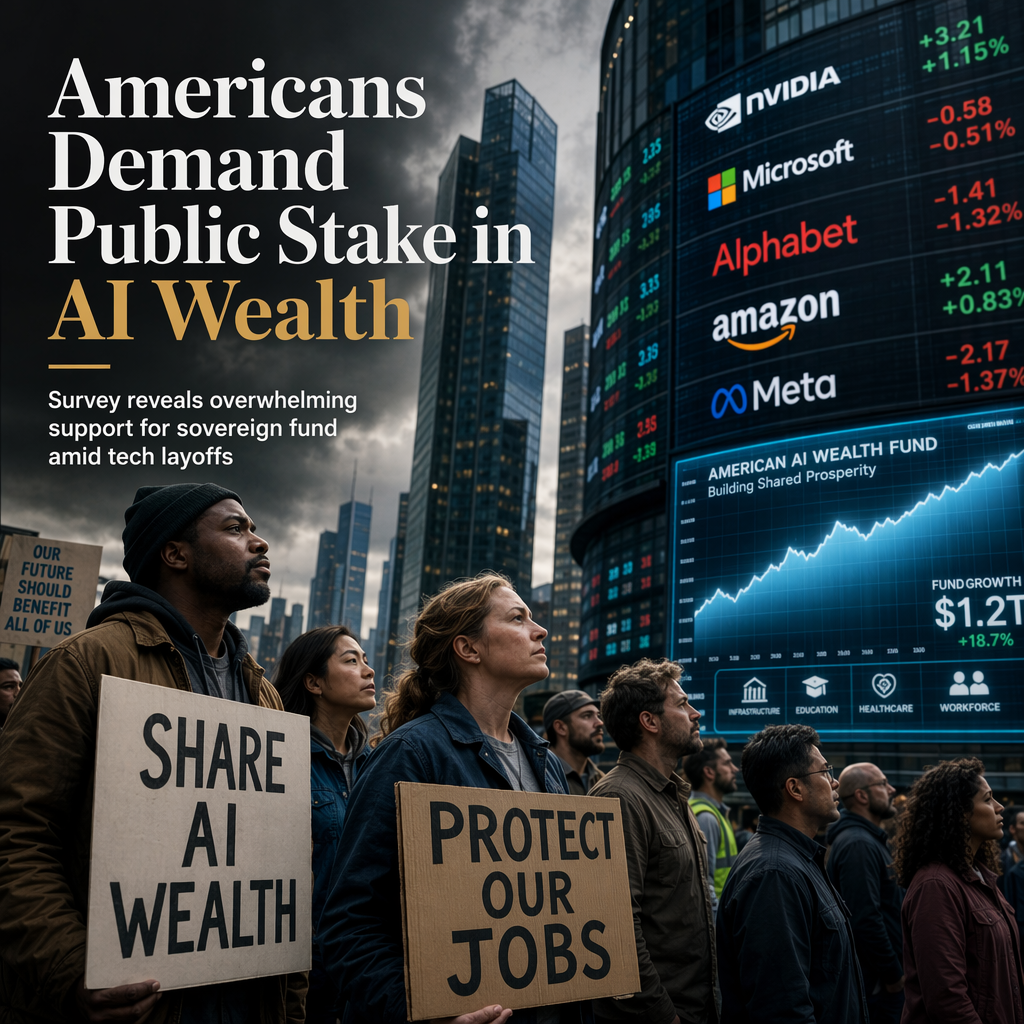
A recent national survey conducted by research firm Verasight found that 69% of Americans support 'forcing' AI firms to transfer 50% of their stock to a public sovereign wealth fund, reflecting growing concern over job security as tech layoffs surge in the United States [1]. The survey, which polled 1,690 adults in June and was published earlier this month, highlights widespread frustration among workers who are dissatisfied with increasing layoffs despite higher corporate profits [1].
Senator Bernie Sanders has proposed the American AI Sovereign Wealth Fund Act, which would grant the public a 50% stake in the largest AI companies in the U.S. Sanders stated that this measure would ensure the economic benefits generated by AI are used to improve the lives of all Americans, rather than enriching only the wealthiest individuals [1]. He emphasized that decisions about the future of AI should not be made solely by Silicon Valley billionaires seeking to maximize their power and profit [1].
Goldman Sachs Senior Global Economist Joseph Briggs estimates that more than 9% of the U.S. labor force, or approximately 15 million workers, could lose their jobs during a 10-year AI transition period, according to a report published last month [1]. Briggs likened this to previous automation shocks seen in the late '90s and early 2000s, but believes these losses will be temporary, as AI is expected to create many new jobs over the long term even as it eliminates existing ones [1].
Research firm Windfall Trust notes that sovereign wealth funds could play multiple roles in the AI sector, including funding capital-intensive AI infrastructure, taking equity stakes in AI companies, and capturing a share of AI-driven economic gains for the public treasury [1]. However, these funds may face challenges in balancing the public good with the global race to build AI capabilities [1].
CONCLUSION
The survey results and legislative proposal signal strong public support for redistributing AI industry gains amid concerns over job losses and corporate accountability. While the transition to AI may cause significant labor disruptions, analysts expect new opportunities to emerge in the long term. The debate over an AI sovereign wealth fund underscores the tension between maximizing public benefit and maintaining competitive advantage in the global AI race.