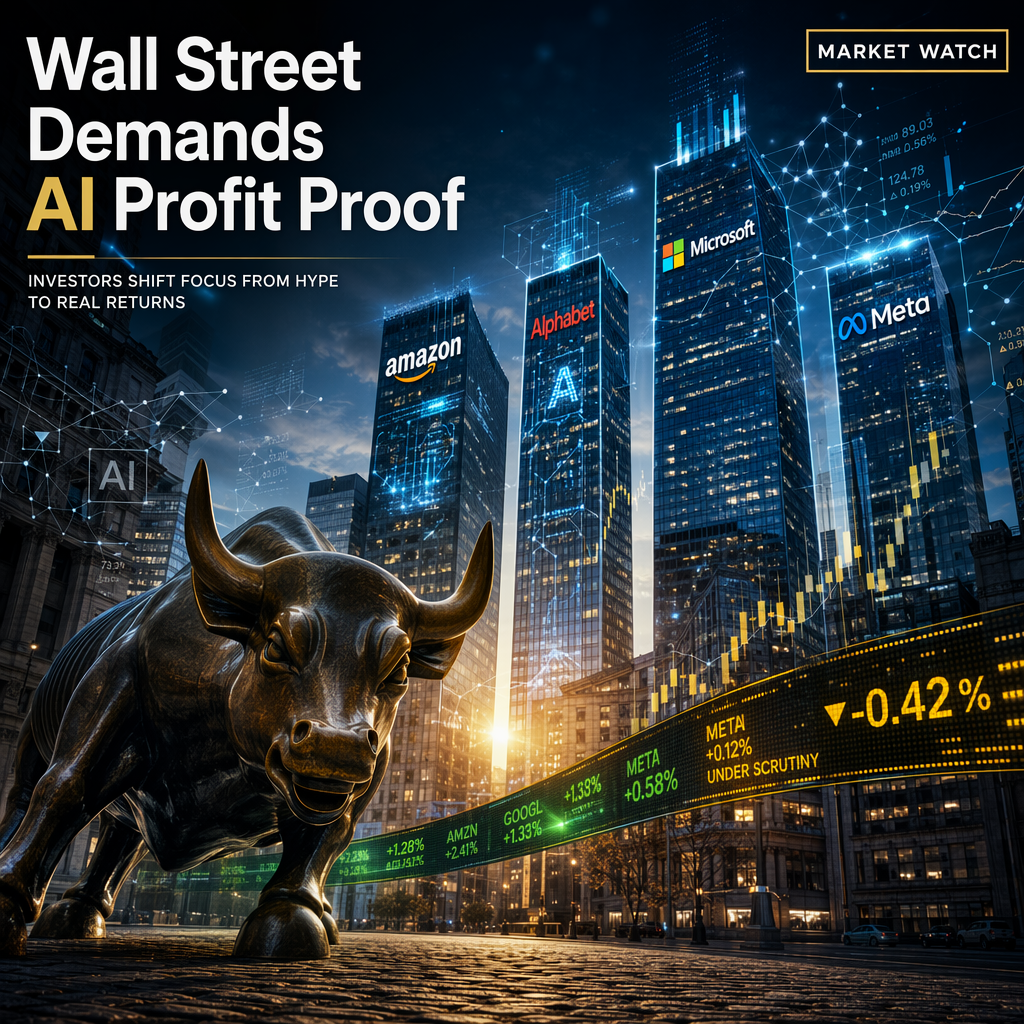
Wall Street is transitioning from an era of AI euphoria to a new rationalization phase, according to CNBC Investing Club's Paulina Likos and Zev Fima [1]. After years of rewarding companies for announcing large-scale artificial intelligence spending, investors are now demanding evidence of tangible returns on these investments. Hyperscalers such as Amazon, Alphabet, Microsoft, and Meta Platforms are under increasing pressure to justify their capital expenditure plans and demonstrate real productivity gains and profitability from their AI initiatives [1].
Three major developments are shaping this shift: first, the need for companies to show return on investment; second, a move from 'token maxxing'—maximizing AI usage regardless of efficiency—to 'token optimization,' which prioritizes productivity and sustainable growth; and third, the realization that most users do not require the most advanced AI models, with frontier models reserved for specialized applications like scientific research and software engineering [1].
These trends are prompting investors to re-examine which companies will benefit most from the next phase of AI innovation. The focus on quality over quantity in AI deployment could lead to more sustainable revenue growth and potentially weed out firms unable to demonstrate a clear path to profitability [1]. Market segmentation is expected, with generalized and cost-effective AI solutions likely to dominate the broader commercial landscape, while advanced models remain essential for niche fields [1].
Investors are advised to closely monitor how these developments affect the performance and outlook of major tech companies, especially those in the CNBC Investing Club portfolio. The ripple effects of this rationalization phase could significantly impact AI-related stocks, either positively or negatively, depending on their ability to adapt and deliver measurable results [1].
CONCLUSION
The market is entering a more discerning phase regarding AI investments, with a clear emphasis on productivity and profitability. Investors should pay close attention to how major tech companies respond to these demands, as their ability to deliver tangible returns will likely determine the future performance of AI-related stocks.