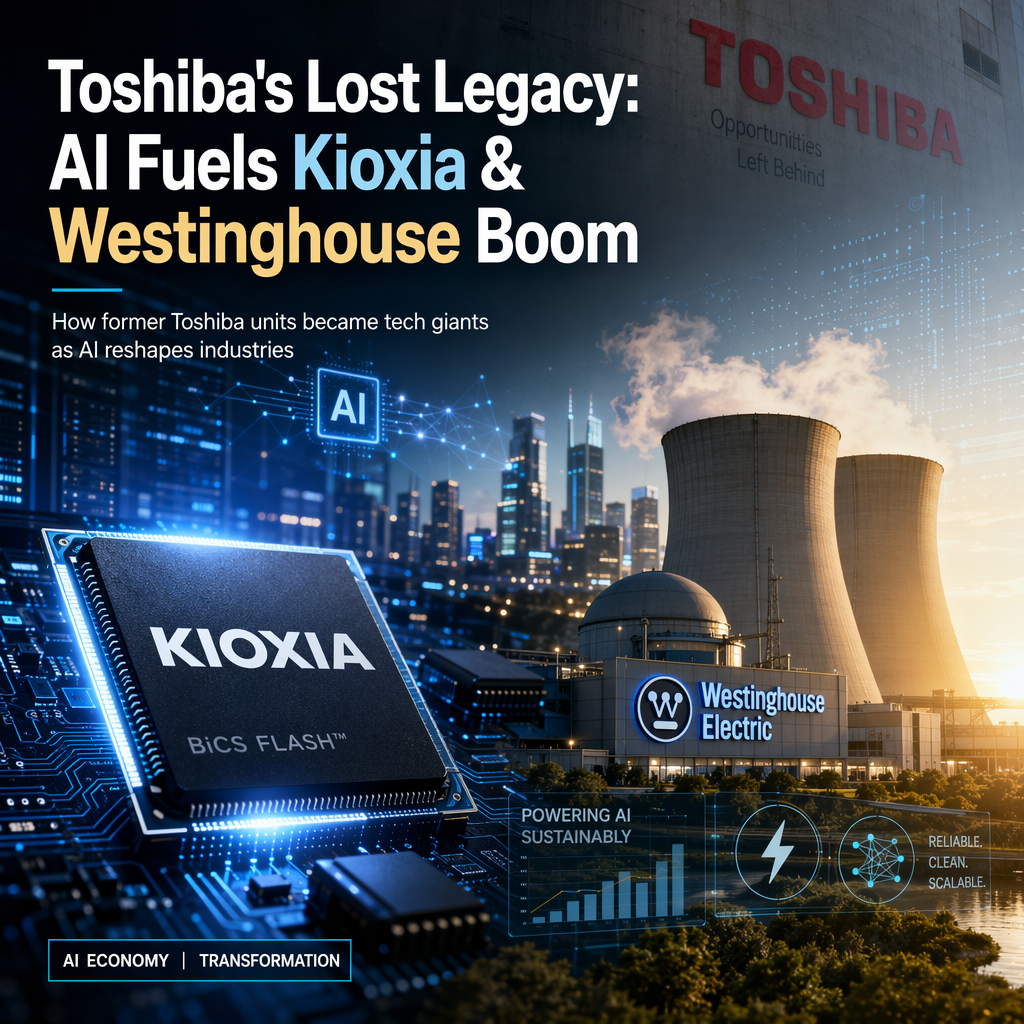
Toshiba, once a global leader in memory chips and nuclear power, relinquished both its memory business and its U.S. nuclear unit, Westinghouse Electric, following a management crisis that began in 2016 [1]. The memory business, now operating as Kioxia, was separated from Toshiba during this period of turmoil. Since then, Kioxia has experienced significant growth, becoming a $350 billion company, a development attributed to the explosive demand for memory driven by the rise of artificial intelligence [1].
Westinghouse Electric, which filed for bankruptcy after being separated from Toshiba, has also seen a resurgence as the adoption of AI increases demand for clean energy solutions [1]. The article underscores how both Kioxia and Westinghouse Electric have become central players in the technology-driven economy, particularly as AI adoption accelerates [1].
These developments highlight the missed opportunities for Toshiba, which was once positioned to dominate both the semiconductor and nuclear energy sectors. The current success of Kioxia and Westinghouse Electric illustrates the transformative impact of AI on the memory and energy industries [1].
CONCLUSION
Toshiba's divestment of its memory and nuclear businesses has resulted in missed opportunities, as both Kioxia and Westinghouse Electric now thrive amid the AI-driven surge in demand for memory and clean energy. The growth of these former Toshiba units underscores the shifting landscape of the technology and energy sectors.