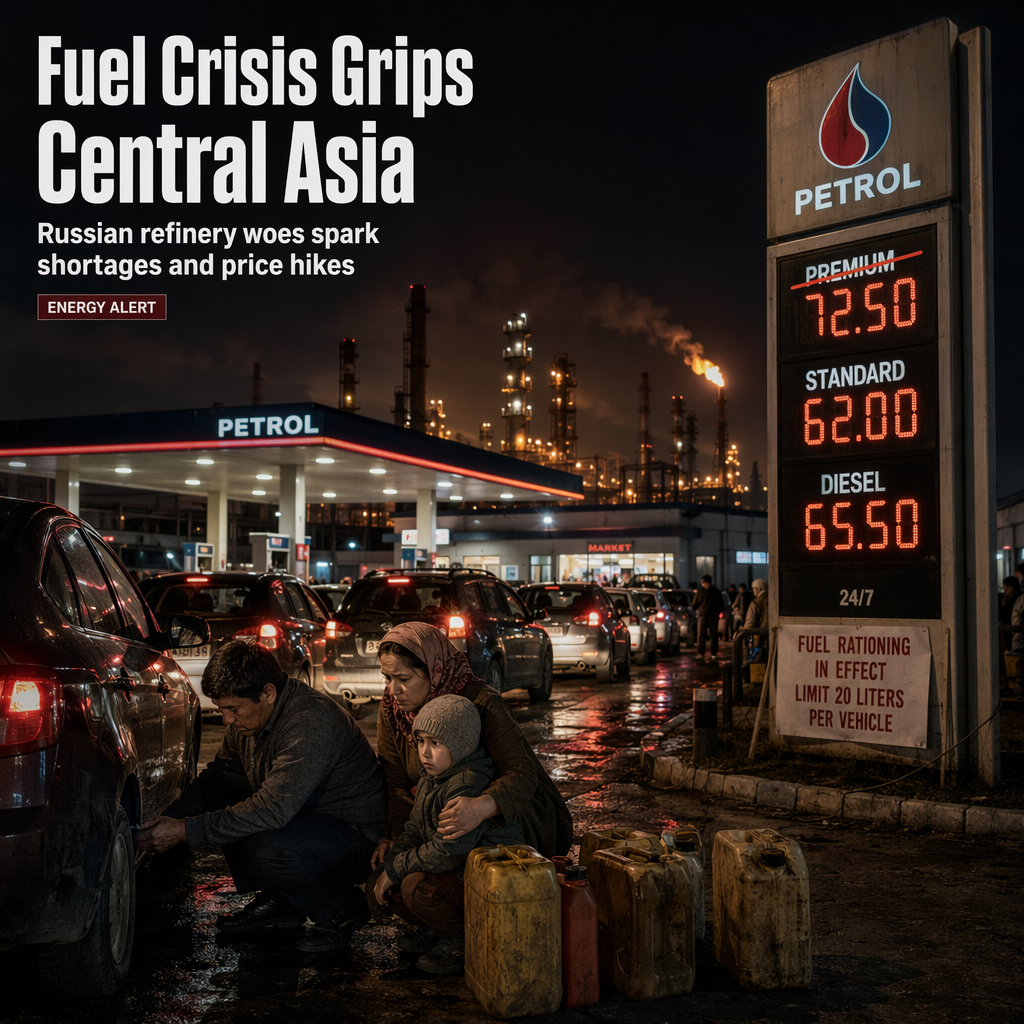
Central Asia is experiencing significant disruptions in its fuel markets as a result of Russia tightening energy exports following Ukrainian drone strikes on Russian refineries, according to Nikkei Asia [1]. Kyrgyzstan is facing shortages of premium-grade gasoline, forcing consumers to switch to standard grades, which is altering purchasing patterns and raising concerns about engine performance and consumer sentiment [1]. In response to the supply shock, Kyrgyzstan is actively seeking new suppliers to address the shortage [1].
Uzbekistan has seen gasoline prices rise in recent weeks, with some stations rationing supplies and imposing sales limits to manage the shortages caused by increased demand and constrained supply [1]. Kazakhstan is responding by tightening controls on fuel exports and imports, introducing stricter regulations to prevent outflows of refined products and ensure adequate domestic supply [1].
The crisis is directly linked to Ukrainian drone strikes that have reduced output at Russian refineries, prompting Moscow to restrict energy exports to neighboring countries [1]. Analysts warn that unless the situation stabilizes, regional fuel markets may face sustained volatility, with further price hikes and supply disruptions likely [1]. Market participants are closely monitoring price levels, supply chain developments, and government interventions, and traders and suppliers are advised to stay alert for new regulations and potential shifts in pricing as governments respond to the evolving crisis [1].
A Bishkek-based energy analyst stated, "The ripple effects of Russia's refinery crisis are being felt across Central Asia. We expect continued volatility in the fuel market, especially for premium grades, until Russian supplies normalize or alternative sources are secured" [1].
CONCLUSION
The Russian refinery crisis, triggered by Ukrainian drone strikes, is causing fuel shortages and price increases across Central Asia, with governments and market participants bracing for continued volatility. Unless Russian supplies recover or new sources are found, the region is likely to face ongoing market instability and further disruptions.