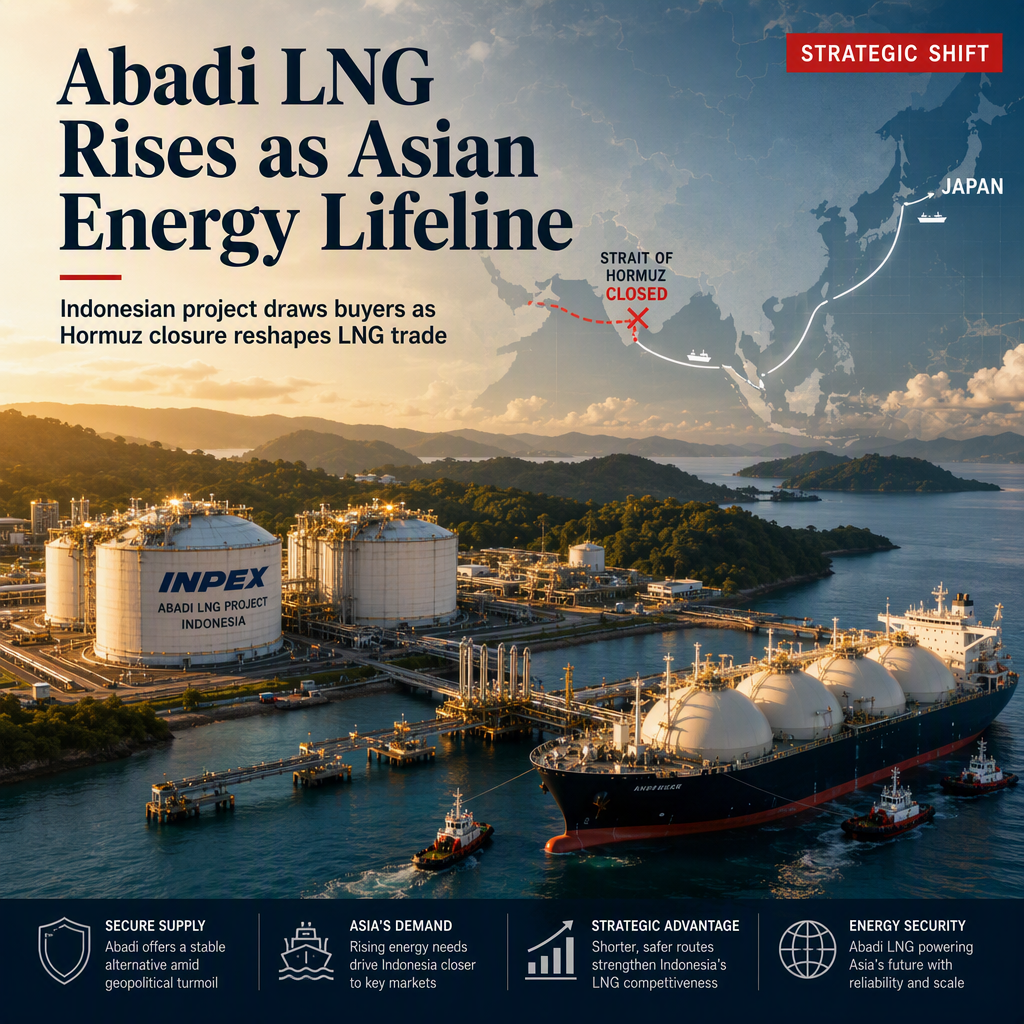
Japanese energy group Inpex is experiencing strong buyer interest in its Abadi liquefied natural gas (LNG) project in Indonesia, as recent geopolitical tensions in the Middle East have led to the closure of the Strait of Hormuz following the Iran war [1]. The Abadi LNG project is expected to produce 9.5 million metric tons of LNG annually, which is equivalent to over 10% of Japan's yearly imports, highlighting its strategic importance for Asian energy security [1].
According to Inpex's President, energy sources that can bypass the Strait of Hormuz have seen a significant increase in market value, with Asian buyers actively seeking to diversify their LNG procurement away from the Middle East [1]. This shift in demand has made the Indonesian LNG project particularly attractive, as it offers reliable supplies to Japan and other Asian markets, reducing risks associated with supply interruptions from Middle Eastern routes [1].
Market analysts cited in the article suggest that the Abadi project could become a new benchmark for Asian LNG contracts due to its strategic location and large scale [1]. Industry experts also anticipate that the project may influence regional LNG price dynamics, potentially exerting upward pressure on prices as demand for non-Middle Eastern supply increases [1]. The Abadi project is considered a key asset in Inpex's portfolio, providing both stability and growth opportunities in the current volatile energy landscape [1].
While no specific trading advice or technical chart analysis was provided, the overall market sentiment remains bullish regarding the value of LNG assets that can avoid the Hormuz corridor. Support for LNG prices is expected at current levels, with resistance likely if additional supply from similar projects enters the market [1].
CONCLUSION
The closure of the Strait of Hormuz has significantly increased the strategic value of Inpex's Abadi LNG project in Indonesia, attracting strong interest from Asian buyers seeking secure energy supplies. Market sentiment is bullish on non-Middle Eastern LNG assets, with expectations of upward pressure on regional LNG prices as demand shifts away from traditional supply routes.