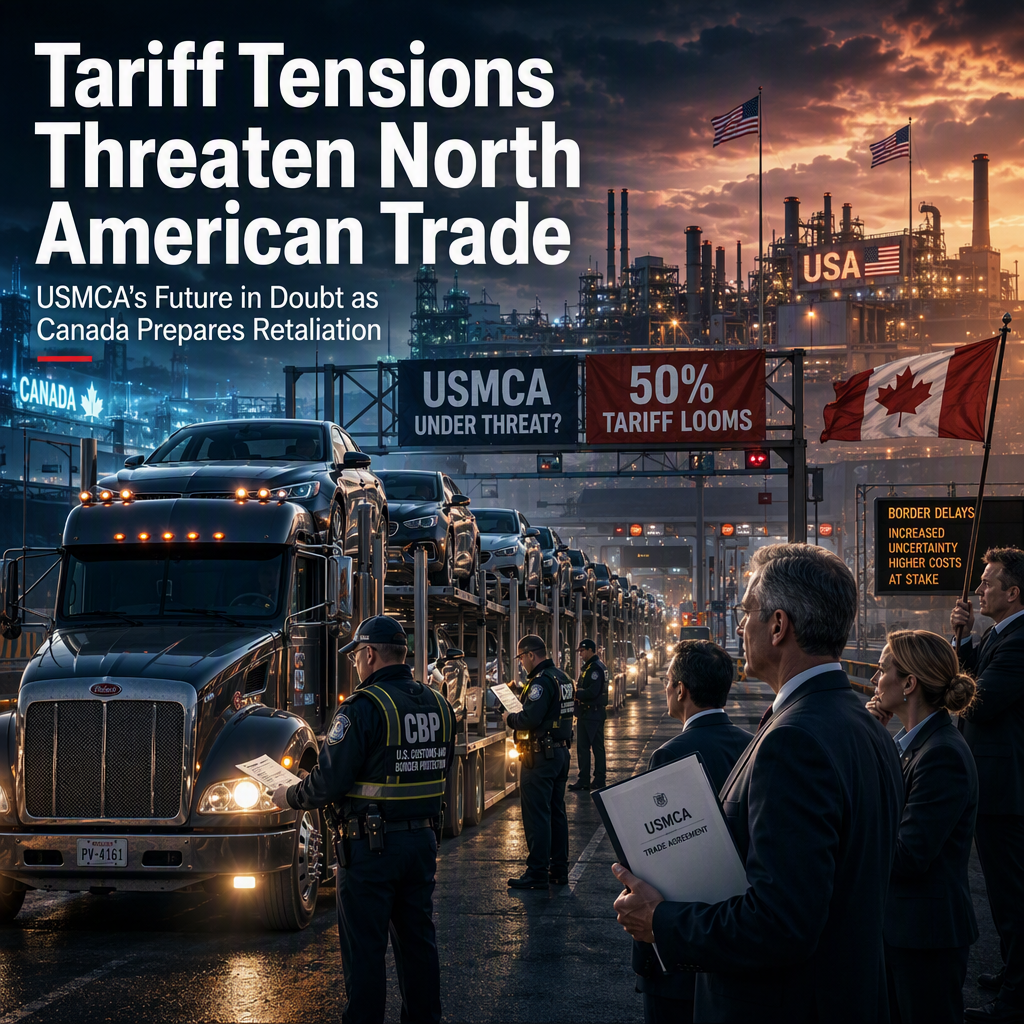
According to Dev Ashish at Societe Generale, the Trump administration has threatened to impose a 50% tariff on Canadian vehicles and parts, signaling a broader strategy to redirect manufacturing investment to the United States and challenging the reliability of the United States-Mexico-Canada Agreement (USMCA) [1]. The proposed tariffs are set to take effect from January 1, 2027, but there remains room for negotiation before their implementation [1].
In response to these threats, Canada is preparing retaliatory measures, which are likely to target politically sensitive US exports. These measures are expected to begin on September 8, with further details to be announced soon [1]. Prime Minister Mark Carney has emphasized the importance of Canadian sovereignty and maintaining a 'true partnership,' indicating that the dispute extends beyond mere tariff rates and touches on broader issues of national autonomy and equality within the trade agreement [1].
The shifting US stance has raised significant concerns within the Carney administration about whether Canada will continue to be treated as an equal partner under USMCA or if it will become a production satellite whose access to the US market is subject to Washington's discretion [1]. These developments introduce immediate pressure on Canadian investment and raise questions about the future stability of cross-border trade relations [1].
CONCLUSION
The Trump administration's tariff threats against Canadian vehicles and parts have heightened investment risks and cast doubt on the reliability of USMCA. Canada's planned retaliatory measures and the emphasis on sovereignty underscore the seriousness of the dispute, with significant implications for future North American trade relations.