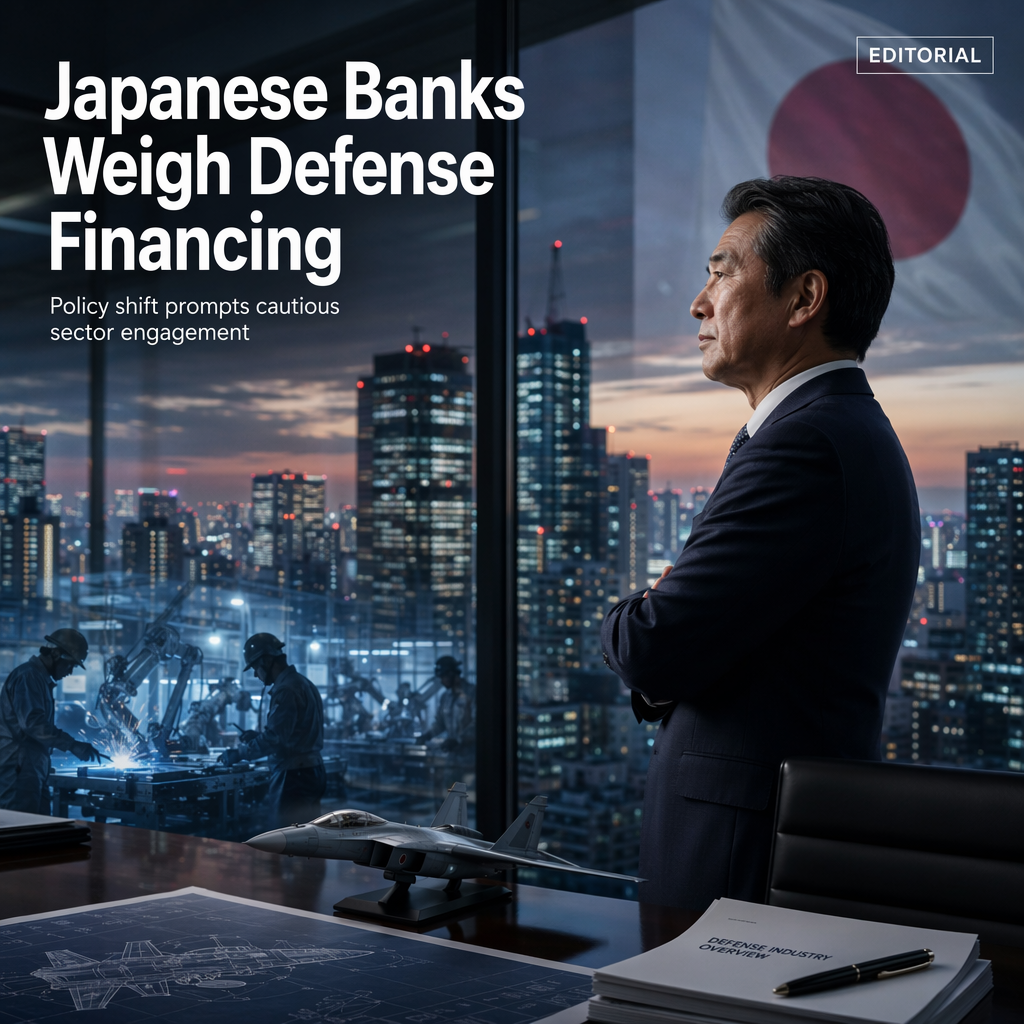
Major Japanese banks are reassessing their longstanding policy of avoiding loans to security and defense companies, prompted by heightened geopolitical risks and the Japanese government's April 2026 decision to lift the ban on exports of lethal weaponry [1]. This marks a significant departure from previous practices, where banks steered clear of financing arms makers due to ethical concerns and reputational risks [1]. The policy shift is encouraging financial institutions to consider greater involvement in the defense sector, with bank officials emphasizing that any financing decisions will be made on a case-by-case basis, taking into account risk and compliance requirements [1].
Industry observers suggest that this change could open new funding channels for Japan's defense manufacturers, potentially accelerating sector growth [1]. Enhanced access to capital may allow these companies to invest in research and development, expand production, and compete more aggressively on the international stage, according to financial analysts cited in the article [1]. A senior executive at a major bank stated, "We recognize the importance of supporting national security interests, but must ensure that our actions align with both legal and ethical standards" [1].
The April policy change is viewed as a catalyst for broader private sector engagement, with banks expected to play a key role in facilitating business deals and technological innovation within the defense industry [1]. While market sentiment is cautiously optimistic, some stakeholders remain concerned about potential reputational risks and public backlash associated with increased financing of arms makers [1].
No specific financial values, trading advice, or technical indicators are mentioned in the article [1].
CONCLUSION
Japanese banks are cautiously considering financing defense companies following a government policy shift on arms exports, signaling a potential boost for the sector. While market sentiment is optimistic about growth prospects, concerns about reputational risks persist. The move could reshape Japan's defense industry by enabling greater investment and international competitiveness.