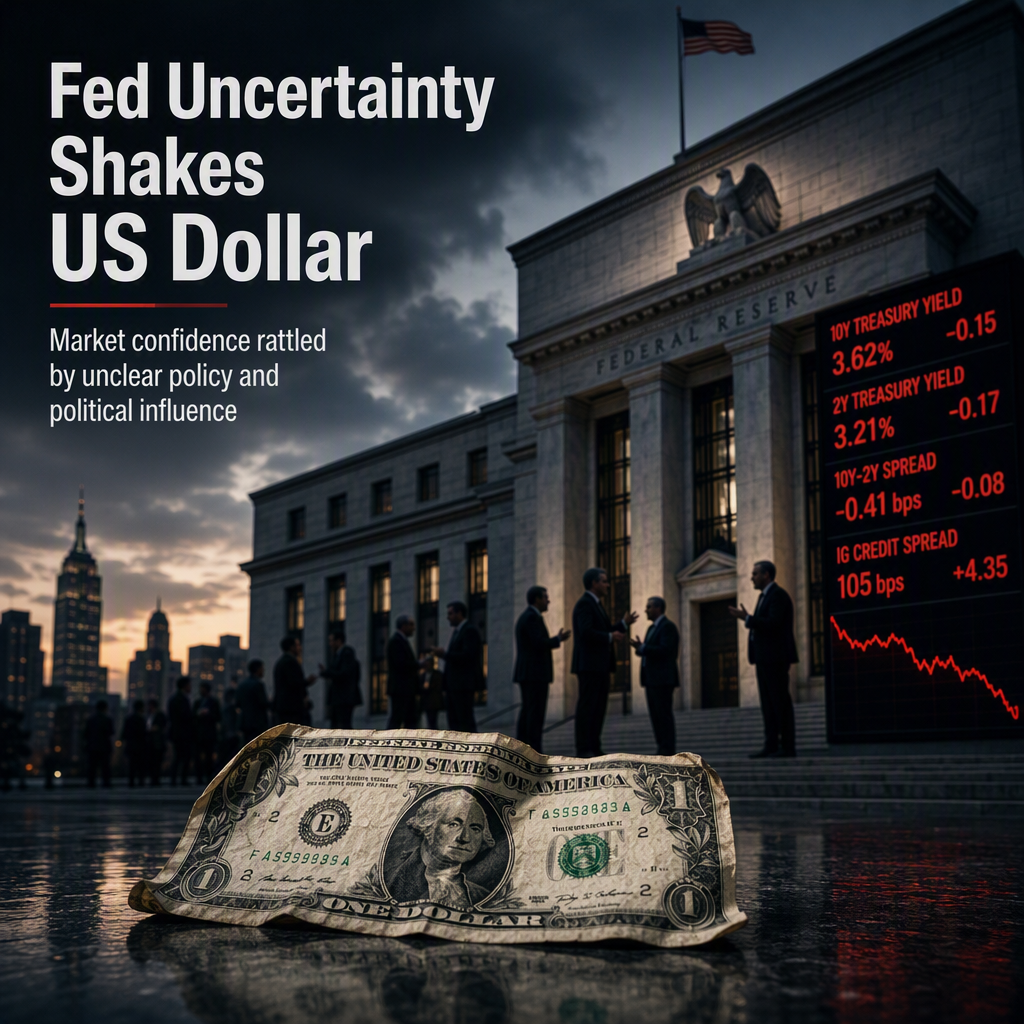
MUFG’s Derek Halpenny reports that the US Federal Reserve’s decision to hold rates steady, combined with Fed Chair Warsh’s lack of clear justification for this move, has led to a sell-off in the long end of the US Treasury bond market and a weaker US dollar [1]. Halpenny notes that Warsh spoke for approximately 45 minutes without providing a clear explanation for the FOMC’s decision to keep the key policy rate unchanged, which has contributed to market uncertainty [1].
Three possible explanations for the Fed’s stance are outlined: a potentially more laissez-faire approach from Warsh, ongoing debate within the Fed regarding the balance sheet’s stimulus effect, and the possibility that Warsh is more ideologically opposed to rate hikes than previously assumed [1]. The bond market sell-off was further exacerbated by President Trump’s comment at the end of a press conference, stating that 'Warsh would love to see lower rates,' raising concerns about political influence and divisions within the FOMC [1].
The 2s10s Treasury spread experienced its largest jump since August of the previous year, which MUFG interprets as a negative outcome for the US dollar [1]. Additionally, rising inflation expectations and questions regarding the Fed’s credibility have increased the risk of further depreciation for the dollar [1].
Investors are now facing heightened uncertainty, with the possibility of a sooner-than-expected adjustment in the Fed’s balance sheet and concerns that the Fed may fall behind the curve in responding to inflation [1].
CONCLUSION
The Federal Reserve’s lack of clarity and perceived political influence have undermined market confidence, resulting in a weaker US dollar and a significant steepening of the Treasury curve. Rising inflation expectations and doubts about Fed credibility suggest further downside risk for the dollar in the near term.