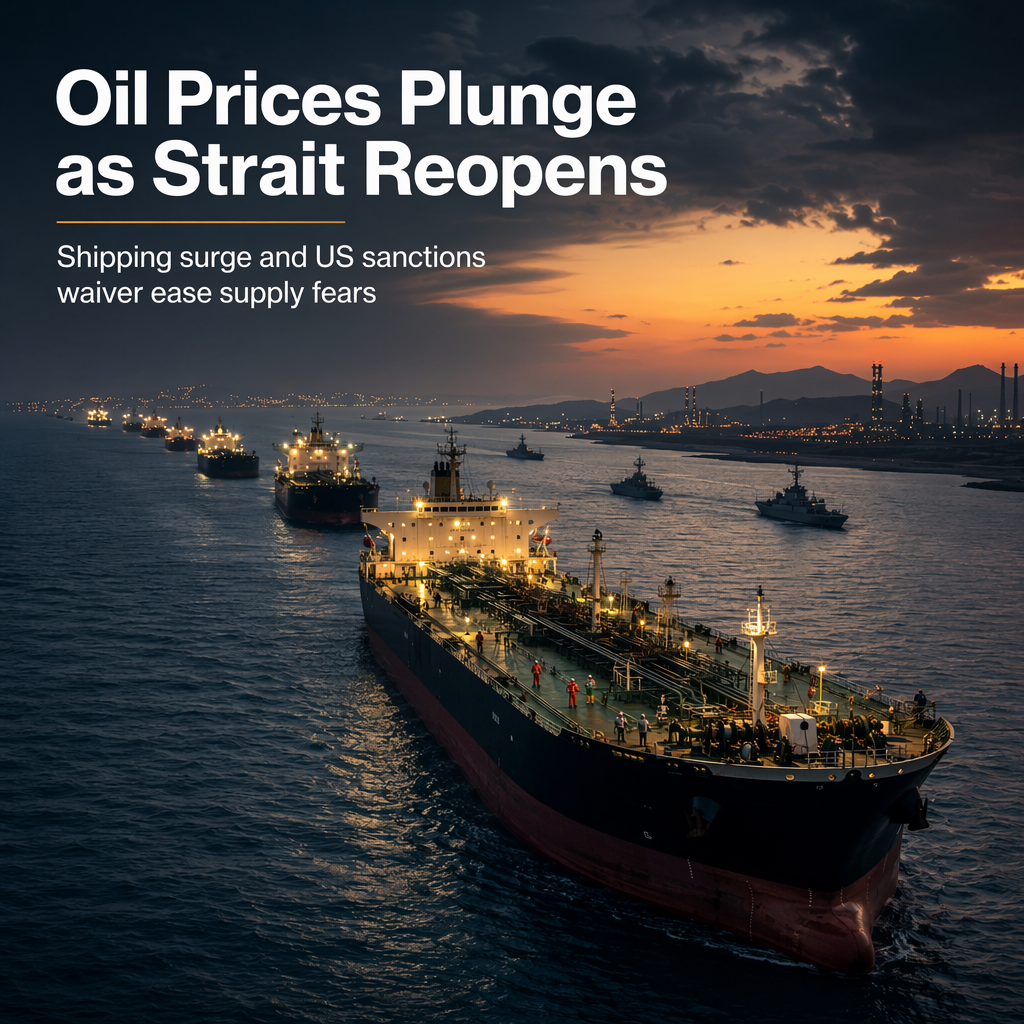
West Texas Intermediate (WTI) crude oil prices continued their downward trend, dropping below the $72.00 mark and reaching their lowest level since the US and Israel attacked Iran in late February [1]. This decline is attributed to increased shipping traffic through the Strait of Hormuz and the US government's decision to waive sanctions on Iranian crude oil during a 60-day ceasefire, which have alleviated investor concerns about ongoing nuclear inspection disputes and uncertainty surrounding the peace deal's outcome [1].
The Strait of Hormuz Live Tracker reported 39 ships crossing the waterway in the past 24 hours, a significant rise compared to pre-peace deal levels, though still well below the pre-war average of 130 vessels per day [1]. Despite US President Donald Trump and Vice President JD Vance's claims that Iran has agreed to allow International Atomic Energy Agency (IAEA) inspectors into the country, Iranian Foreign Ministry Spokesperson Esmaeil Baradei stated there is no schedule for such inspections [1].
In addition, President Trump criticized oil companies on Truth Social, accusing them of maintaining high fuel prices at the pump despite lower oil costs, and stated he has urged the Department of Justice to investigate potential unfair commercial practices [1].
CONCLUSION
WTI oil prices have fallen to multi-month lows as increased shipping through the Strait of Hormuz and a temporary US sanctions waiver on Iranian crude ease supply concerns. However, uncertainty remains regarding Iran's nuclear inspections, and political scrutiny of oil companies' pricing practices could add further volatility to the market.