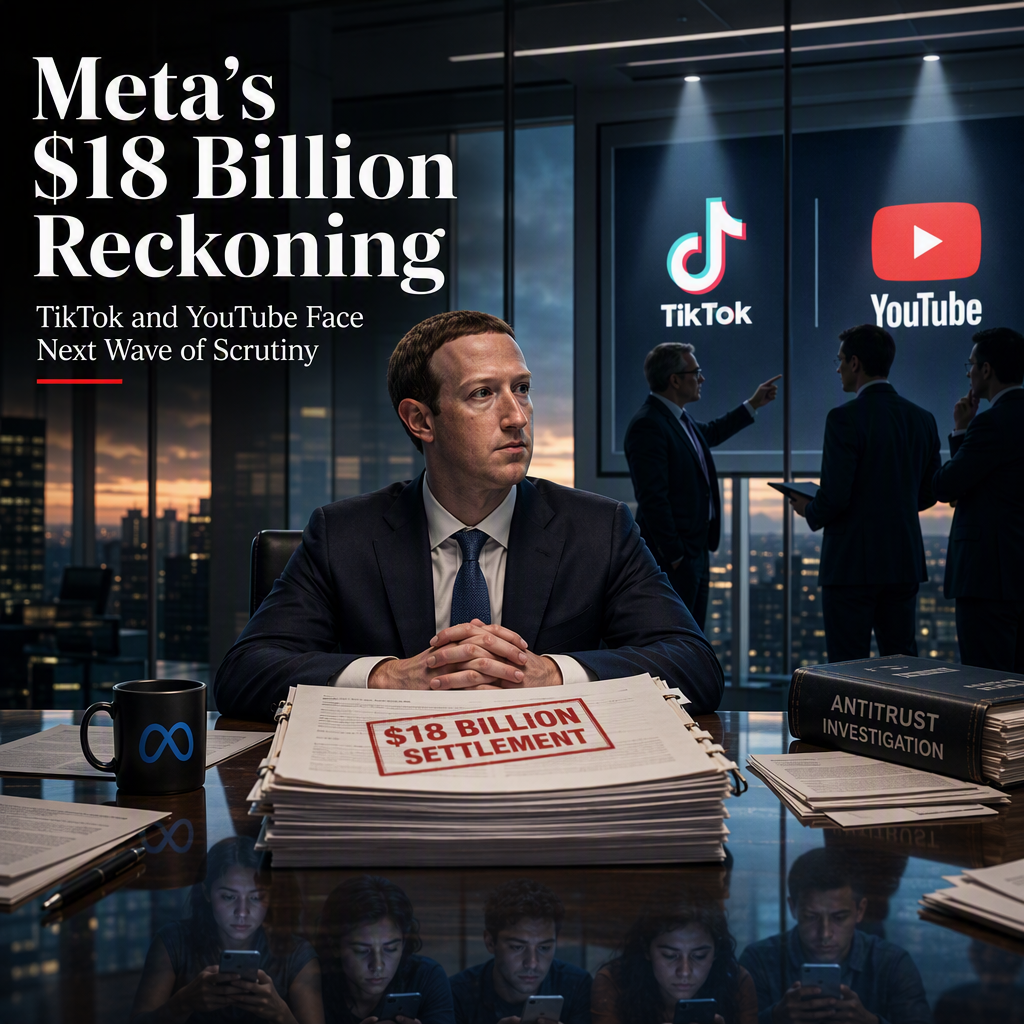
Meta has reached a landmark settlement of up to $18 billion in a social media addiction trial brought by a coalition of tens of U.S. states, which alleged that the company misled the public about the harms its platforms posed to younger users [1]. Under the terms of the agreement, Meta will pay $12.7 billion to the states over a period of 10 years, with the remaining $5.3 billion contingent upon rival platforms TikTok and Alphabet's YouTube implementing similar changes for younger users [1].
As part of the settlement, Meta has agreed to make significant changes to its platforms for users under the age of 18. These changes include a 2-hour daily usage limit that only a parent can lift, disabling extreme makeup and cosmetic surgery filters, implementing tighter age verification measures, and introducing a night mode [1]. The settlement has shifted regulatory focus to other major social media platforms, with California's Attorney General Rob Bonta stating that he plans to target other big players next, specifically naming TikTok, YouTube, and Snap [1].
Industry experts suggest that the settlement reflects a business decision about reputational risk, and that other platforms may make changes preemptively to avoid similar legal challenges. Rob Lalka, a professor at Tulane University, noted that platforms like TikTok, YouTube, and Snapchat depend on trust from parents, users, and advertisers, and are likely to consider changes to avoid facing similar lawsuits [1].
The settlement comes amid increasing global pressure on social media companies, as governments consider enforcing teen social media bans and as Meta, TikTok, YouTube, and Snap face a series of lawsuits related to the impact of their platforms on young users [1].
CONCLUSION
Meta's $18 billion settlement marks a significant regulatory turning point for the social media industry, with immediate financial and operational implications for the company. The agreement puts TikTok, YouTube, and Snap under heightened scrutiny, signaling that similar actions may soon be expected from these platforms. The market is likely to react to the increased regulatory risk and potential for further costly settlements across the sector.