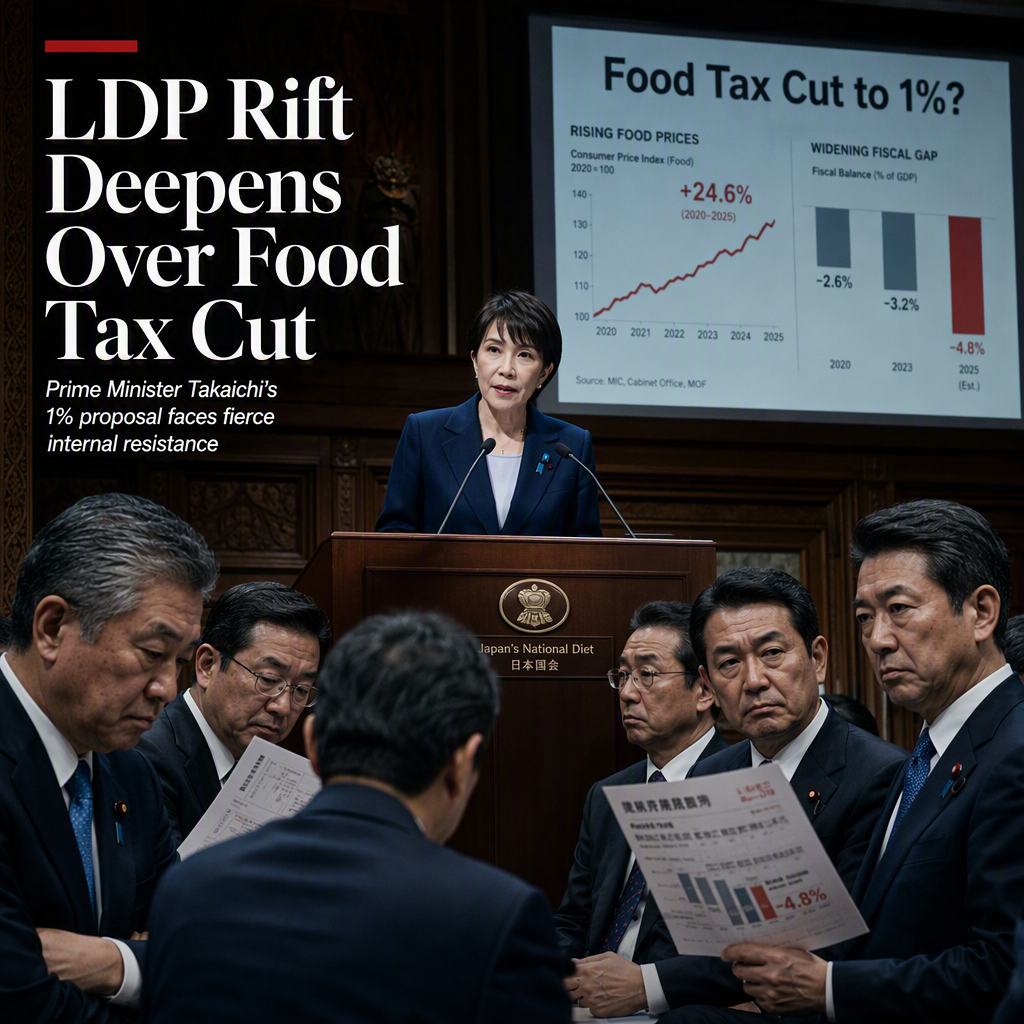
Japan's ruling Liberal Democratic Party (LDP) has postponed the approval of Prime Minister Sanae Takaichi's plan to reduce the consumption tax on food to 1%, following significant pushback from party members concerned about the proposal's fiscal implications [1]. Prime Minister Takaichi announced the tax cut plan unilaterally, without first seeking party consensus, which has caused discontent among LDP lawmakers [1].
The proposed reduction is aimed at alleviating the impact of rising inflation on Japanese households by lowering their tax burden on food purchases [1]. However, the plan is estimated to create a funding gap of approximately $30 billion, raising questions about how the government would compensate for the lost revenue [1]. Some lawmakers have warned that, without alternative funding sources, the government may eventually be forced to increase the consumption tax again, potentially negating the intended relief for consumers [1].
The debate within the LDP underscores concerns about Japan's fiscal stability, as policymakers weigh the need to address inflationary pressures against the imperative of maintaining fiscal discipline [1]. The party leadership has not reached a consensus, and discussions are ongoing as officials consider potential measures to offset the revenue shortfall or reassess the financial sustainability of the tax cut [1].
As of now, the issue remains unresolved, with the LDP leadership continuing to seek agreement among party members before any further action is taken on the proposed tax cut [1].
CONCLUSION
The LDP's internal divisions and concerns over fiscal sustainability have stalled Prime Minister Takaichi's plan to cut the food consumption tax to 1%. The outcome remains uncertain as party leaders work to build consensus and address the significant funding gap the proposal would create.