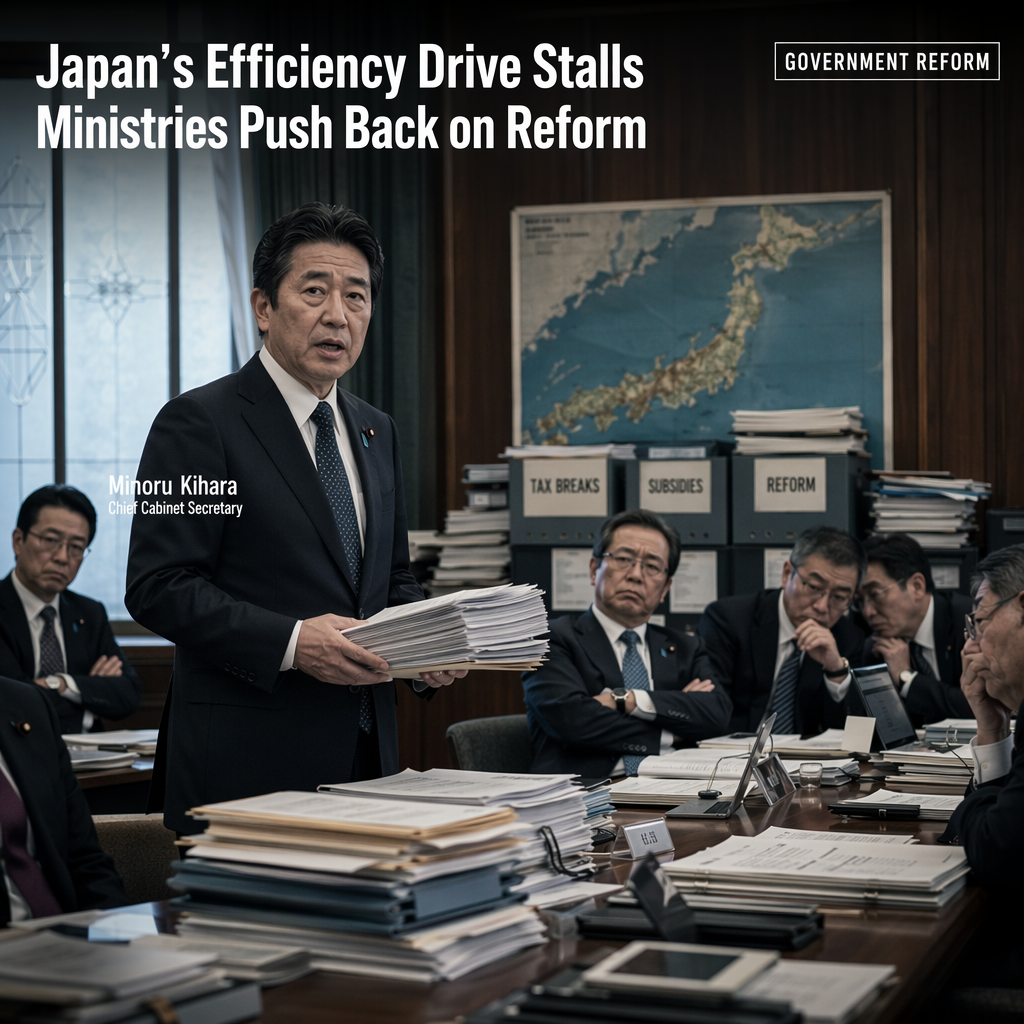
Japan's government efficiency initiative, modeled after the Trump administration's DOGE program, is encountering significant resistance from domestic ministries as it attempts to eliminate tax breaks and subsidies deemed to have limited effectiveness [1]. Out of 120 tax breaks and subsidies currently under review, only one has been identified for elimination, highlighting the limited progress made so far [1].
Chief Cabinet Secretary Minoru Kihara is leading the DOGE initiative, but has faced considerable pushback during meetings aimed at reassessing tax measures and subsidy programs [1]. The reluctance of ministries to relinquish their favored programs underscores the entrenched interests within Japan's bureaucracy and the broader challenges reformers face in achieving meaningful reductions in government spending [1].
No specific market reactions, analyst opinions, or forward-looking statements are provided in the article [1].
CONCLUSION
Japan's DOGE government efficiency push has made minimal headway, with only one out of 120 targeted tax breaks and subsidies slated for elimination. The strong resistance from ministries suggests that significant reductions in public spending remain unlikely in the near term.