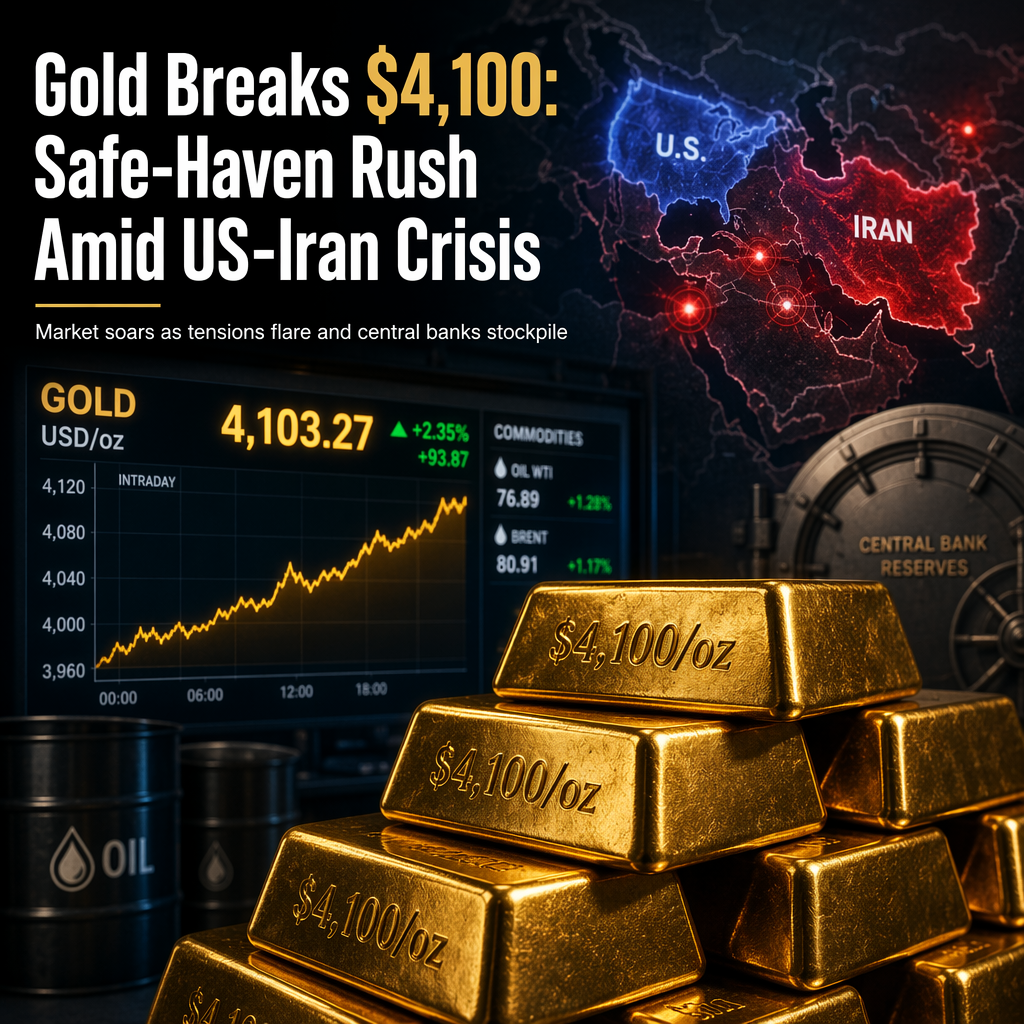
Gold price (XAU/USD) traded in positive territory around $4,125 during the early Asian session on Thursday, marking a significant rebound above the $4,100 level as buyers returned to the market [1]. The recovery in gold prices is attributed to ongoing geopolitical uncertainties, particularly the widening conflict between the United States and Iran, which has intensified safe-haven demand for the precious metal [1]. US President Donald Trump threatened to destroy Iranian infrastructure, including bridges and power plants in Tehran, in response to Iranian attacks on ships in the Strait of Hormuz. Iran, in turn, threatened to strike US-linked infrastructure and energy facilities across the region if Washington follows through on Trump's threats [1]. US Secretary of State Marco Rubio accused Iran of not being "serious" about reaching an agreement, while emphasizing Washington's commitment to diplomacy in the Middle East [1].
Ryan McKay, senior commodity strategist at TD Securities, commented that the recent rebound in gold prices appears to be "mostly flow-driven, sparked by a bit of dip-buying and sheer relief that the US$4,000-an-ounce floor held." However, McKay cautioned that this may not signal the start of a new structural trend, noting that rising energy prices could ultimately cap gold's upside [1].
On the monetary policy front, Fed funds futures traders were pricing in a nearly 34% probability of a rate hike from the Federal Reserve this month, up from 10% a week ago. Additionally, traders were pricing in a 78% chance of at least a 25 basis points rate increase in September, according to the CME FedWatch tool [1]. These expectations for higher interest rates could influence gold's trajectory, given its inverse correlation with the US Dollar and US Treasuries [1].
Central banks remain the largest holders of gold, with emerging economies such as China, India, and Turkey rapidly increasing their reserves. In 2022, central banks added 1,136 tonnes of gold worth around $70 billion to their reserves, marking the highest yearly purchase since records began, according to the World Gold Council [1].
CONCLUSION
Gold's rebound above $4,100 reflects heightened safe-haven demand amid escalating US-Iran tensions and shifting monetary policy expectations. While the relief rally is notable, analysts caution that rising energy prices and potential Fed rate hikes may limit further upside. The market remains highly sensitive to geopolitical developments and central bank activity.