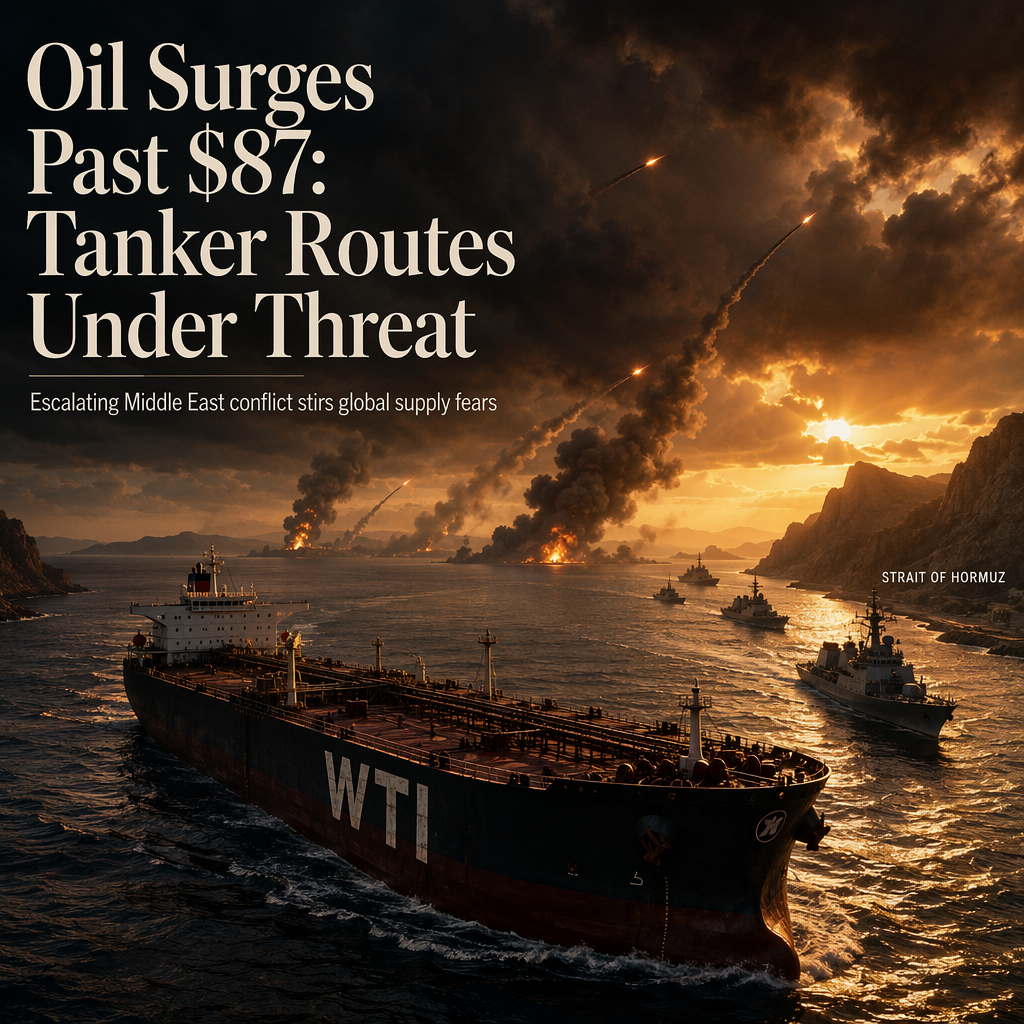
West Texas Intermediate (WTI) oil prices extended their rally for the fifth consecutive day, trading around $87.30 per barrel during Asian hours on Thursday, as escalating tensions in the Middle East fueled concerns over potential supply disruptions [1]. The surge in crude prices was driven by heightened geopolitical risks after US President Donald Trump threatened to strike Iranian infrastructure if Tehran targeted ships passing through the Strait of Hormuz. In response, Iran vowed swift retaliation against US-linked energy assets across the region [1].
Market anxiety intensified following missile and drone attacks by Iran-backed Houthi militants on two Saudi oil tankers in the Red Sea. This incident marked the first direct strikes on tankers in the waterway, threatening a crucial alternative export route for Saudi crude and opening a new front in the ongoing conflict [1]. The situation was further exacerbated as US forces completed a 12th consecutive day of strikes on Iranian targets, with both sides dismissing prospects for peace. As a result, risks to maritime shipping across both the Red Sea and the Strait of Hormuz have increased rapidly [1].
The article highlights that political instability, wars, and sanctions are significant drivers of WTI oil prices, as they can disrupt supply and impact market dynamics. The current escalation in the Middle East underscores the vulnerability of key oil transit chokepoints, amplifying fears of widespread supply disruptions and supporting higher oil prices [1].
CONCLUSION
WTI oil prices have surged above $87 per barrel amid escalating Middle East tensions and direct attacks on Saudi oil tankers, raising fears of significant supply disruptions. The market is reacting strongly to the heightened geopolitical risks, with key shipping routes facing increased threats and no immediate prospects for de-escalation.