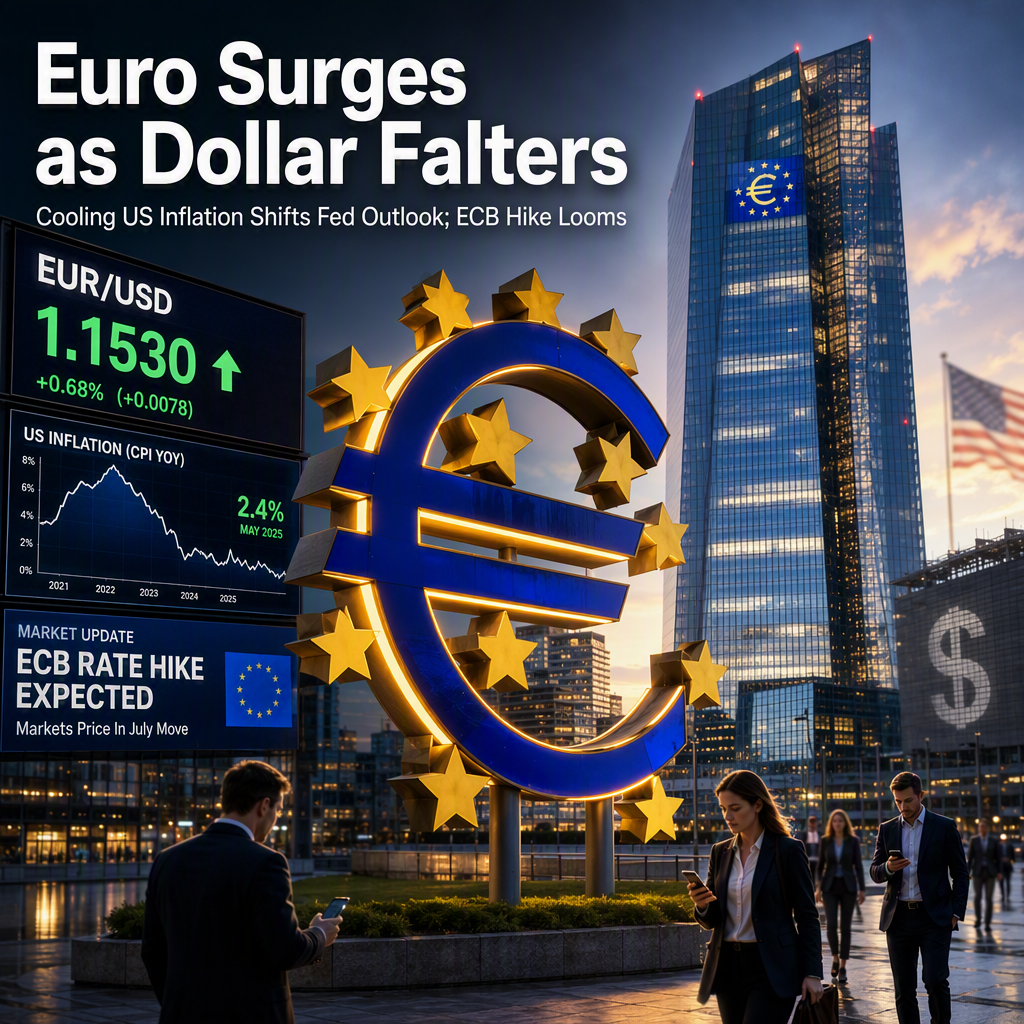
The Euro advanced against the US Dollar, with EUR/USD trading around 1.1530 during Asian hours on Thursday, as the US Dollar weakened following the release of July's Consumer Price Index (CPI) report [1]. The Bureau of Labor Statistics reported that headline CPI increased 3.4% year-over-year in July, down from 3.5% previously, while core CPI rose 2.5% year-over-year compared to 2.6% in June; both figures matched market expectations [1]. Month-over-month, headline CPI rose 0.1%, with energy prices (gasoline -3% m/m) and slowing food inflation contributing to the modest increase [1].
The cooling inflation data led to a shift in market expectations regarding future Federal Reserve policy. According to the CME FedWatch tool, interest-rate swaps now price in a roughly 40.1% chance of a rate hike in September, while the odds for an October move fell to about 60% from 75% the previous day. The next potential rate increase is not fully priced in until December [1].
Despite the Euro's gains, upside momentum for EUR/USD may be limited by escalating geopolitical tensions between the US and Iran, with no progress reported in reviving the interim deal or establishing an implementation timeline [1].
In the Eurozone, the macroeconomic outlook remains supportive of the European Central Bank's (ECB) hawkish stance. Market-based inflation expectations for the Euro Area over the next year are around 2.4%, above the ECB’s 2% target, while actual Eurozone inflation edged up to 2.9% in July. The region's economy expanded by 0.4% in Q2, the strongest pace since early 2025, leading analysts to be optimistic about growth prospects. Investors fully expect the ECB to deliver another 25-basis-point rate hike in September, although near-term growth may moderate before regaining momentum [1].
CONCLUSION
Cooling US inflation has weakened the US Dollar and boosted the Euro, with markets adjusting expectations for future Fed rate hikes. Meanwhile, the Eurozone's resilient economic data and persistent inflation above target support expectations for an ECB rate hike in September. Geopolitical tensions and near-term growth moderation may temper further Euro gains.