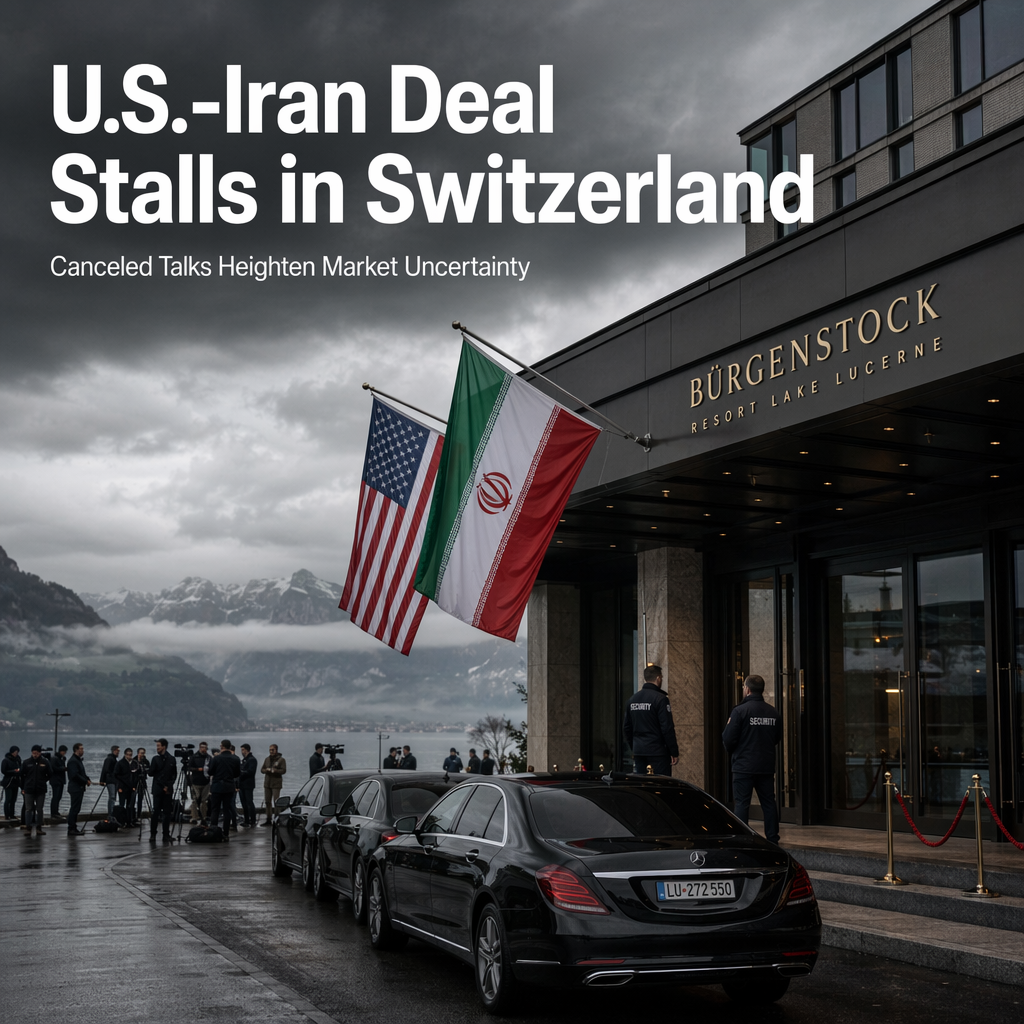
The interim agreement between the United States and Iran, which was signed by President Donald Trump and Iranian President Masoud Pezeshkian, has encountered early challenges after follow-up talks in Switzerland were canceled on June 19, 2026 [1]. The Swiss foreign ministry confirmed that the U.S.-Iran talks scheduled at Bürgenstock would not proceed as planned, and the White House announced that Vice President JD Vance would no longer travel to Switzerland due to unresolved logistical issues surrounding the negotiations [1].
Analysts emphasized that the agreement is only the first step toward a broader settlement, with several unresolved issues remaining. UBS noted that the deal marks the beginning rather than the end of efforts to end the war and address Iran's nuclear capabilities [1]. Adel Abdel Ghafar of the Australian Strategic Policy Institute highlighted ongoing concerns, such as Israel's campaign in Lebanon, warning that failure to resolve these could lead to renewed conflict, despite both sides currently seeking to avoid escalation [1].
The initial announcement of the deal brought some relief to markets, particularly by easing disruptions in the Strait of Hormuz, where shipping had been affected by Iranian attacks and a U.S. Navy blockade under President Trump [1]. This easing could benefit oil-importing economies by lowering oil prices, potentially containing inflation and reducing pressure on central banks to raise interest rates, according to David Roche of Quantum Strategy [1].
However, Roche also criticized the agreement, arguing that it strengthens Iran's position in the Gulf and limits external interference in its domestic affairs, which could lead to greater instability in the Middle East over the long term. He further stated that Israel is unlikely to accept the deal and predicted that Iran would not abandon its nuclear ambitions [1].
CONCLUSION
The cancellation of follow-up talks in Switzerland has cast doubt on the durability of the U.S.-Iran interim agreement, highlighting persistent challenges and unresolved issues. While the deal has provided some short-term market relief, analysts warn of significant long-term risks and instability in the region.