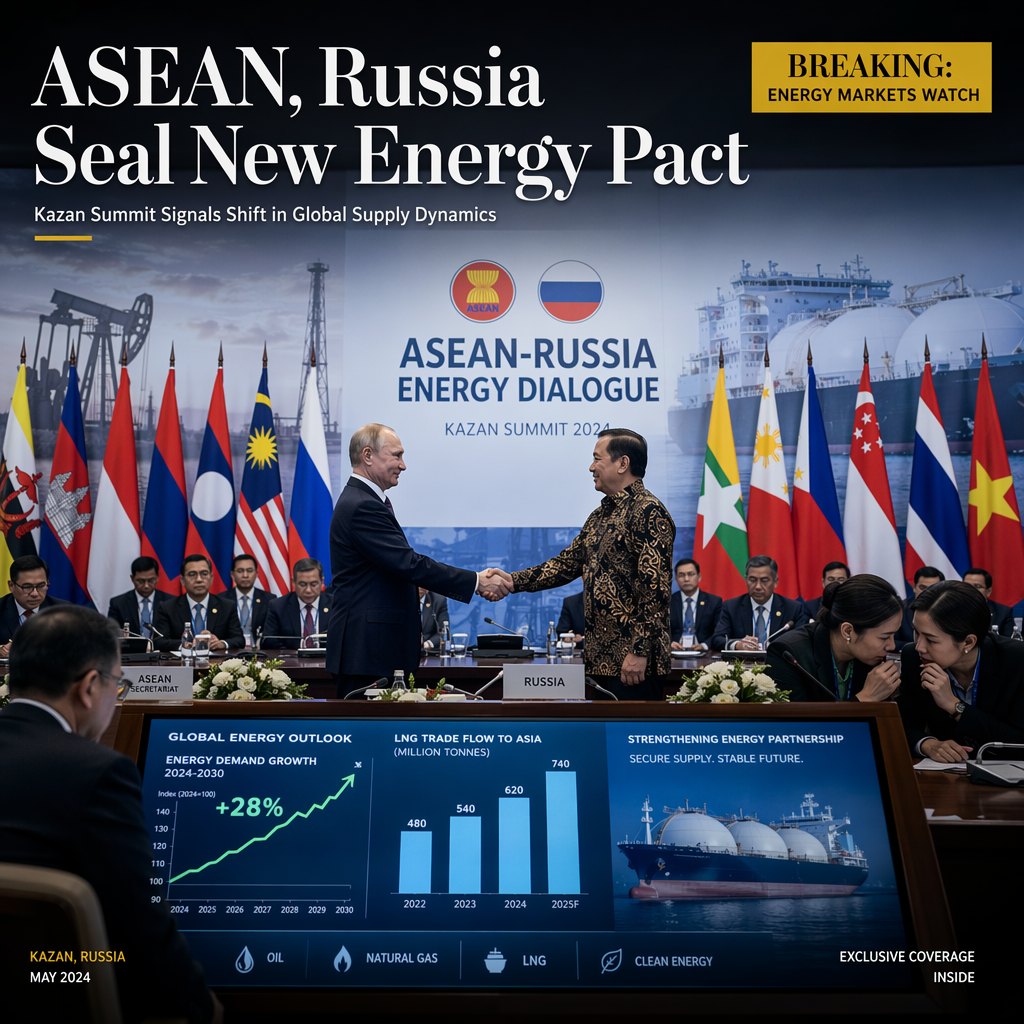
Leaders from the Association of Southeast Asian Nations (ASEAN) and Russia concluded their first in-person summit in eight years on July 18, 2026, in Kazan, Russia, with Moscow pledging to deepen energy integration with the region. Russian President Vladimir Putin used the summit to demonstrate Russia's ongoing diplomatic engagement, countering perceptions of isolation by Western governments. The summit's focus on energy was particularly significant for Southeast Asia, which has been severely affected by recent volatility in global energy supply and pricing [1].
Russia proposed several initiatives to strengthen energy ties, including joint ventures in oil and gas, increased shipments of liquefied natural gas (LNG), and expanded collaboration on renewable energy technologies. ASEAN leaders stressed the importance of diversifying energy sources and ensuring stable supply lines, with summit discussions covering potential investments, technical partnerships, and strategies to mitigate the impact of global conflicts on regional energy security [1].
Although no specific financial values or trading advice were disclosed, market analysts noted that the summit signals a shift in geopolitical energy alliances, which could influence global energy flows and pricing dynamics in the coming months. Key statements from both sides emphasized the urgency of addressing price volatility and supply shortages, given the region's heavy reliance on imported energy for economic stability and growth [1].
While technical chart analysis and support/resistance levels were not discussed publicly, market sentiment in Southeast Asia's energy sector is expected to remain cautious but optimistic as negotiations for new deals and partnerships proceed in the aftermath of the summit [1].
CONCLUSION
The ASEAN-Russia summit in Kazan marks a significant step toward deeper energy cooperation, with both sides prioritizing long-term stability and diversification. While concrete financial details remain undisclosed, the event is expected to influence regional and global energy dynamics, fostering cautious optimism in Southeast Asia's energy markets.