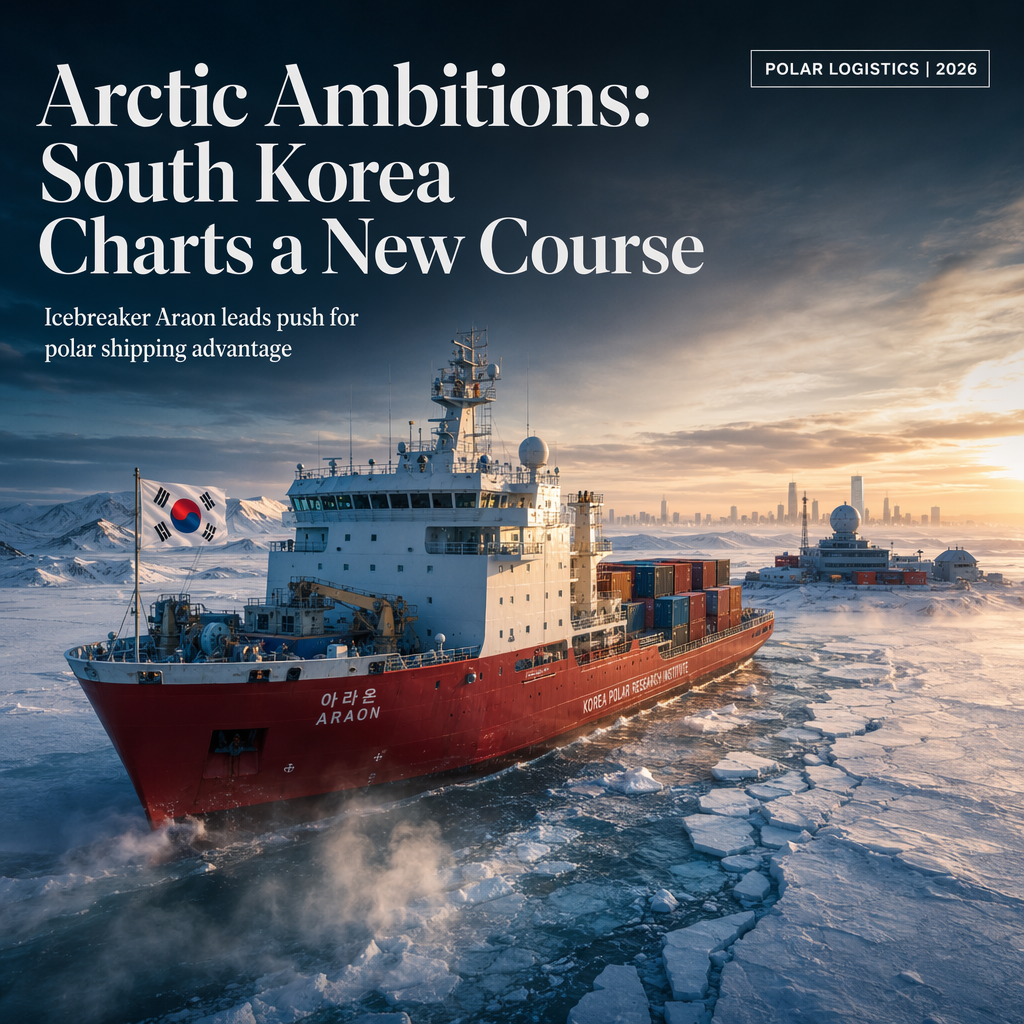
South Korea is advancing its ambitions in polar logistics with the Korea Polar Research Institute's icebreaker Araon embarking on its 17th Arctic voyage on July 11, 2026. The Araon, which can carry approximately 45 standard shipping containers, is also tasked with resupplying South Korea's Antarctic research stations, highlighting its dual role in both research and logistics operations [1].
President Lee is actively promoting Busan as a polar hub, a strategic move designed to revitalize South Korea's shipping sector. The initiative focuses on leveraging new Arctic shipping routes, which are expected to significantly reduce transit times to Europe and North America. This reduction in transit time could lower operational costs and enhance the competitiveness of South Korea's shipping industry [1].
The deployment of the Araon is part of broader government efforts to strengthen the nation's economic position by capitalizing on emerging polar trade routes. This move not only aims to boost the shipping and shipbuilding sectors but also underscores South Korea's ambition to expand its influence in polar logistics and research [1].
While the article does not provide specific market reactions or analyst opinions, the emphasis on strategic positioning and cost reduction suggests a positive outlook for the shipping sector if these initiatives succeed [1].
CONCLUSION
South Korea's push to utilize Arctic shipping routes represents a strategic effort to enhance the competitiveness of its shipping industry and position Busan as a key polar logistics hub. The success of these initiatives could lower costs and strengthen the nation's economic standing in global trade.