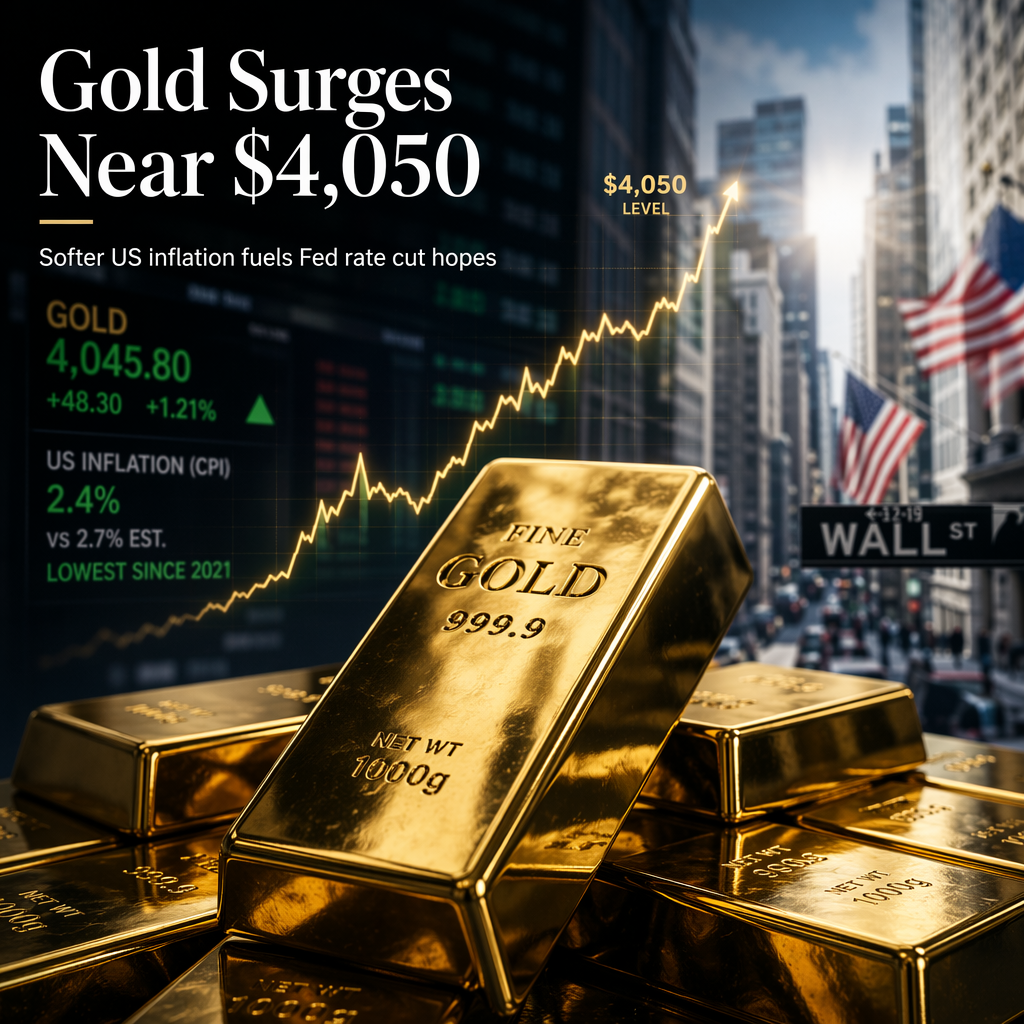
Gold prices (XAU/USD) climbed to around $4,050 during the early Asian session on Wednesday, following the release of softer-than-expected US inflation data. The US Bureau of Labor Statistics reported that the Consumer Price Index (CPI) inflation eased to 3.5% year-over-year in June, down from a three-year high of 4.2% in May and below the market consensus of 3.8%. On a monthly basis, the headline CPI declined by 0.4% in June, compared to a 0.5% increase in May. The core CPI, which excludes volatile food and energy prices, remained unchanged month-over-month and rose 2.6% year-over-year, lower than the 2.9% increase in May and the expected 2.8% rise [1].
The softer inflation data prompted traders to exit bets on a Federal Reserve rate hike at its July 28-29 meeting, providing support for gold prices. Tai Wong, an independent metals trader, commented, "Gold gallops higher on a surprisingly subdued CPI report that saw headline dive lower but more importantly, core unchanged versus 0.2%. This should drop rate hike expectations sharply at least for the July and September meetings" [1].
Despite the positive momentum for gold, concerns remain that oil-driven inflation could lead the US central bank to keep interest rates elevated for a longer period, which may weigh on non-yielding assets such as gold. Additionally, geopolitical tensions have escalated, with US Central Command (CENTCOM) forces launching additional strikes against Iran to degrade capabilities used to attack commercial shipping in the Strait of Hormuz. Iran’s Foreign Ministry spokesperson, Esmaeil Baghaei, condemned the US military’s attack on a ranger post in Hormozgan as "the latest example of America’s heinous war crimes" [1].
CONCLUSION
Gold prices surged on the back of softer US inflation data, which reduced expectations for imminent Federal Reserve rate hikes. While the immediate market reaction was positive for gold, ongoing inflation concerns and geopolitical tensions could influence future price movements.