
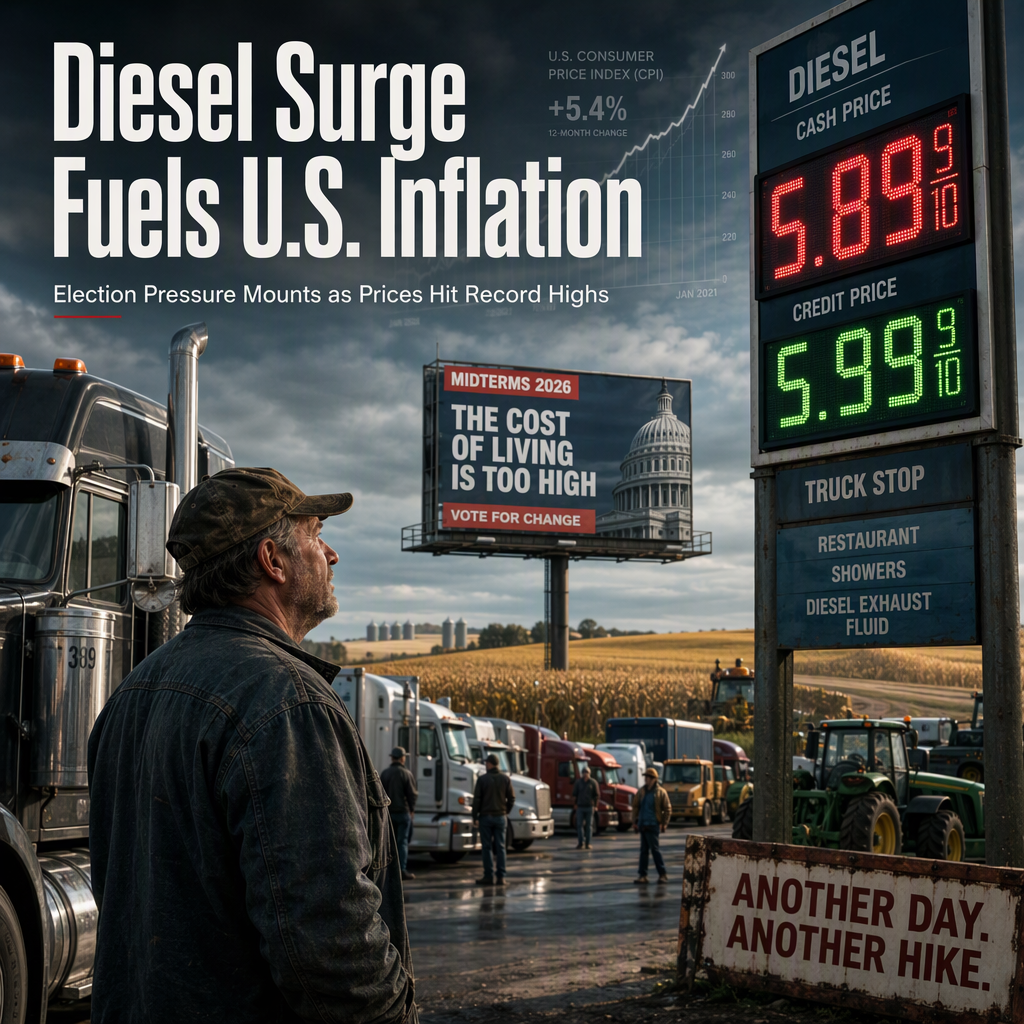
Diesel prices in the United States have surged more than 75% since the onset of the Iran war in late winter, fueling inflation and causing widespread concern among economists and policymakers [1]. Diesel, a critical fuel for farmers and truckers, has seen its costs trickle down into nearly every sector, intensifying the inflationary pressures faced by businesses and consumers [1]. The Bureau of Labor Statistics is scheduled to release its September consumer price index report, with economists surveyed by Dow Jones expecting the annual inflation rate to rise to 3.7% from 3.4% [1]. The anticipated monthly increase of 0.6% from August to September would mark one of the largest jumps in years [1].
Oil prices have also climbed sharply, rising from about $80 per barrel in August to over $105 per barrel, while regular gasoline prices remain elevated by more than 45% since late February, coinciding with the start of the Iran war [1]. These price hikes have disproportionately impacted agricultural states such as Kansas, Iowa, and Texas, where Democrats are outperforming in Senate races by focusing their campaigns on the high cost of living [1].
In response to mounting public pressure, President Donald Trump has enacted several policy measures to curb fuel prices, including urging G7 allies to release more diesel stocks, permitting broader use of tax-free diesel, and negotiating a deal with Russian President Vladimir Putin to release diesel supplies and ease export restrictions [1]. However, these actions have yet to significantly lower prices and have sparked global backlash, particularly after Trump eased some sanctions on Russia to facilitate the diesel deal [1].
Despite inflationary pressures and wage growth lagging behind at 3% as of September, consumers continue to spend at a steady pace, according to CEOs of major U.S. banks [1]. Citigroup's CEO noted that, "While various headwinds, most recently higher energy prices, and tighter monetary policies have been challenging, the global economy has held up remarkably well in the U.S." [1].
CONCLUSION
Diesel price increases are a major driver of U.S. inflation, with significant impacts on both businesses and consumers. Policy interventions have so far failed to curb rising costs, and the upcoming inflation report is expected to show further acceleration. The situation is creating political and economic challenges as the midterm elections approach.