
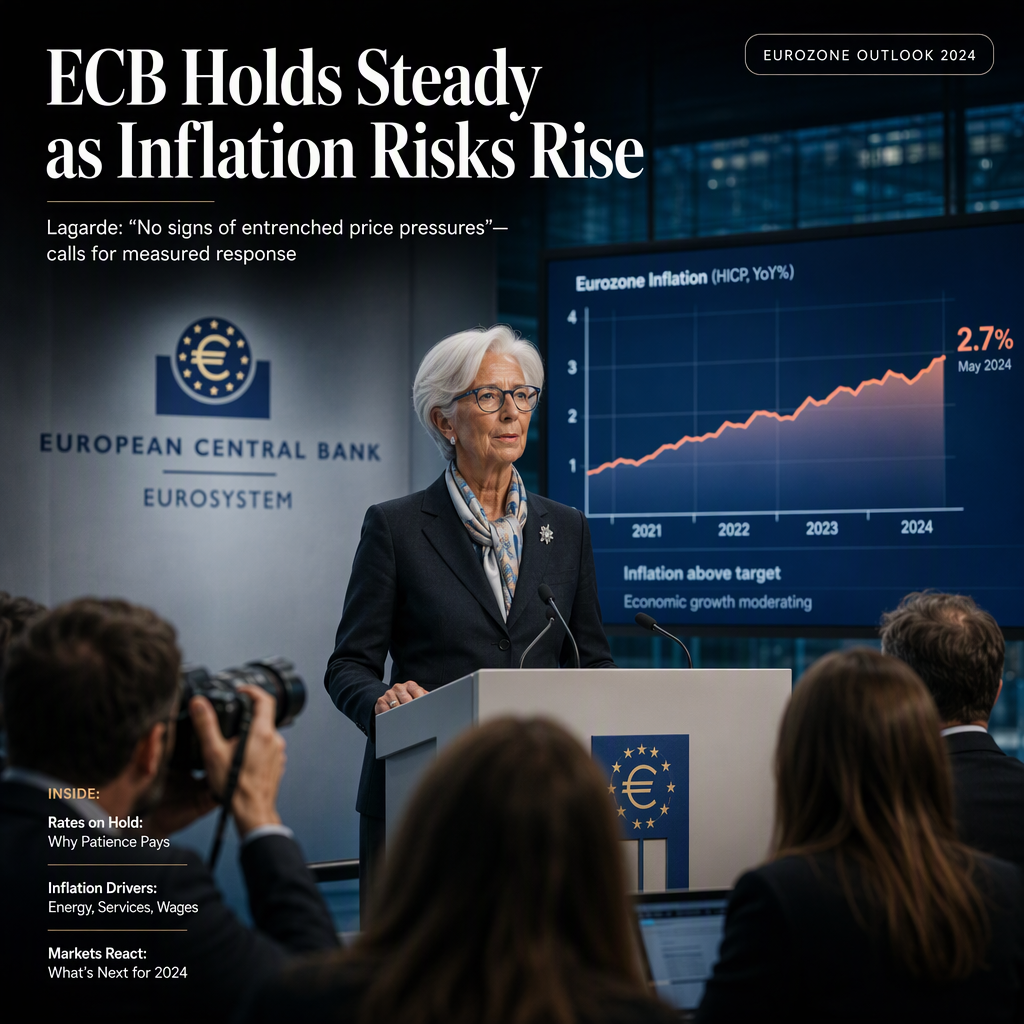
European Central Bank (ECB) President Christine Lagarde stated on Monday that the eurozone economy continues to expand broadly across countries and sectors, with manufacturing and the labor market remaining robust [1]. Despite this resilience, Lagarde warned that inflation is projected to be higher in 2027 and 2028 than previously anticipated, signaling a worsening inflation outlook for the bloc [1]. She emphasized that, although inflationary pressures are rising, there is currently no evidence that these price pressures are becoming embedded in the economy [1].
Lagarde highlighted that major technological advancements have not reduced employment, but noted that the impact of artificial intelligence remains uncertain at this stage [1]. She also acknowledged that the economic outlook is surrounded by high uncertainty, reinforcing the need for cautious policy decisions [1].
In response to these developments, Lagarde reiterated the ECB's commitment to a 'middle path' for monetary policy, as outlined earlier this year. She explained that while the inflation shock is too significant to ignore, a measured policy response is deemed appropriate to keep inflation in check [1]. No specific forward-looking statements or analyst opinions were provided beyond Lagarde's remarks [1].
CONCLUSION
The ECB, under Lagarde's leadership, is maintaining a cautious and measured approach to monetary policy amid expectations of higher inflation in the coming years. While the eurozone economy remains resilient, the central bank is not seeing signs of entrenched inflation, opting for a balanced response to ongoing uncertainties. This stance suggests continued vigilance but no immediate drastic policy shifts.