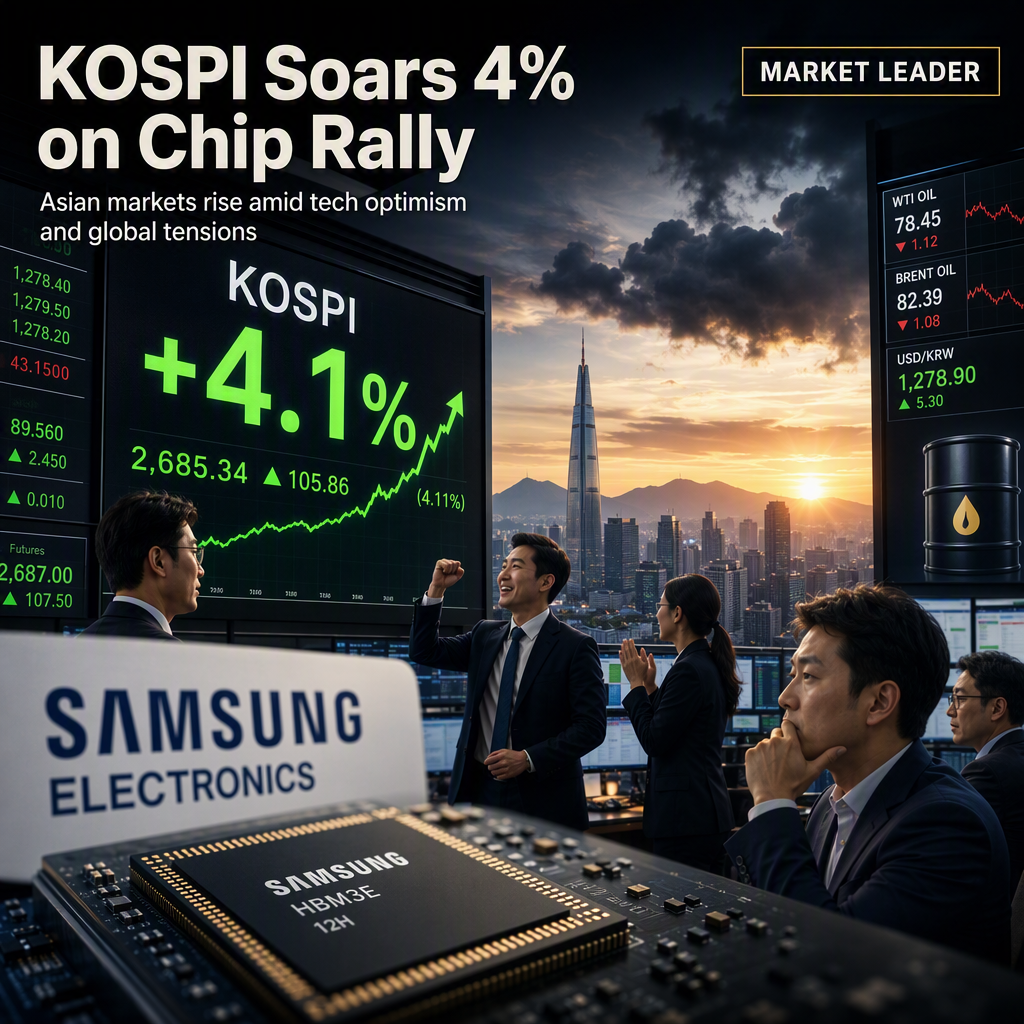
Asian stock markets traded with a mixed but positive bias on Monday, largely driven by optimism surrounding a new OpenAI model that is expected to boost demand for memory chips. This sentiment followed a rally in US semiconductor and memory stocks on Friday, which improved broader sector confidence [1]. South Korea’s benchmark KOSPI led regional gains, climbing over 4% to top 6,950 and marking its third consecutive day of advances. Key contributors to the rally included Samsung Electronics, SK Hynix, SK Square, and Hyundai Motor. The surge was underpinned by robust economic fundamentals, with South Korea’s exports reaching a record $709.4 billion year-to-date, surpassing its 2025 total, and semiconductor exports jumping 169.6% from January to August [1].
Japan’s Nikkei 225 rose 1.85% above 66,200, while the Topix gained 0.48% past 4,100, extending gains for a second day thanks to tech heavyweights like Kioxia Holdings and SoftBank Group. Despite the positive momentum, traders remained cautious, pricing in a potential September rate hike by the Bank of Japan to address persistent inflation and currency weakness [1].
Chinese markets showed a split performance: the Shanghai Composite dipped 0.24% toward 3,920, while the Shenzhen Component jumped over 2% above 13,800. In a significant move to bolster credit growth and strengthen balance sheets, China announced a CNY 300 billion ($45 billion) injection into its largest financial institutions, marking its biggest sector recapitalization in nearly two decades. Meanwhile, Hong Kong’s Hang Seng Index fell roughly 1% to near 25,400, weighed down by declines in financial, technology, and energy shares [1].
Broader market caution persisted after strong US jobs data reinforced expectations of a Federal Reserve rate hike in September. August Nonfarm Payrolls rose by 162,000, far exceeding the 56,000 forecast, while the unemployment rate held steady at 4.1% and annual wage growth slowed less than anticipated to 3.1%. The CME FedWatch tool indicated a 58.3% probability of a 25-basis-point Fed rate increase in September. Additionally, rising crude oil prices fueled concerns about renewed inflationary pressures, following a geopolitical escalation between the US and Iran over the weekend. The US targeted three Iranian tankers in response to missile attacks on its warships, prompting Tehran to establish a new restricted zone around the Strait of Hormuz [1].
CONCLUSION
Asian markets showed mixed reactions, with South Korea’s KOSPI leading gains on strong semiconductor optimism and export data, while caution prevailed due to US rate hike expectations and geopolitical tensions. China’s major recapitalization and rising oil prices added to the complex market landscape. Overall, sentiment remains positive but guarded as traders weigh sector momentum against macroeconomic and geopolitical risks.