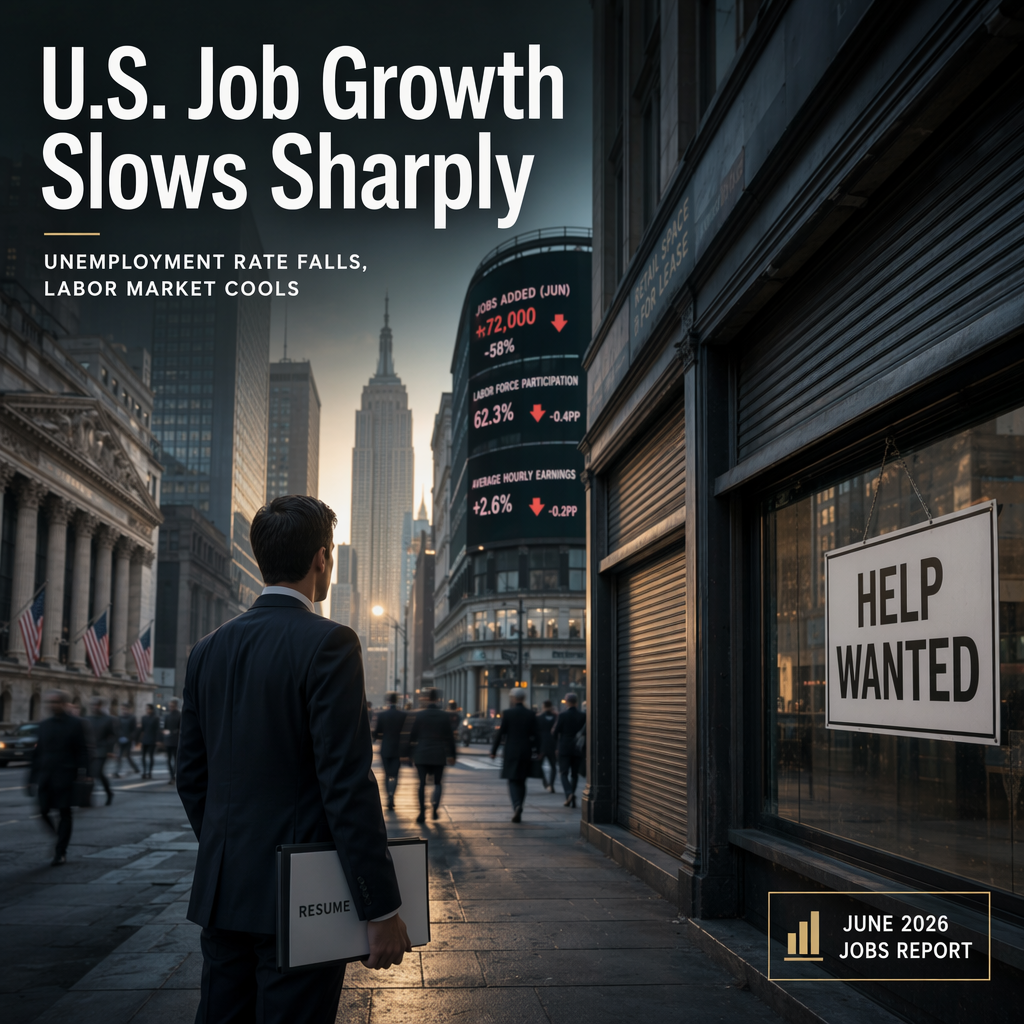
The U.S. economy added 57,000 jobs in June 2026, a figure that fell significantly short of economists' expectations, with estimates ranging from 110,000 (LSEG) to 115,000 (Dow Jones) jobs added for the month [1][2]. The unemployment rate declined to 4.2%, which was below the consensus estimate of 4.3% and slightly higher than the 4.1% rate recorded a year earlier [1][2]. The drop in the unemployment rate was attributed in part to a 0.3 percentage point decrease in the labor force participation rate, which fell to 61.5%, its lowest level since March 2021 [2]. Household employment saw a sharp decline, with 507,000 fewer people reported at work in June [2].
Significant downward revisions were made to previous months' payroll data. April's job gains were revised down by 31,000 to 148,000, and May's were cut by 43,000 to 129,000, resulting in a combined reduction of 74,000 jobs for those two months [1][2]. Private payrolls increased by 49,000 in June, well below the LSEG estimate of 110,000, while government payrolls grew by 8,000 [1]. The manufacturing sector added 3,000 jobs, matching economist expectations [1]. Sector-specific data from June showed professional and business services leading with a gain of 36,000 jobs, followed by social assistance (+25,000) and health care (+22,000), though health care's growth was slower than usual [2]. Leisure and hospitality, however, lost 61,000 jobs, a decline attributed to slower-than-usual seasonal hiring, despite earlier speculation that the World Cup might boost payrolls by 40,000 jobs according to Goldman Sachs [2].
Average hourly earnings rose by 0.3% for the month and 3.5% year-over-year, both in line with consensus forecasts [2]. A broader measure of unemployment, which includes discouraged workers and those working part-time for economic reasons, fell by 0.2 percentage point to 7.9% [2].
The weaker-than-expected jobs report, combined with downward revisions to prior months, highlights a cooling labor market and could influence Federal Reserve policy discussions in the coming weeks [1][2]. Federal Reserve policymakers have expressed mixed views, with Chairman Kevin Warsh describing the jobs picture as "steady" while emphasizing the need to bring inflation down to the central bank's 2% target [2]. Inflation has remained above this target for the past five years, with recent surges attributed in part to the Iran war and ongoing tariffs [2]. Markets currently expect the Fed to hold rates steady through the summer, but there is a solid chance of a quarter-point rate hike in September, though Warsh has avoided providing forward guidance on future policy moves [2].
CONCLUSION
The June 2026 jobs report revealed a marked slowdown in U.S. job growth, with both headline figures and sector data coming in below expectations and prior months revised downward. The cooling labor market, combined with persistent inflation concerns, is likely to weigh on Federal Reserve policy decisions and market sentiment in the near term.