
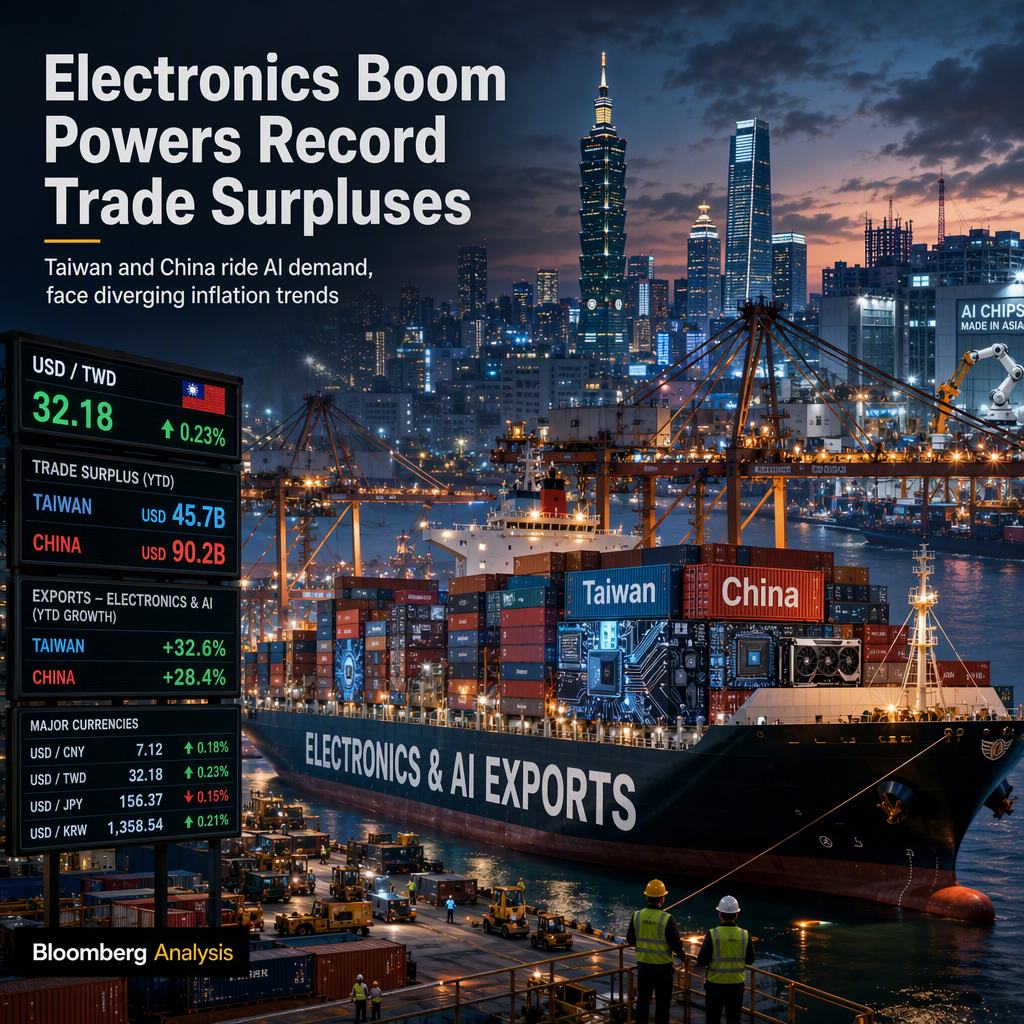
Taiwan posted a record trade surplus of USD23.6bn in September, surpassing the Bloomberg consensus of USD19.0bn and up from USD22.3bn in August, according to Commerzbank analysts. This surge was fueled by a 60.9% year-on-year increase in exports, attributed to strong AI-related demand. The cumulative trade surplus for January to September reached USD160.6bn, already exceeding the full-year 2025 surplus of USD157.1bn. The Central Bank of the Republic of China (CBC) may adopt a more hawkish stance if the current inflation uptrend continues, with inflation averaging 1.9% from January to September and rising to 2.7% year-on-year in September. In the foreign exchange market, USD/TWD rose 0.3% to 31.90, influenced by broad USD strength, higher oil prices, and significant foreign portfolio outflows, as foreign investors were net sellers of USD2.6bn in Taiwanese equities—the largest daily outflow in nearly a month. The CBC disclosed FX intervention in September, possibly selling up to USD1.1bn, which may cap further upside in USD/TWD [1].
Meanwhile, DBS Group Research reports that China’s exports are expected to grow 25.7% year-on-year in September, supported by strong electronics demand and improving manufacturing PMIs. Both the official and Caixin manufacturing PMIs rose above the 50 expansion threshold, indicating strengthening manufacturing activity. External trade indicators also improved, with average daily deadweight tonnage at China's 20 major ports accelerating from -0.7% year-on-year in August to 7.2% in September. International cargo flight growth also rebounded from -1.4% to 3.6% year-on-year. On the pricing front, factory-gate and raw material prices increased amid geopolitical tensions, with main raw material purchasing price and producer price subPMI rising from 56.6 and 50.4 to 60.8 and 54.0, respectively. However, consumer price inflation is expected to remain subdued, with CPI inflation forecast to edge up from 0.8% in August to 1.0% in September due to soft domestic demand [2].
Both Taiwan and China are experiencing robust export growth, particularly in electronics and AI-related sectors, which is reflected in their strong trade surpluses and improving manufacturing indicators. While Taiwan faces upward inflationary pressure and potential central bank tightening, China’s consumer price inflation remains moderate despite rising input costs. Market reactions in Taiwan included a modest rise in USD/TWD and significant foreign equity outflows, while no specific market reaction was mentioned for China [1][2].
CONCLUSION
Taiwan and China both reported strong trade performance in September, driven by electronics and AI demand. Taiwan’s record surplus and rising inflation may prompt a more hawkish central bank stance, while China’s export growth is accompanied by moderate consumer inflation. These developments highlight the resilience of regional trade but also signal diverging inflationary pressures and policy outlooks.