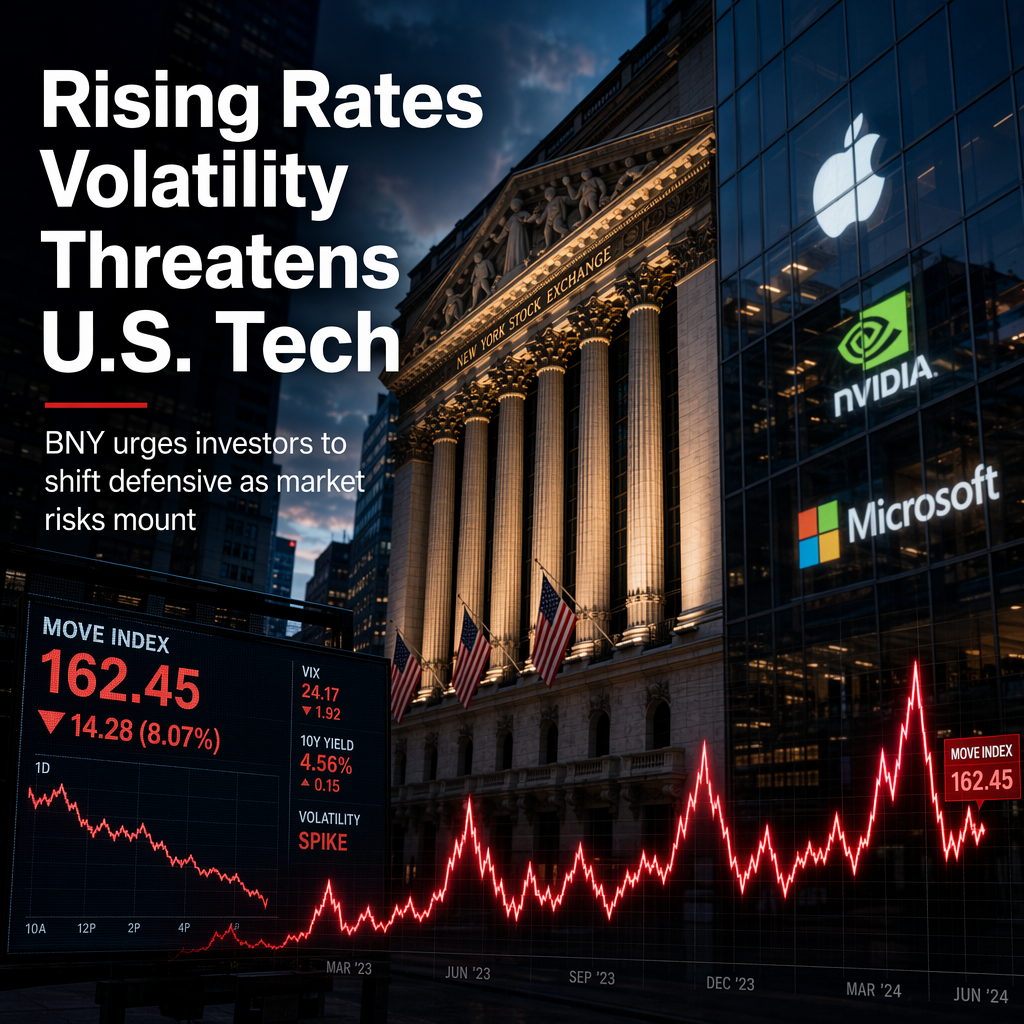
BNY strategist David Tam has cautioned that a renewed increase in rates volatility, as measured by the MOVE Index, poses a significant risk to U.S. equities, especially within the technology and growth sectors [1]. Tam highlights that since 2023, and more recently since 2025, rates volatility has become much more consequential for equity markets than in previous years [1]. The S&P 500 has exhibited a strong negative correlation of approximately -84% with rates volatility, as measured by the MOVE Index [1]. This pronounced negative correlation is also evident in the Nasdaq (-83%), tech (-82%), and semiconductor (-73%) segments, indicating that these areas are reacting more strongly to bond market volatility than many investors may have anticipated [1].
Tam advises investors to take proactive measures in response to this environment. He suggests expanding risk budgets, reducing overall equity exposure, and shortening the equity duration of portfolios by adjusting sector allocations or shifting size/style emphasis [1]. Furthermore, Tam recommends favoring defensive sectors, particularly those with large cash reserves and consistent all-market revenue, as these are likely to be more resilient if rates volatility increases further [1].
The strategist warns that if rates volatility rises from current levels, market leadership could shift rapidly, and portfolios heavily concentrated in growth stocks could experience sharper swings than investors have recently become accustomed to [1].
CONCLUSION
BNY's analysis underscores the heightened sensitivity of U.S. equities, especially technology and growth stocks, to rates volatility. Investors are urged to reassess their portfolios, reduce exposure to riskier segments, and consider defensive sectors to mitigate potential market swings.