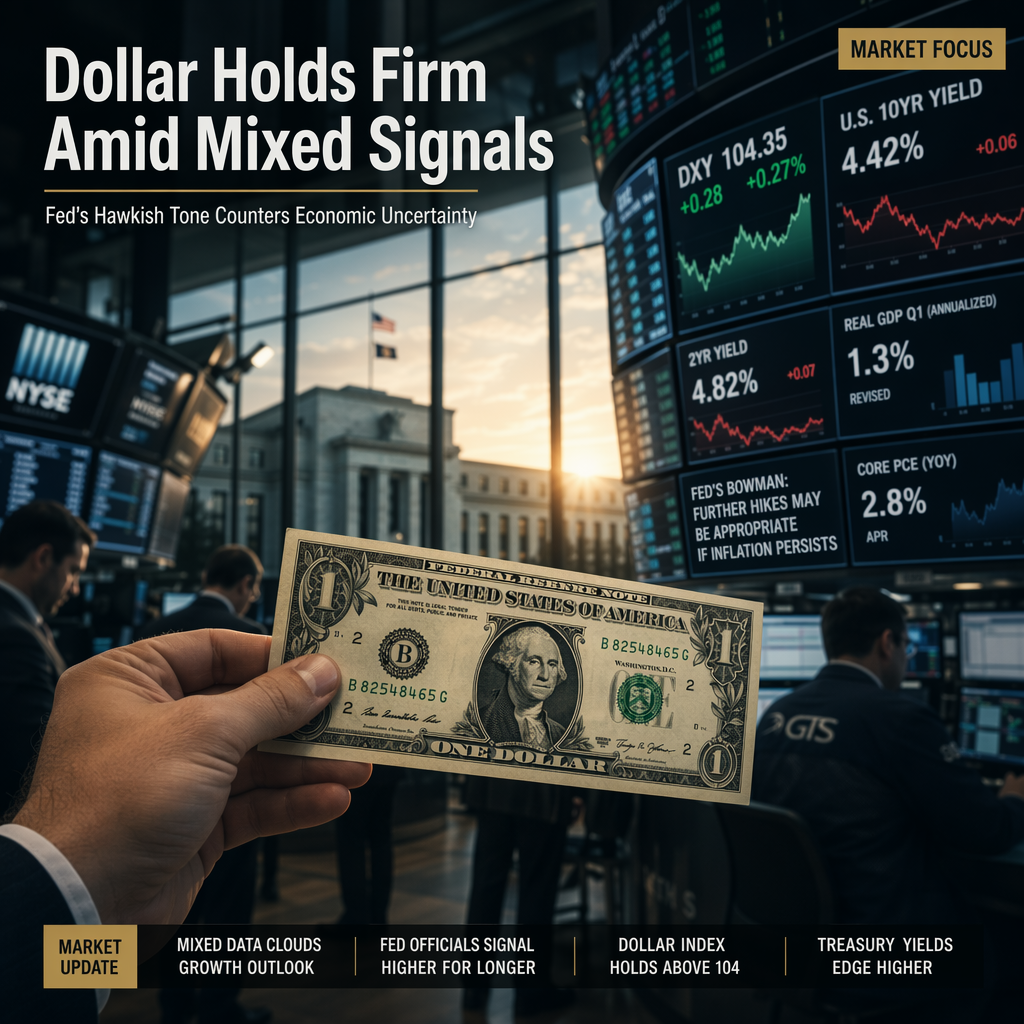
The US Dollar Index (DXY) remained resilient on Wednesday, trading around 101.35–101.38, after having touched a more than one-year high of 101.80 last week [1][2]. This stability came as traders digested a combination of weaker-than-expected US economic data and hawkish remarks from Federal Reserve Chair Kevin Warsh at the ECB Forum in Sintra. Warsh emphasized, "We're not going to give forward guidance," and reaffirmed the Fed's commitment to restoring price stability, noting that "inflation risks have come down" [1][2]. He also opposed inflation exceeding the 2% goal and described the labor market as stable [2].
US economic data released Wednesday was mixed. The ADP Employment Change report showed private payrolls increased by 98K in June, missing expectations of 113K and down from 122K in May [1][2][3]. The ISM Manufacturing PMI also disappointed, easing to 53.3 in June from 54 in May, below forecasts of 54, though it remained above the 50 threshold, indicating continued expansion in factory activity [1][2][3]. The ISM Prices Paid Index, a measure of inflation in manufacturing, fell to 73 from 82.1, suggesting some cooling in price pressures [2][3]. Additionally, Challenger Job Cuts in June decreased by 53% from 97,006 to 45,849, with total announced job cuts for the year at 443,604, 40% less than the same period last year [2].
Despite the mixed data, the US Dollar initially faced modest selling pressure but recovered as Warsh's comments reinforced expectations of a potential rate hike later this year. The CME FedWatch Tool indicated markets are pricing in a 67% probability of a rate hike at the September meeting [1]. The Dollar was the strongest against the Euro, gaining 0.36% on the day [1]. Meanwhile, the Japanese Yen traded near a 40-year low against the Dollar, with USD/JPY hovering around 162.50. The Yen's weakness persisted despite Japan's Tankan Large Manufacturing Index reaching its highest level in eight years and inflation expectations remaining above the Bank of Japan's 2% target, supporting the case for further BoJ rate hikes [3].
Gold (XAU/USD) surged nearly 2% to $4,083, despite the strong Dollar and steady US Treasury yields, as risk-off sentiment and mixed US data drove demand for safe-haven assets [2]. The geopolitical risk premium for gold eased somewhat following the signing of a Memorandum of Understanding between the US and Iran, with talks resuming in Doha, Qatar [2].
Looking ahead, market participants are focused on Thursday's US Nonfarm Payrolls report, with expectations for a 110K increase in jobs and the unemployment rate to remain at 4.3% [2]. Analysts note that the labor market's trajectory will be key in shaping the Fed's monetary policy outlook [1][2][3].
CONCLUSION
The US Dollar remains supported by hawkish Fed rhetoric and safe-haven demand, despite mixed economic data. Market attention now turns to the upcoming Nonfarm Payrolls report, which is expected to provide further direction for both the Dollar and broader risk sentiment. The interplay between labor market data and central bank policy remains the primary driver for currency and commodity markets in the near term.