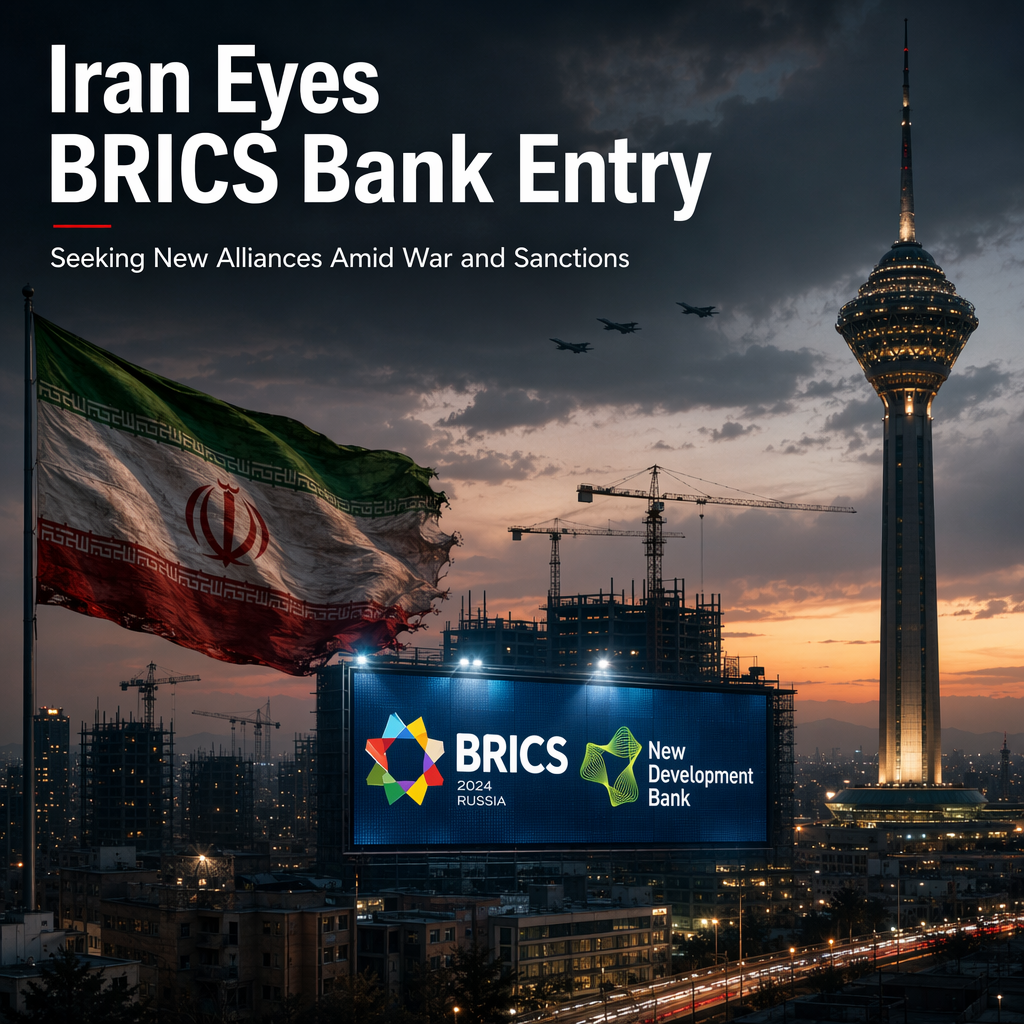
Iran is preparing to join the BRICS New Development Bank (NDB), according to Abdolnasser Hemmati, governor of the Central Bank of Iran, as the country aims to strengthen its economic alliances nearly six months into its war with the U.S. and Israel [1]. Hemmati announced Iran's intention to become a member of the NDB while in India ahead of the upcoming BRICS Summit, stating, "We are seeking to establish bilateral and trilateral monetary cooperation with member states" [1].
The BRICS alliance, originally formed in 2006 by Brazil, Russia, India, and China, with South Africa joining in 2010, has expanded to include Iran, Egypt, Ethiopia, Saudi Arabia, the UAE, and Indonesia, with other nations such as Belarus, Cuba, and Nigeria joining as partner countries [1]. The NDB was established to mobilize resources for infrastructure and sustainable development projects in emerging markets and developing countries [1].
A spokesperson for the NDB told CNBC that the bank cannot confirm information regarding Iran's membership at this time, noting that NDB membership is open to United Nations members and that Uzbekistan was the most recent country to join on June 5, 2026 [1]. Iran would need to complete the NDB's accession process before becoming an official member, with current prospective members including Uruguay, Colombia, Ethiopia, Angola, and Zimbabwe [1].
If Iran joins the NDB, it would become eligible to seek financing for projects in sectors such as transport, sanitation, digital infrastructure, and urban development [1]. Iran's access to international capital has been severely limited by longstanding sanctions, particularly from Western financial institutions, and the ongoing war has further pressured its economy, resulting in surging inflation, plummeting growth, and a depreciating currency [1]. U.S. President Donald Trump has threatened to impose 25% tariffs on goods imported to the U.S. from any country that purchases goods or services from Iran, labeling BRICS policies as "anti-American" [1]. China remains Iran's largest trading partner, having purchased more than 80% of Iran's shipped oil in 2025, though it is unclear if this relationship has changed since the war began [1].
CONCLUSION
Iran's potential accession to the BRICS New Development Bank represents a strategic move to access alternative financing and strengthen economic ties amid severe Western sanctions and ongoing conflict. However, the process is not yet confirmed by the NDB, and U.S. threats of tariffs could further complicate Iran's international trade relationships. The market impact is medium, with significant implications for Iran's economic outlook and regional alliances.