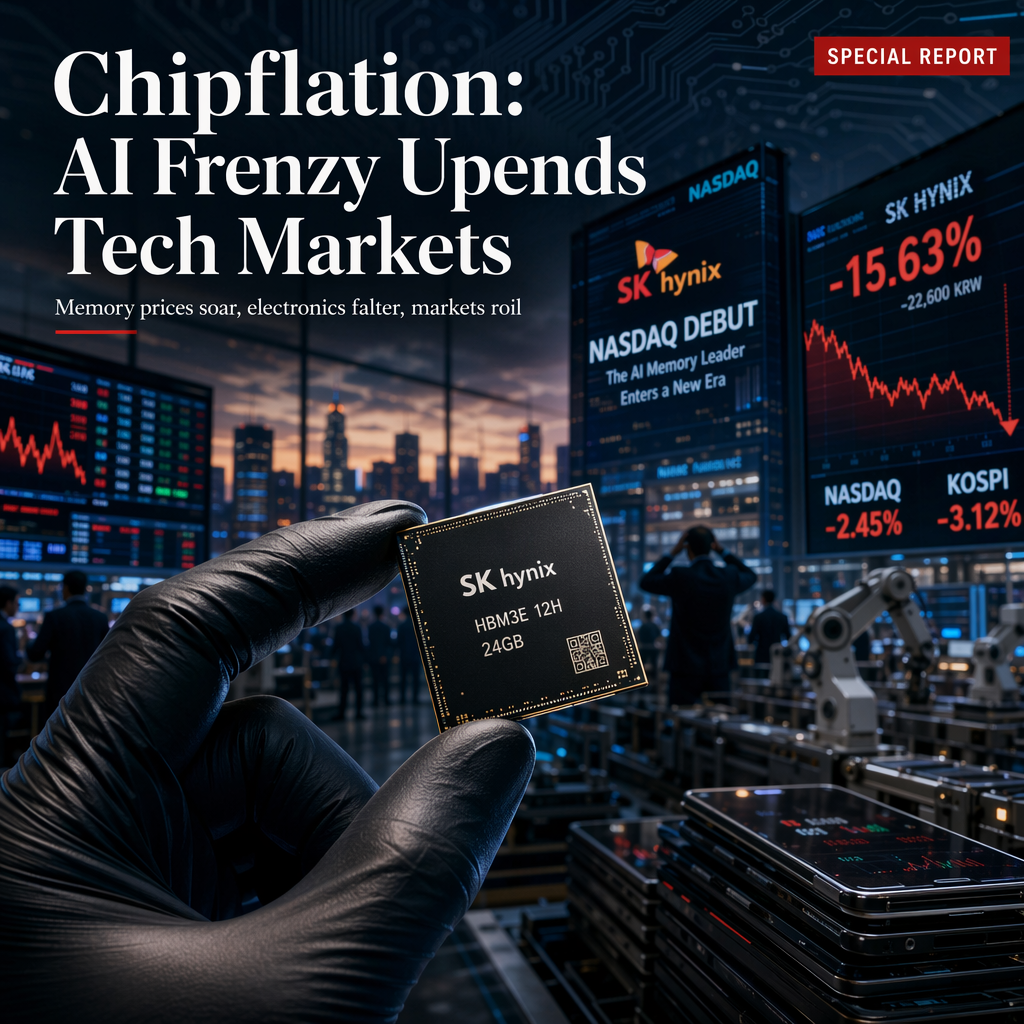
The global surge in artificial intelligence investment has triggered a phenomenon dubbed 'chipflation,' characterized by a sixfold increase in memory chip prices, which is significantly raising the cost of consumer electronics such as smartphones and computers [1]. This price escalation has led to a projected decline of 200 million units in combined shipments of these devices, marking a record drop in sales [1]. Analysts warn that unless supply stabilizes or AI hardware demand slows, elevated chip prices are likely to persist, impacting both manufacturers and consumers [1].
The semiconductor sector is witnessing unprecedented investment, with SK Hynix raising $26.5 billion in the US through its Nasdaq listing, and South Korea announcing a $520 billion chip plant project involving Samsung and SK Hynix [1][3]. Despite SK Hynix's successful Nasdaq debut, its shares closed down more than 15% on Monday, following an initial 13% rise on its first trading day [3]. This sharp decline has weighed on the broader KOSPI index, reflecting investor concerns that the memory chip industry's uptrend may have peaked [3].
In Japan, the impact of soaring AI-related stocks is reshaping the equities market. The Topix index is set to have significantly fewer components as small- and midcap shares are pushed out by structural reforms and the surging market capitalizations of memory chip maker Kioxia Holdings and Murata Manufacturing [2]. At one point in 2026, Kioxia Holdings' market cap was more than 10 times its value in late 2025, underscoring the transformative effect of AI-driven demand on market structure [2].
Market sentiment is mixed, with optimism about AI's growth offset by concerns regarding consumer demand and the sustainability of elevated chip prices [1][3]. Trading advice from analysts suggests caution in electronics and semiconductor equities due to heightened input costs and potential for reduced shipment volumes [1]. Technical indicators point to continued upward momentum in chip prices, but warn of possible corrections if supply catches up or demand moderates [1].
CONCLUSION
The AI-driven surge in memory chip prices is causing significant disruptions across electronics and equity markets, with record declines in device shipments and volatility in semiconductor stocks. While massive investments signal long-term industry commitment, recent market reactions highlight investor caution and uncertainty about the sustainability of current valuations. The reshaping of indices and persistent chipflation suggest ongoing challenges for manufacturers, investors, and consumers.