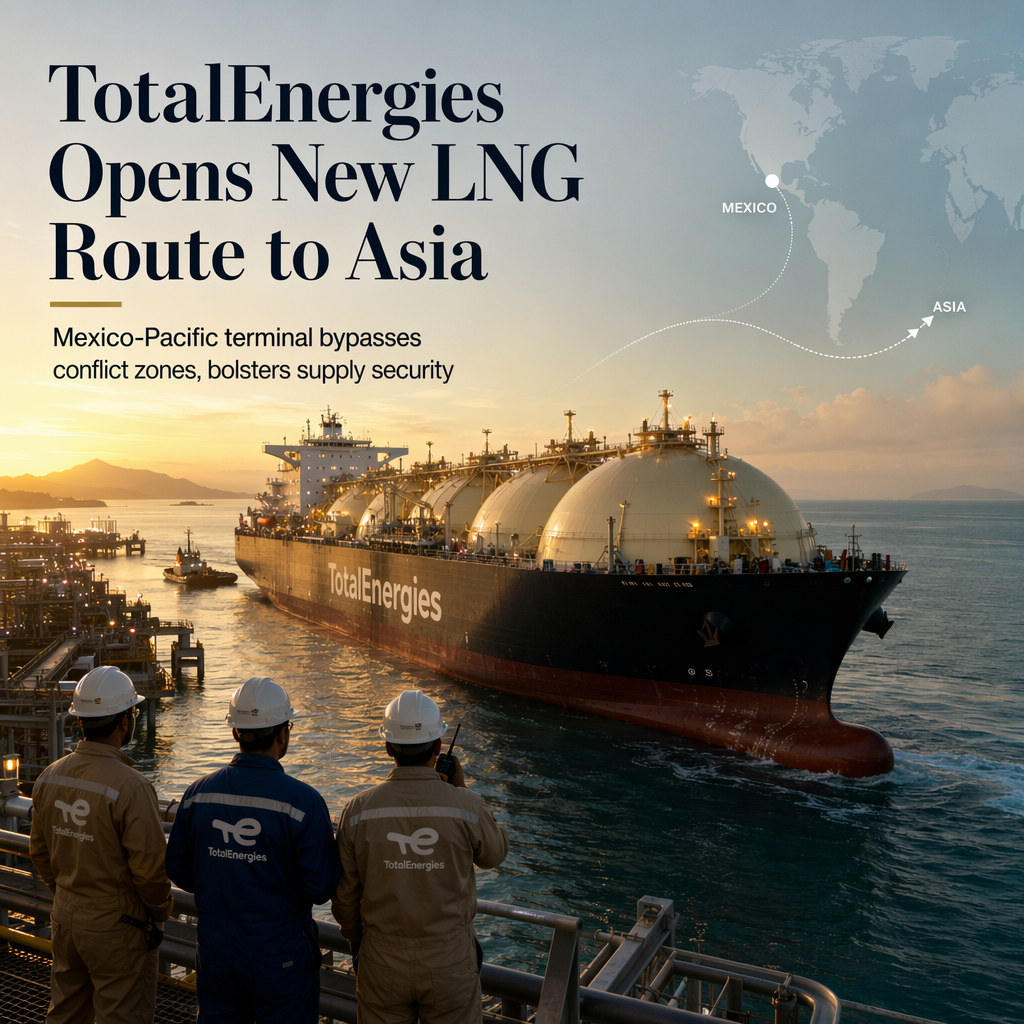
French energy company TotalEnergies has completed its first shipment of liquefied natural gas (LNG) from a newly constructed export facility on Mexico's Pacific coast to Asia, marking a significant milestone in global energy logistics [1]. This development comes as Asian markets seek alternative supply routes that avoid chokepoints such as the Strait of Hormuz, which has experienced blockages and disruptions due to the Iran war [1]. The new Mexican terminal is strategically positioned to provide a safer and more reliable supply path, reducing reliance on routes vulnerable to geopolitical instability [1].
Market participants in Asia have responded positively to the news, emphasizing that the diversification of supply routes can help stabilize LNG prices and ensure more predictable deliveries amid ongoing volatility caused by regional conflicts [1]. Industry analysts note that LNG prices in Asia have remained slow to normalize, despite diplomatic efforts and production restarts in Qatar, highlighting the importance of new export facilities like the one in Mexico [1]. The Pacific coast location of the terminal enables direct access to Asian markets, bypassing traditional routes threatened by conflict [1].
TotalEnergies' move is seen as part of a broader industry trend, with energy companies increasingly investing in diversified export infrastructure to secure uninterrupted supply to key markets [1]. The shipment from Mexico is the first of its kind, and further cargoes are anticipated as Asian demand for LNG continues to rise amid persistent geopolitical uncertainty [1].
CONCLUSION
TotalEnergies' inaugural LNG shipment from Mexico to Asia represents a strategic step toward enhancing energy security and supply stability for Asian markets. The new route is expected to mitigate risks associated with traditional chokepoints and support price stabilization in the region.