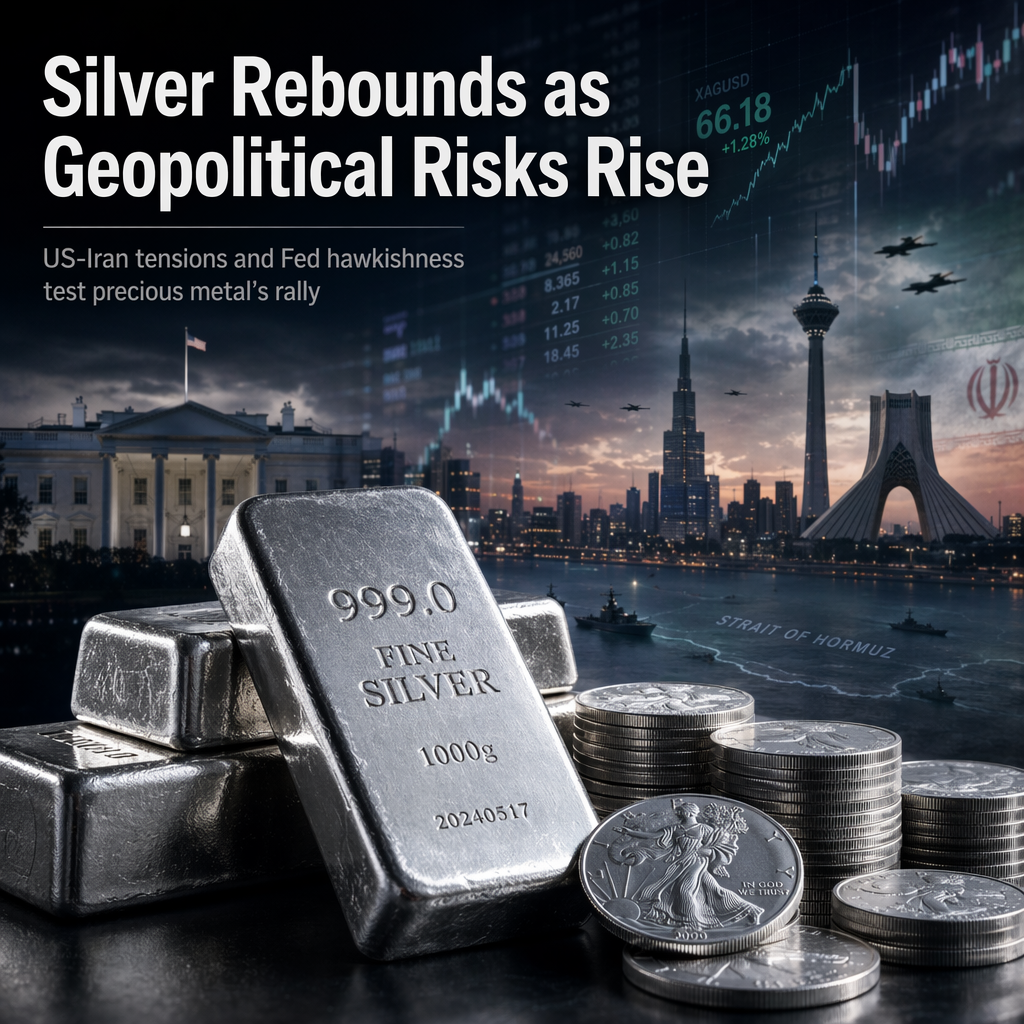
Silver (XAG/USD) ended its three-day losing streak, trading around $65.90 per troy ounce during Asian hours on Monday [1]. The rebound comes amid renewed concerns over the prospects for a US-Iran peace deal, following threats from US President Donald Trump to launch direct strikes on Iran if Hezbollah continues attacks on Israel [1]. This escalation has cast significant doubt on diplomatic progress between Washington and Tehran, with President Trump also threatening to dismantle the current peace framework, despite Vice President JD Vance's recent meeting with Iranian officials under an interim deal [1].
Further complicating the geopolitical landscape, Tehran announced the closure of the strategic Strait of Hormuz and, according to Iranian state media, suspended negotiations in response to Trump's remarks. However, sources close to the matter indicated that discussions may still be ongoing behind the scenes [1]. These developments have heightened inflation risks and raised the possibility of prolonged high interest rates, both of which are weighing on investor sentiment toward non-yielding assets like silver [1].
On the monetary policy front, the Federal Reserve kept interest rates steady last week but signaled a hawkish stance, with 9 out of 19 Fed policymakers projecting at least one rate hike this year. Market participants are now pricing in a potential increase as early as September [1]. Tim Waterer, chief market analyst at KCM Trade, noted that the resurgent US dollar, bolstered by the Fed's hawkish tone under Kevin Warsh, is creating additional headwinds for precious metals [1].
Overall, silver faces pressure from both geopolitical uncertainty and expectations of tighter US monetary policy, with the strong dollar further limiting upside potential [1].
CONCLUSION
Silver's brief rebound near $66 is overshadowed by escalating US-Iran tensions and the Federal Reserve's hawkish outlook, both of which are pressuring the precious metal. Market participants remain cautious, with the potential for further declines if geopolitical risks persist and US interest rates rise as anticipated.