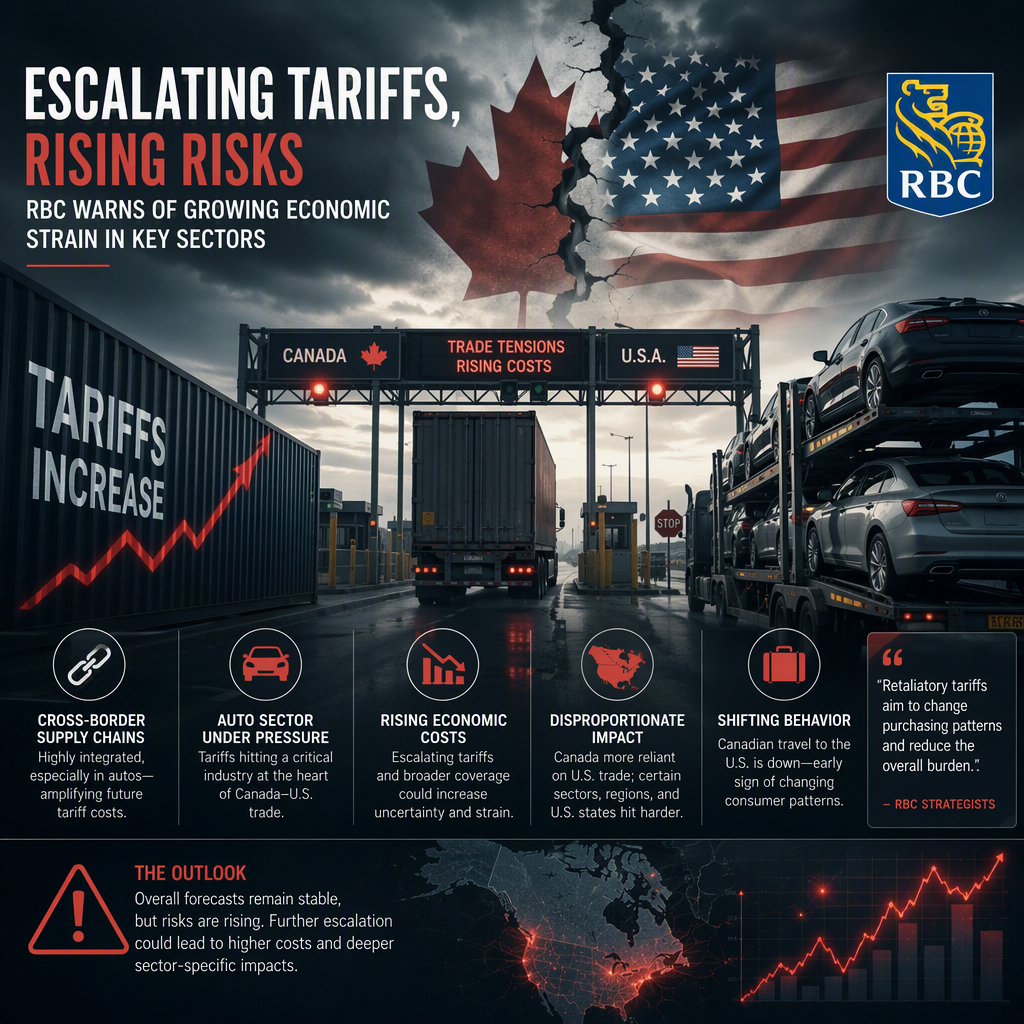
Royal Bank of Canada (RBC) strategists have highlighted rising economic risks stemming from escalating trade tensions and tariff hikes between Canada and the United States. While the baseline economic outlook forecasts for both the U.S. and Canada remain stable, RBC notes that specific sectors, regions, and cross-border supply chains—especially in the auto industry—are facing significant strain as tariffs rise and broaden [1].
RBC points out that the implementation of U.S. Section 338 tariffs and Canada's retaliatory measures have created uncertainty, with economic costs expected to increase if tariffs continue to escalate and expand across more products. The bank emphasizes that cross-border supply chain integration, particularly in the auto sector, amplifies the cost of potential future tariffs [1].
The analysis also notes that Canada is more reliant on trade with the U.S. than vice versa, meaning certain Canadian sectors and regions, as well as specific U.S. states, will be disproportionately affected by the new measures. Additionally, Canadian travel spending has already shifted significantly to avoid trips to the U.S., reflecting early behavioral changes in response to the trade conflict. RBC adds that retaliatory tariffs are intended to alter consumer and business purchasing patterns to minimize the overall tariff burden [1].
CONCLUSION
RBC's analysis underscores that while overall economic forecasts for Canada and the U.S. remain stable, escalating tariffs are causing notable strain in key sectors, especially autos, and prompting shifts in consumer behavior. The situation remains fluid, with further escalation likely to increase economic costs and sector-specific impacts.