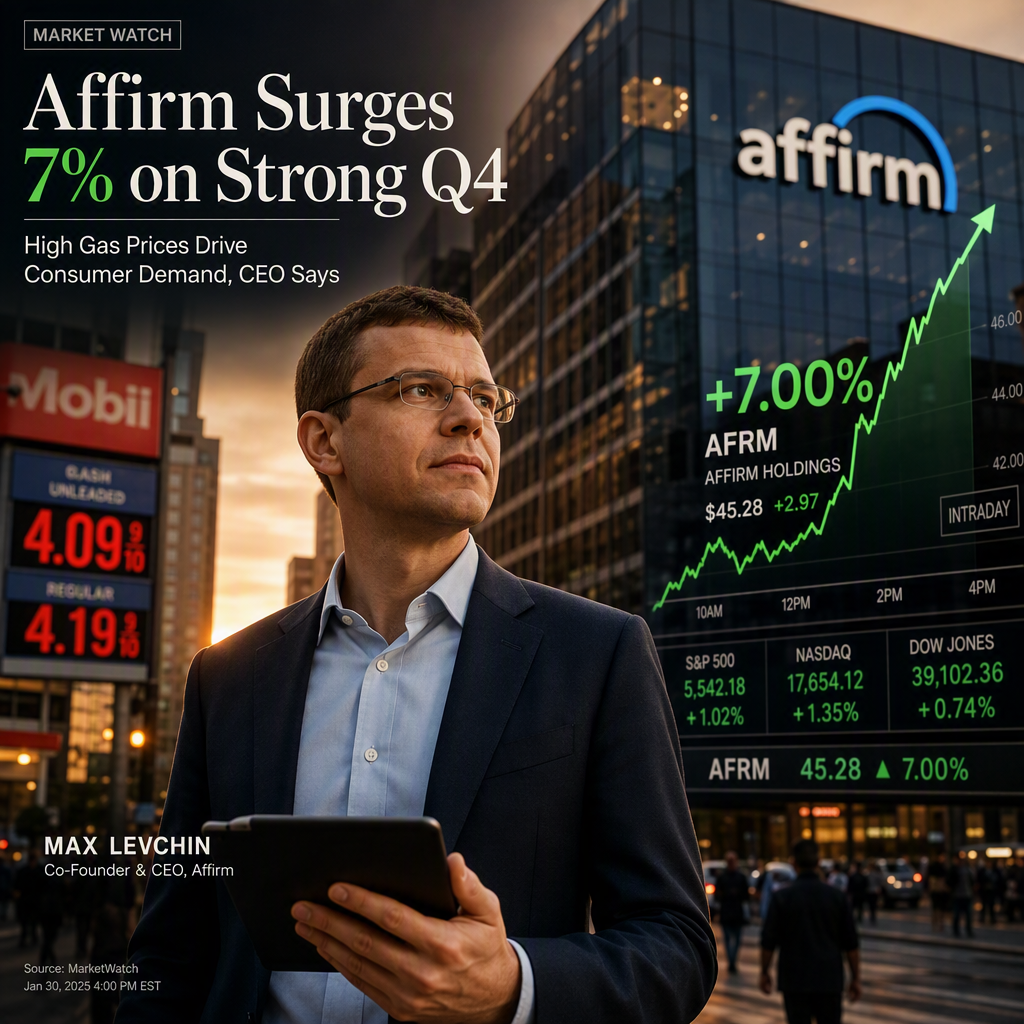
Affirm Holdings reported robust fiscal fourth-quarter earnings, leading to a 7% surge in its stock price on Friday [1]. The buy now, pay later company posted Q4 revenue of $1.17 billion, surpassing the $1.11 billion estimate from LSEG [1]. Additionally, Affirm's gross merchandise volume reached $14.1 billion, well above the $13.39 billion expectation from StreetAccount [1]. The company also issued a strong outlook for the upcoming quarter, projecting fiscal first-quarter revenue between $1.19 billion and $1.22 billion, exceeding the Street's expectation of $1.16 billion [1].
CEO Max Levchin highlighted that high gas prices are impacting U.S. consumers, with the national average at $4.09 per gallon as of Friday, down from over $4.50 in May but still significantly higher than pre-Iran war levels [1]. Levchin noted that consumers are increasingly turning to Affirm to help manage expenses amid inflationary pressures, stating, "In times of inflation, we see more demand because folks are budgeting" [1].
Economic data showed the annual inflation rate at 3.7% in July, with the personal consumption expenditures (PCE) price index rising 0.2% for the month [1]. Despite inflation, consumer strength was evident as personal income rose 0.4% and spending increased 0.2% in July, both outperforming expectations [1]. These factors are influencing the Federal Reserve's upcoming policy decisions, with Chairman Kevin Warsh set to lead discussions at the September meeting [1].
Levchin expressed cautious optimism, stating that while the consumer remains generally healthy, sustained pressure from high prices could pose long-term challenges [1].
CONCLUSION
Affirm's strong Q4 results and optimistic outlook drove a notable stock rally, reflecting investor confidence in the company's ability to benefit from current consumer trends. While high gas prices and inflation remain concerns, Affirm's performance and guidance suggest resilience amid economic headwinds. The market is closely watching the Federal Reserve's next moves as inflation and consumer spending dynamics evolve.