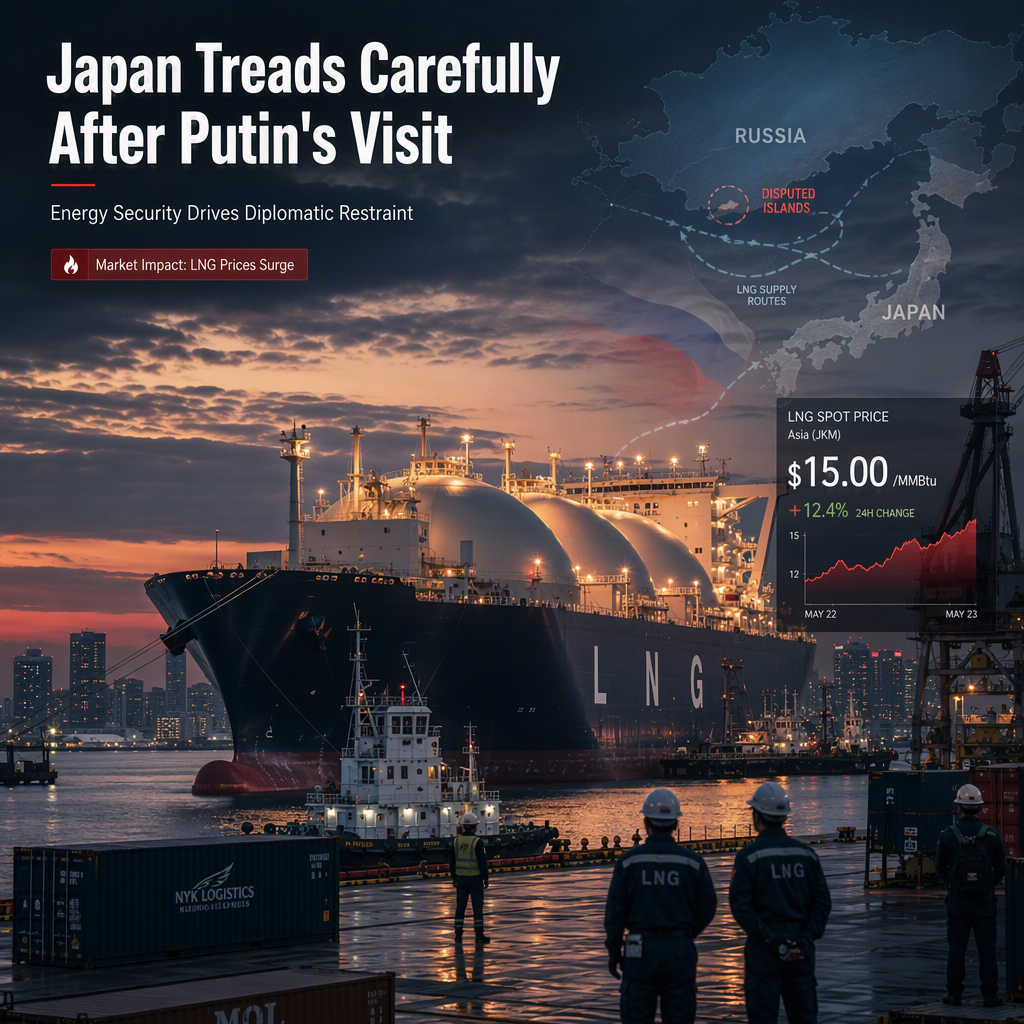
Japanese Prime Minister Sanae Takaichi has objected to Russian President Vladimir Putin's visit to a disputed northwestern Pacific island but has not taken any concrete countermeasures in the month since the event, highlighting Japan's complex relationship with Russia as a key energy supplier [1]. The lack of a strong response is primarily attributed to Japan's dependence on Russian liquefied natural gas (LNG) imports, which are crucial for maintaining stable energy supplies, especially amid the ongoing Iran war [1].
Market analysts note that the LNG spot price in Asia remains highly sensitive to geopolitical developments, with Japan's cautious diplomatic stance aimed at preventing supply disruptions and price spikes [1]. An energy strategist stated, "Japan's energy security is paramount, especially as global LNG prices are reacting to conflicts in the Middle East and Europe" [1]. There is no indication that Japan will impose sanctions or restrict energy trade with Russia in the near term, as the government is weighing the risks of antagonizing Moscow, which could lead to a reduction in LNG shipments and force Japanese buyers into the volatile spot market, where prices have surged by more than 20% in the past month [1].
Technical analysis from local brokerage firms indicates that the Asian LNG futures market is trading near key resistance at $15 per MMBtu, with support at $13.50. Any disruption in Russian supplies could push prices above resistance, prompting traders to hedge positions aggressively [1]. Japanese energy companies are reportedly maintaining diversified supply sources and increasing hedging activities in anticipation of further volatility if diplomatic tensions escalate [1].
In summary, Japan's muted response to Putin's visit is shaped by the urgent need for stable LNG supplies, market sensitivity to geopolitical shocks, and technical factors influencing trading strategies. Energy market participants are closely monitoring the situation for any signs of escalation or supply disruption [1].
CONCLUSION
Japan's reluctance to retaliate against Russia following Putin's disputed-island visit is driven by concerns over energy security and the potential for LNG market volatility. With Asian LNG prices already up over 20% in the past month, any escalation could further disrupt supplies and drive prices higher. Market participants are advised to remain vigilant as the situation develops.