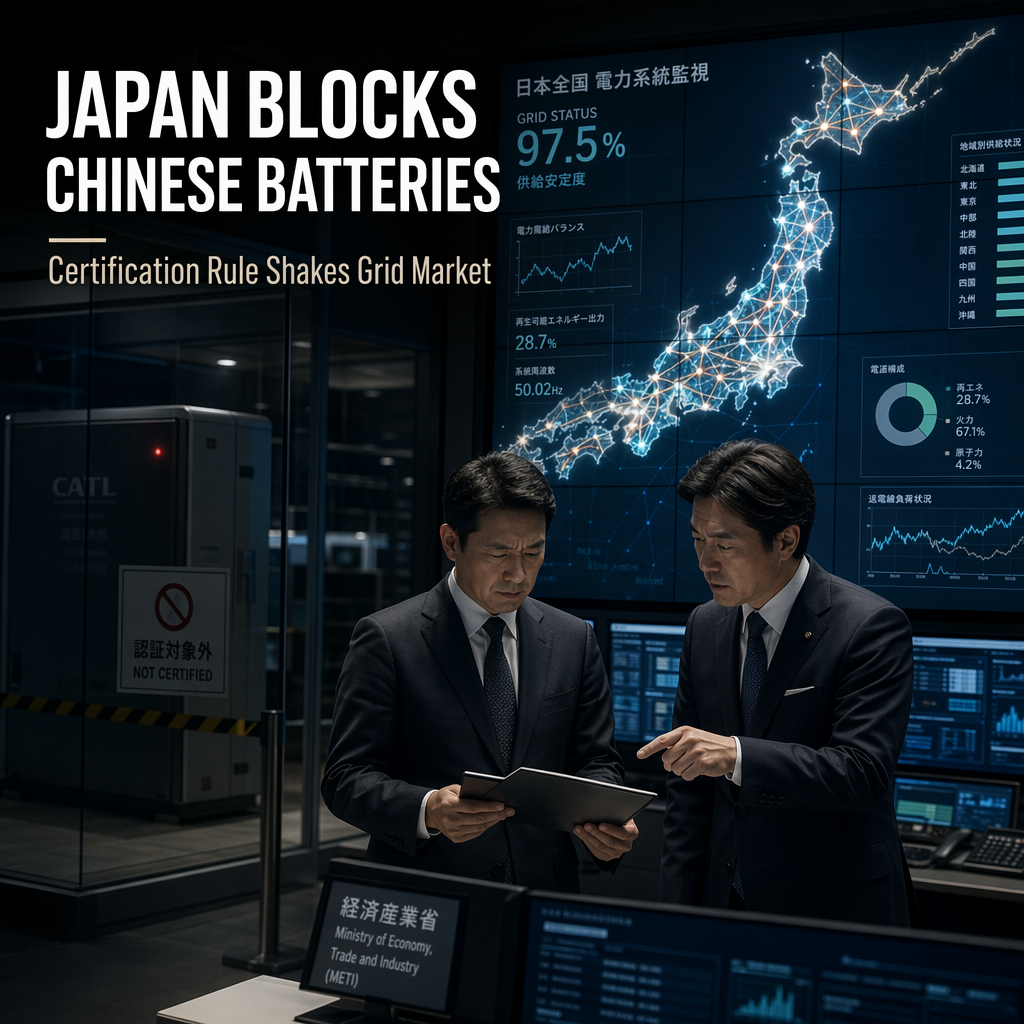
Japan's government has not granted cybersecurity clearance to any Chinese storage battery manufacturers, despite an impending requirement that all such equipment must be certified to connect to the Japanese power grid [1]. Even Chinese companies with an established market share in Japan currently lack approved products, raising concerns as the certification deadline approaches [1]. A representative from a Chinese manufacturer described the situation as a 'de facto exclusion,' underscoring the difficulties foreign companies face in meeting Japan's cybersecurity standards [1].
The new certification rule is set to become mandatory for all storage batteries connected to the grid, which could significantly impact suppliers without approved products [1]. This move is part of Japan's broader efforts to bolster energy infrastructure security, particularly in the context of rising geopolitical tensions [1]. Market analysts cited in the article anticipate that the requirement could reshape the competitive landscape, favoring domestic or already-certified foreign suppliers and potentially increasing costs for battery storage projects in Japan [1].
While the article does not provide specific financial data or technical market analysis, it notes that this policy development may influence future investment decisions and procurement strategies for companies involved in Japan’s energy storage market [1].
CONCLUSION
Japan's decision to withhold cybersecurity certification from Chinese storage battery makers is poised to alter the competitive dynamics of the country's energy storage sector. The new requirement may benefit domestic or certified foreign suppliers and could lead to increased costs and strategic shifts for market participants.