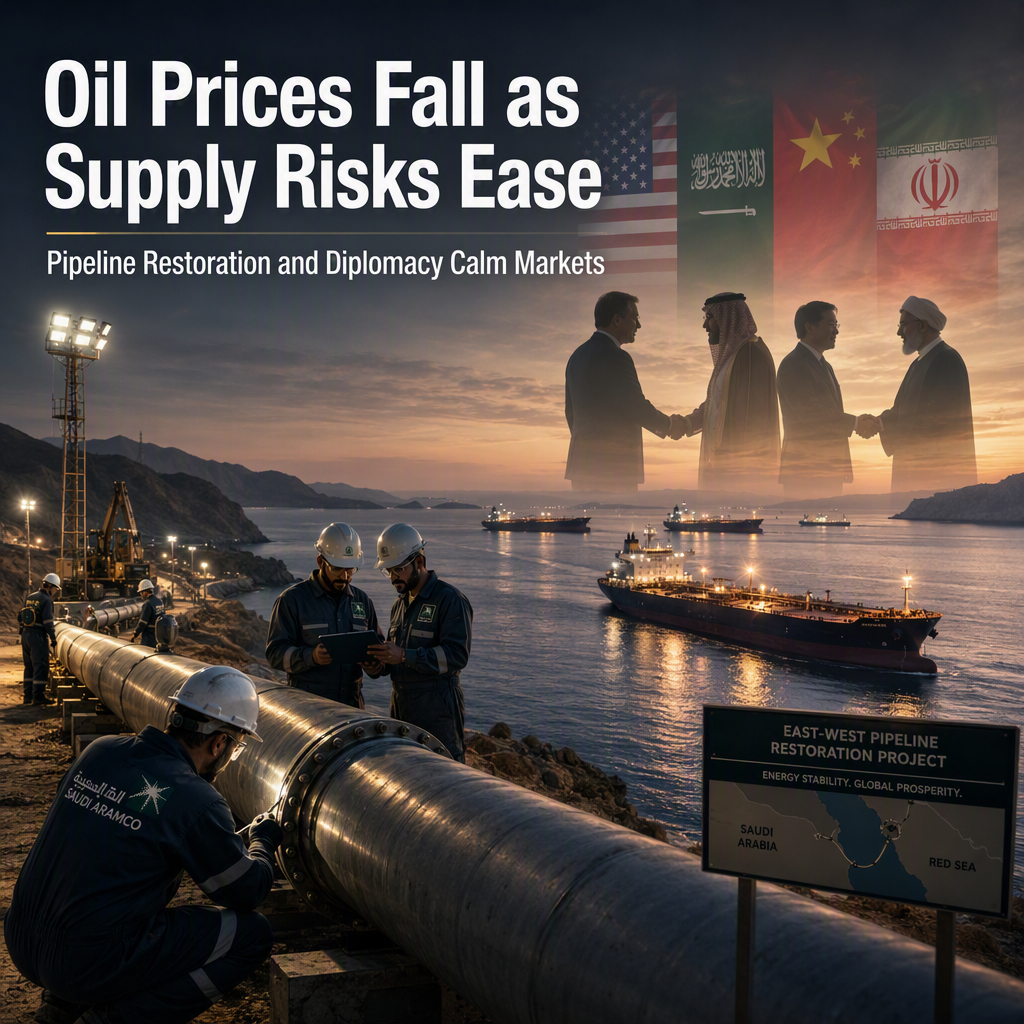
Oil prices have declined as markets reassess supply risks associated with the US-Iran war and regional chokepoints, according to MUFG [1]. The easing of supply concerns has been attributed to several factors, including Saudi Arabia's efforts to restore the damaged East-West pipeline to its Red Sea coast, with the aim of returning about half its capacity within days [1]. Additionally, some tankers continue to traverse the contested Strait of Hormuz, indicating that shipping disruptions have not fully materialized [1].
Diplomatic initiatives have also played a role in calming markets. The United States, Gulf nations, China, and Iran are all engaged in diplomatic moves, with markets looking forward to the next round of diplomacy that will shape the US-Iran war [1]. Reuters reported that Beijing privately asked Iran to help rein in Houthi militants after an appeal to China by Riyadh, as the militant group has made advances in Yemen towards the Bab el-Mandeb chokepoint in recent days [1].
As a result of these developments, risk assets have rallied and global duration performed better after a period of significant sell-off in recent weeks [1]. The combination of pipeline restoration, ongoing tanker traffic, and diplomatic engagement has contributed to the easing of oil supply concerns and the recent decline in oil prices [1].
CONCLUSION
Oil prices have fallen as supply risks are reassessed, driven by Saudi pipeline restoration efforts and ongoing diplomatic initiatives involving the US, Gulf nations, China, and Iran. The market response has been positive for risk assets, reflecting reduced immediate concerns over oil supply disruptions.