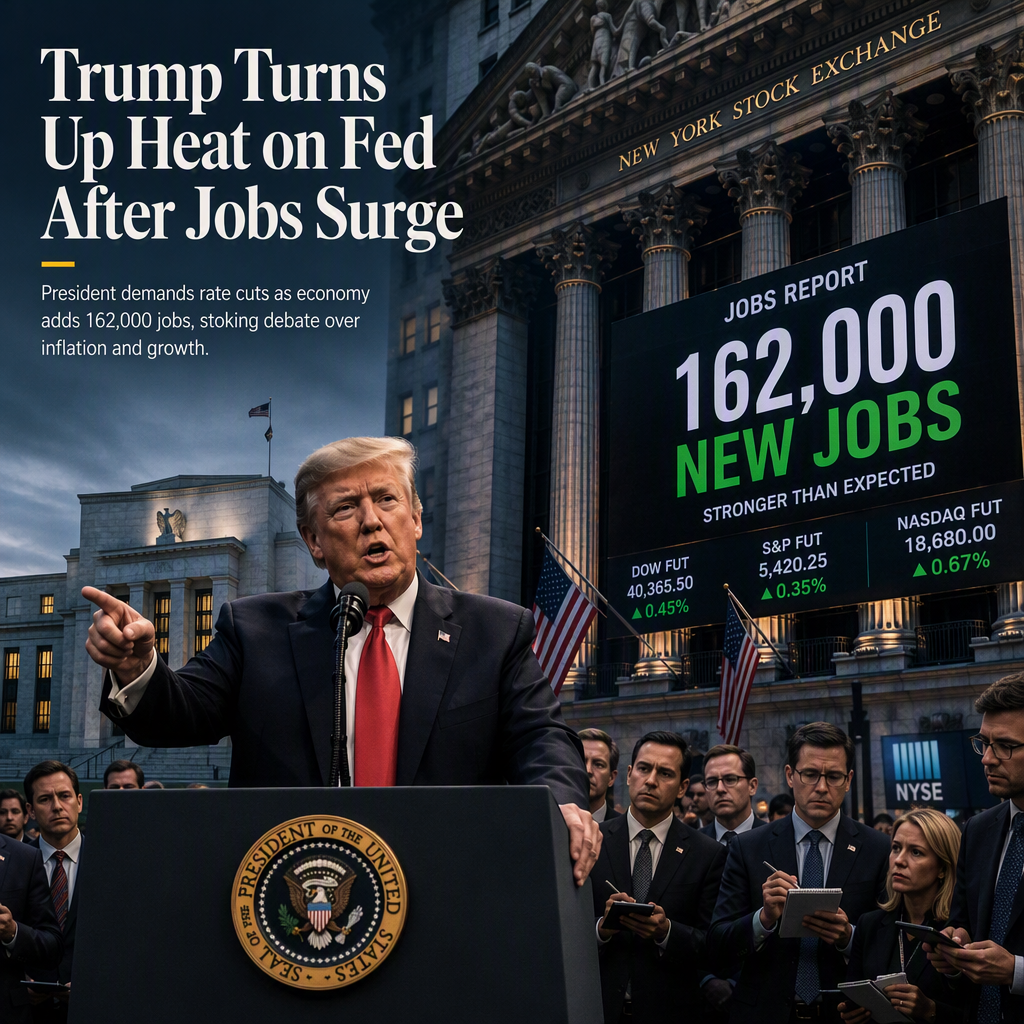
United States President Donald Trump responded to the creation of 162,000 jobs in August, a figure he described as significantly above expectations, by renewing his calls for the Federal Reserve to adopt a more accommodative monetary policy [1]. Despite the robust labor market data, Trump argued that the United States' strong creditworthiness should result in lower interest rates, stating that the country should have the lowest rates in the world [1].
In a post on Truth Social, Trump escalated his demands by directly linking interest rates to US trade policy. He threatened to stop trading with countries that have a trade surplus with the United States unless the Fed lowers rates, presenting this as an alternative to tariffs [1]. Trump also referenced the Fed Board's 'great new leader' in his appeal for lower borrowing costs [1].
This latest intervention increases political pressure on the US central bank as investors evaluate the future trajectory of interest rates in light of the strong employment data [1]. The article does not provide specific market reactions or analyst opinions regarding the potential impact of Trump's statements [1].
CONCLUSION
President Trump's comments following the strong jobs report have heightened political pressure on the Federal Reserve to lower interest rates. His threat to link trade policy to monetary policy introduces additional uncertainty for markets as investors consider the Fed's next moves.