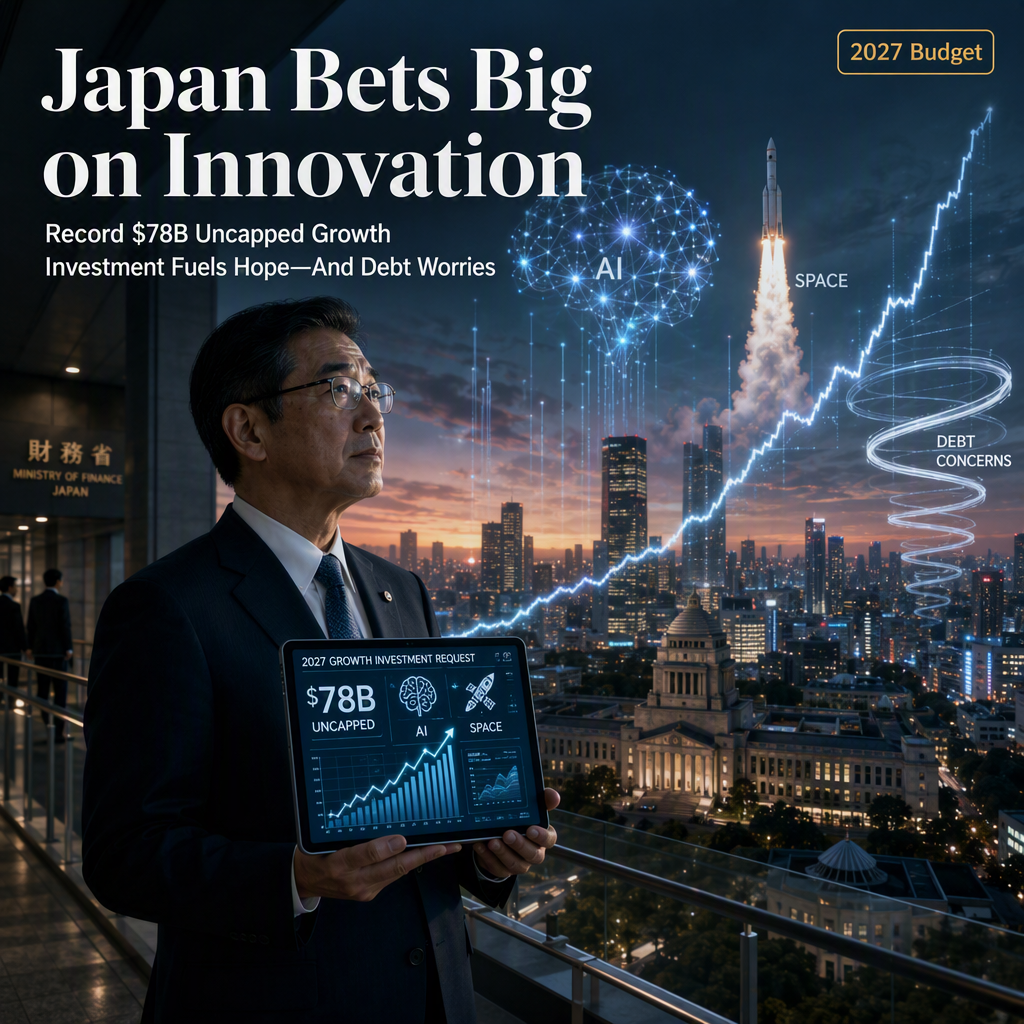
Japan's government agencies have submitted record-breaking budget requests for fiscal 2027, with a notable 12.17 trillion yen ($78 billion) allocated under an uncapped framework for growth investment in sectors such as artificial intelligence (AI) and space [1]. This aggressive push reflects the government's focus on technological advancement and economic growth, aiming to bolster Japan's future competitiveness [1].
The inclusion of such a substantial sum in an uncapped category signals a shift toward prioritizing innovation-driven sectors. However, the budget also includes rising debt servicing costs and unspecified defense items, which have raised concerns about the sustainability of government finances and the risk of ballooning national debt [1].
Analysts caution that these spending trends may intensify debates over government expenditures, especially as Japan faces rising interest rates and mounting fiscal pressures. The increased cost of servicing debt, alongside funding for new initiatives like AI and space, could necessitate additional revenue measures or spending cuts in other areas to ensure fiscal stability [1].
The budget process is being closely watched by both domestic stakeholders and international observers, as the government seeks to balance growth investment with fiscal discipline amid a challenging economic environment [1].
CONCLUSION
Japan's record-high budget requests for fiscal 2027, driven by uncapped growth investment in AI and space, highlight the government's commitment to future competitiveness. However, rising debt costs and fiscal pressures have sparked concerns about sustainability, prompting analysts to warn of potential tensions and the need for careful fiscal management. The market is likely to react strongly as stakeholders monitor the government's balancing act between growth and fiscal discipline.