
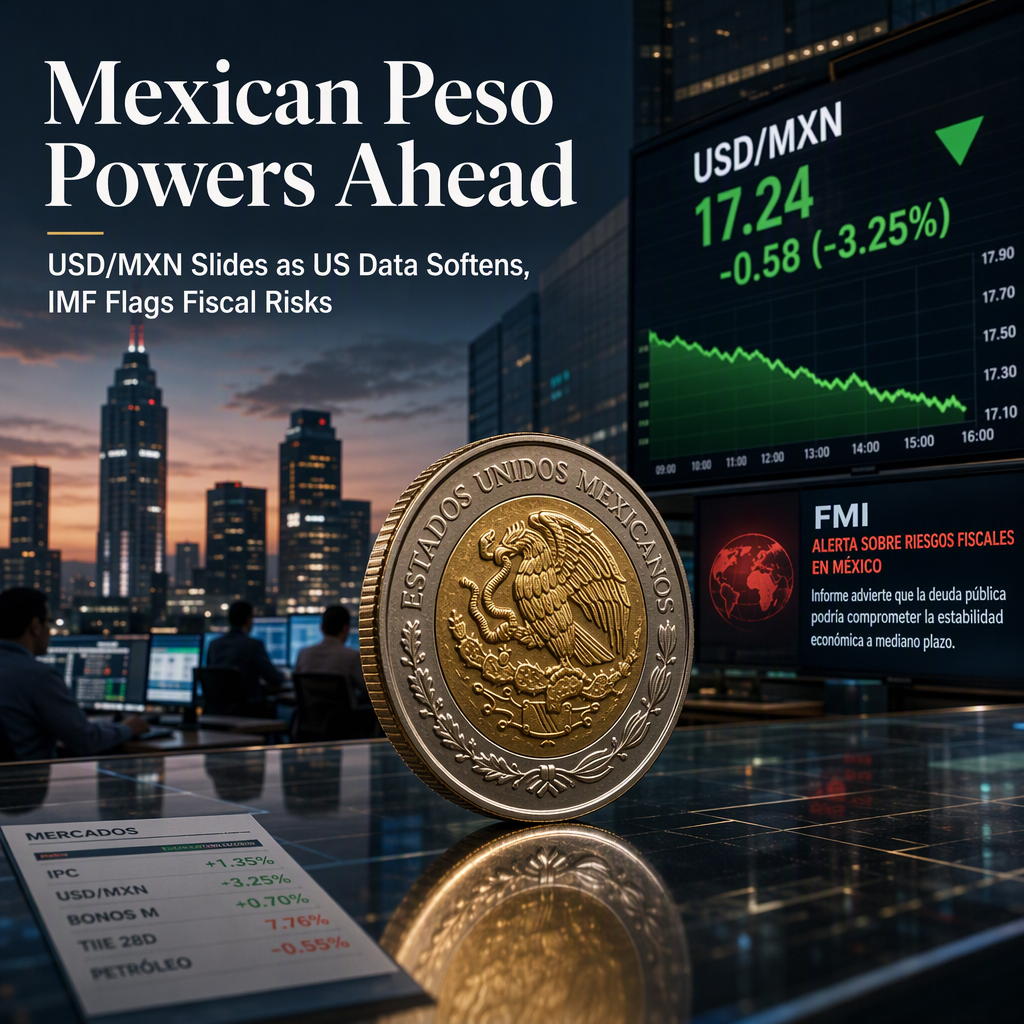
The Mexican Peso extended its winning streak, with USD/MXN declining by approximately 0.34% and trading at 18.08 after reaching a peak near 18.26. This movement was driven by softer-than-expected US economic data, including a mediocre Nonfarm Payrolls report and a decline in the ISM Services PMI from 55.4 to 54.9 in September, which was below estimates of 55. Additionally, inflationary pressures were noted as the prices paid subcomponent of the ISM survey rose from 72.6 in August to 74.0, exceeding expectations. Steve Miller, chair of ISM’s Services Business Survey Committee, highlighted tariffs and fuel costs as key supply chain concerns impacting respondents [1].
Despite rising US Treasury yields, with the 10-year T-note yield up to 5.307% and the US Dollar Index (DXY) increasing by 0.23% to 102.15, risk appetite improved and Wall Street ended positively, led by tech companies. In Mexico, Gross Fixed Investment for July was reported at 1.4% month-over-month, up from the previous 1.3%, but this had minimal impact on the Peso as traders await upcoming inflation data and the Bank of Mexico's meeting minutes [1].
The International Monetary Fund (IMF) commented that Mexico needs greater efforts to reduce its debt, projecting economic growth of 1.5% for this year and 1.8% in 2027. The IMF noted that growth is constrained by external shocks and recommended maintaining a moderately tight monetary policy. Mexico’s 2027 budget anticipates public debt rising to 55% of GDP, despite ongoing fiscal consolidation efforts [1].
From a technical perspective, USD/MXN remains above key simple moving averages (50-, 100-, and 200-day), with the Relative Strength Index (14) at 72.84 indicating overbought conditions and suggesting a risk of a corrective pause rather than an immediate reversal [1].
CONCLUSION
The Mexican Peso's recent gains against the US Dollar are supported by softer US economic data and improved risk sentiment, despite rising US yields and fiscal concerns highlighted by the IMF. While technical indicators suggest a potential pause in the rally, upcoming inflation data and central bank communications will be key for further direction. Market participants remain cautious as Mexico faces fiscal challenges and external shocks.