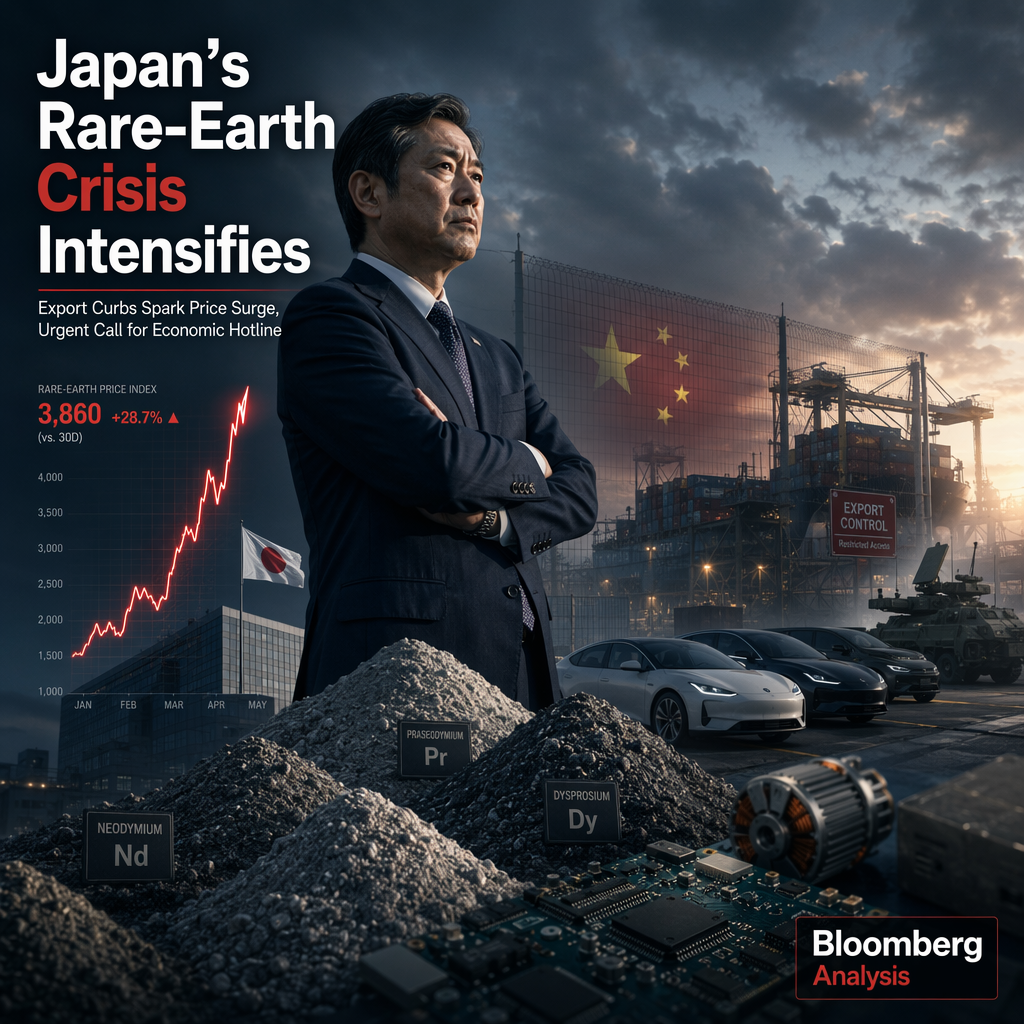
Japanese firms have experienced a surge of over 20% in rare-earth costs, according to a recent survey, highlighting the country's dependence on Chinese supply for these critical materials used in electric vehicles and advanced defense systems [1]. The increase in costs comes as Beijing intensifies its control over rare earth exports, a move with the potential to disrupt $6.5 trillion of Western industry, as estimated by the International Energy Agency (IEA) [1]. Previous Chinese export restrictions have already caused significant disruptions in global supply chains, leading to higher costs and urgent efforts to find alternative sources [1].
While Japan and China have recently agreed to establish a defense hotline to manage maritime and airspace incidents, the article argues that an economic communication channel is equally urgent to prevent misunderstandings over trade restrictions or export controls from escalating into broader crises [1]. In response to China's tightening grip, Japan has accelerated diversification efforts, investing in rare-earth production in Australia, Vietnam, and other countries, as well as developing recycling technologies and alternative materials to reduce reliance on Chinese supply [1].
Market analysis indicates that although China continues to dominate the rare earth market, its share is gradually declining due to these diversification strategies [1]. Prices have become more volatile, with sharp spikes occurring whenever new export controls are announced or rumored, but the market is gradually adjusting over the long term [1]. Technical indicators suggest continued upward pressure on prices amid persistent uncertainty, especially ahead of key geopolitical events or regulatory changes [1].
For traders, the rare earth sector remains highly sensitive to policy signals from Beijing, with support levels for key rare earth prices rising in recent months as buyers build inventory in anticipation of further restrictions [1]. Resistance may be encountered if new supply sources become available or if diplomatic negotiations ease tensions [1]. The establishment of an economic hotline between Japan and China is proposed as a means to reduce market volatility by providing timely information and a forum for resolving disputes, benefiting not only the two countries but also global industries reliant on stable rare earth supplies [1].
CONCLUSION
The surge in rare-earth costs for Japanese firms underscores the market's vulnerability to Chinese export controls and the urgent need for improved economic communication between Japan and China. Diversification efforts are underway, but market volatility is expected to persist until more stable supply channels or diplomatic solutions are established.