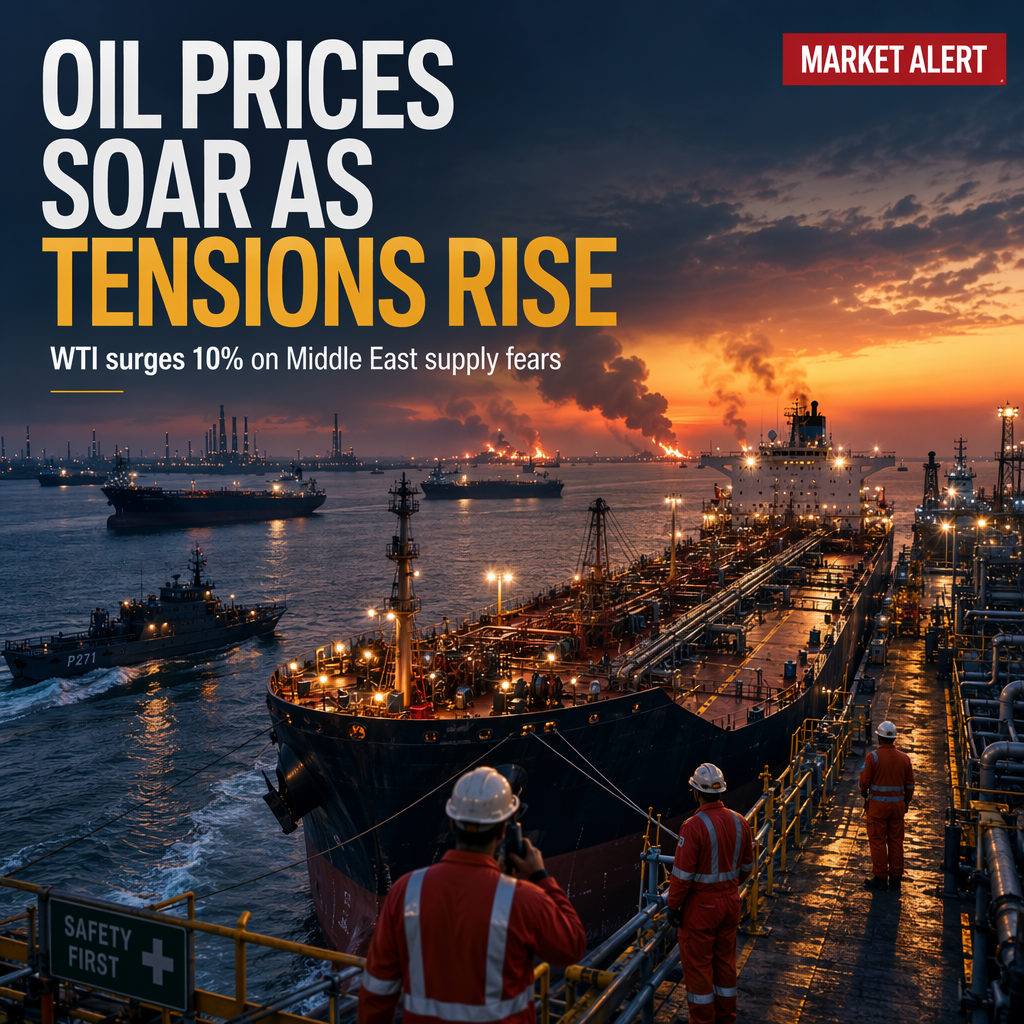
West Texas Intermediate (WTI) oil prices have surged over 10% this week, trading around $90.20 per barrel during Asian hours on Friday, marking a halt to a three-day winning streak but maintaining elevated levels amid escalating tensions in the Middle East [1]. The rally is driven by intense fears of global oil supply disruptions, as the United States continues its 13th consecutive day of strikes against Iran, with both nations ruling out near-term diplomatic talks [1]. President Trump has threatened 'major military punishment' against Iran and Houthi forces over any further strikes on Red Sea shipping, and is considering a 'massive attack' on Iran itself [1].
Recent attacks by Iran-backed Houthi militants targeted two Saudi oil tankers in the Red Sea, a crucial export corridor for Saudi Arabia, especially as ongoing combat disrupts vessel movement through the critical Strait of Hormuz [1]. In response, Asian importers have begun discussions to reroute Saudi crude shipments through the Suez Canal and around Africa, seeking alternatives to the increasingly perilous Red Sea route [1].
Further compounding the regional supply squeeze, the Caspian Pipeline Consortium has suspended crude loadings at its Black Sea terminal following tanker attacks, effectively choking off approximately 80% of Kazakhstan’s oil exports [1]. These developments have heightened market anxiety and contributed to the sharp rise in WTI prices [1].
CONCLUSION
WTI oil prices have surged sharply this week, driven by escalating Middle East tensions and significant supply disruptions. The market is reacting strongly to threats against key shipping routes and the suspension of major crude exports, signaling heightened risk and volatility. Forward-looking, continued instability in the region could sustain elevated oil prices and further impact global supply chains.