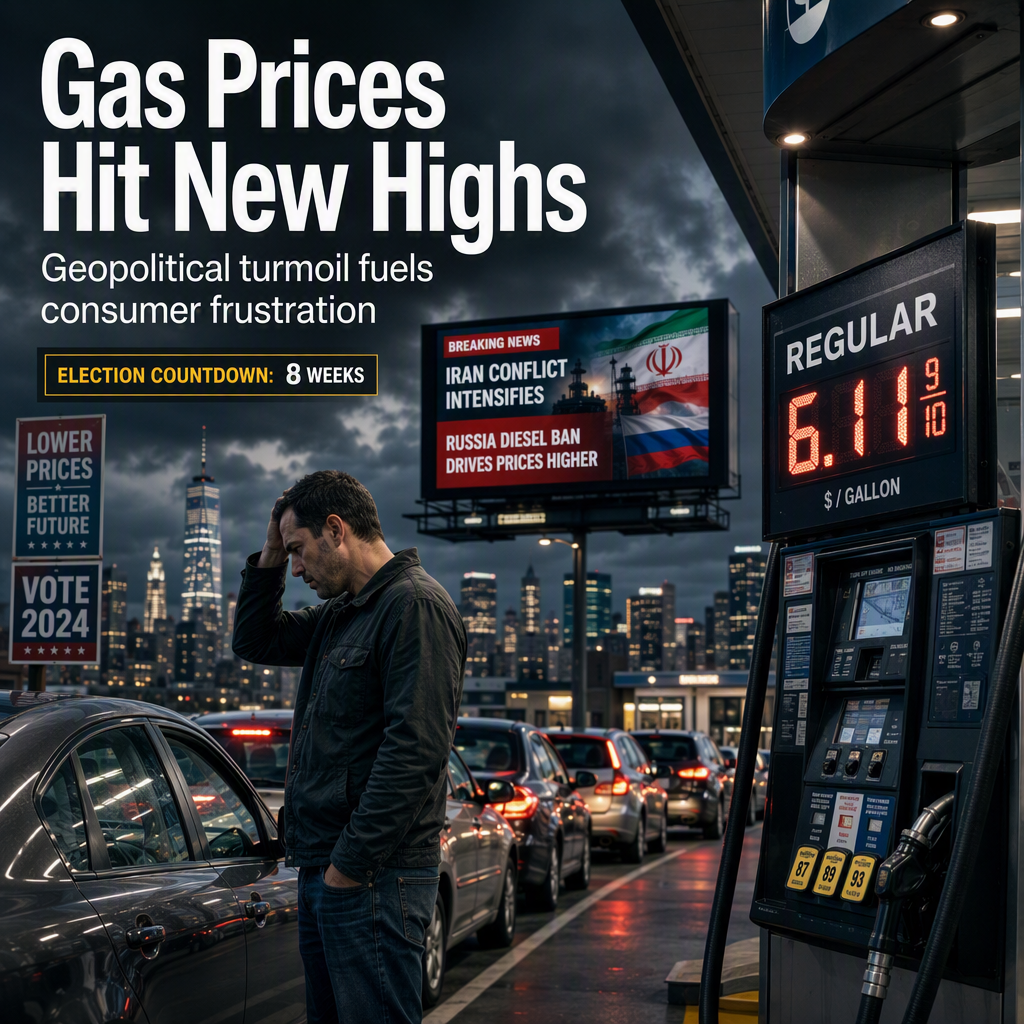
U.S. gas prices have surged to their highest levels of the year, with the national average reaching $4.46 per gallon on Friday, just 10 cents below the peak of $4.56 recorded on May 21. This increase comes as a result of the ongoing Iran war and Russia's ban on diesel exports, which have significantly disrupted global energy markets [1]. At least six states now have average gas prices above $5 per gallon, with California leading at $6.11. States such as Michigan, Utah, and Illinois are nearing the $5 mark [1].
Since the U.S. and Israel attacked Iran on February 28, gas prices have risen 50% nationwide. Diesel prices have also reached new daily all-time highs, with the national average at $6.44 per gallon after a five-cent overnight increase. Diesel prices have climbed 71% since the start of the Iran conflict, impacting the cost of shipping, rail, and trucking, and potentially raising consumer prices due to higher wholesale transportation costs [1].
The political implications are significant, with less than eight weeks before the U.S. midterm elections. Consumer frustration is mounting, as reflected in the sharp drop in the University of Michigan consumer sentiment survey, largely due to inflation concerns. President Donald Trump has claimed that fuel prices will drop sharply once the war ends and has promised to push gas prices below $2 per gallon, a level not seen since the 2020 pandemic. However, commodities analysts and experts have expressed skepticism about these claims, warning that prolonged conflict could keep prices elevated for an extended period [1].
HSBC analysts noted that if diplomatic efforts fail and oil flows through the Strait of Hormuz remain constrained, inventories could fall to operational lows and Brent crude prices could rise to around $120 per barrel. Goldman Sachs has also raised its forecasts in response to the ongoing geopolitical tensions [1].
CONCLUSION
Gas and diesel prices in the U.S. are nearing record highs due to the Iran war and Russia's diesel ban, with significant impacts on consumer sentiment and transportation costs. Analysts remain cautious about any rapid price declines, suggesting that elevated energy prices may persist as geopolitical tensions continue. The situation is creating substantial political and economic pressure ahead of the midterm elections.